


You've used Bookwhen, but it still treats a 10-week term like ten separate tickets, the booking page feels dated next to the website you've worked hard on, and a parent with three kids can't manage their bookings in one place. Whatever pushed you here, we compared 7 Bookwhen alternatives on class management, pricing, and real reviews, and flagged the one case where staying put still makes sense.
Best Bookwhen alternatives at a glance
The table below puts Bookwhen at the top as a reference row (the tool you're replacing), then ranks the alternatives. Pembee is our top pick for class, course, and camp providers, but the right choice depends on what you run.
Why look for a Bookwhen alternative?
Bookwhen is good software. The friction shows up when you stop running one-off events and start running recurring programs. These are the patterns that come up again and again when class providers go looking for something else.
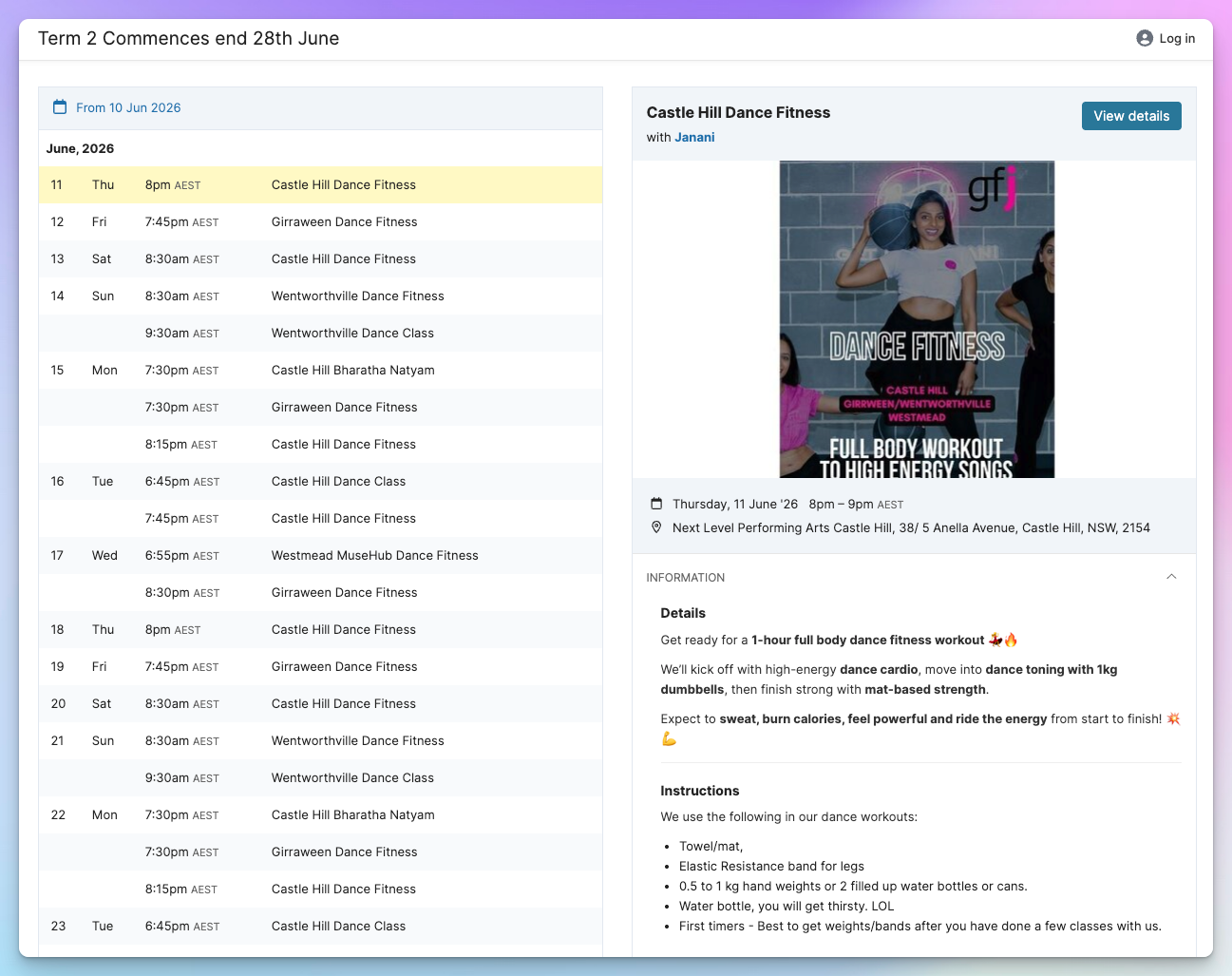
It's built for one-off tickets, not recurring terms. A term or a course becomes manual admin: you're checking who's enrolled in which block, handling partial sign-ups, and often tracking waitlists in a spreadsheet. The most common usability complaint in Bookwhen's own reviews is that switching classes or booking multiple sessions is fiddly for the customer, which lands back on your inbox.
There are no first-class family or parent accounts. A parent with three children ends up making three separate bookings, and reusable child profiles aren't really a concept. If you run a mix of kids' and adult sessions under one brand, that gap gets expensive in admin time.
The booking journey can feel dated. Customers scroll long event lists, and passes and calendar links can confuse them. If you invest in your brand and your website, the booking page often doesn't keep up, especially on mobile.
Reporting and automation stay thin. You get totals, not a per-class, per-term, or per-promotion view. There's no native sibling or multi-attendee discounting, no subscription plans, and no Apple Pay, Google Pay, or payment links.
To be fair, Bookwhen earns its 4.9 ★ rating. It's genuinely quick to set up, it has a real free tier for under 50 bookings a month, it handles varied ticket and pass types well, and reviewers consistently praise its reliability and fast support. The issue isn't quality, it's fit. Once recurring terms, parent and child management, and per-program reporting become daily work, you're asking event software to do a job it wasn't built for.
How we picked these alternatives
We started from one question: does this tool actually close the gaps that push people off Bookwhen? Every alternative here had to do at least one of those jobs better, whether that's real term enrollment, family accounts, modern branded booking, or richer reporting.
From there we weighed pricing and what you get for it, how painful the switch from Bookwhen is, the quality of support, and what real customers say in current Capterra, G2, and Trustpilot reviews. We deliberately kept the lineup varied so the niches don't overlap: a kids'-club specialist, an appointment-first scheduler, a budget automation pick, a group-activity tool, a heavyweight fitness platform, and a pure events tool. That way you can match the tool to how you actually run your programs.
The 7 best Bookwhen alternatives
#1. Pembee, the best overall Bookwhen alternative for class and course providers
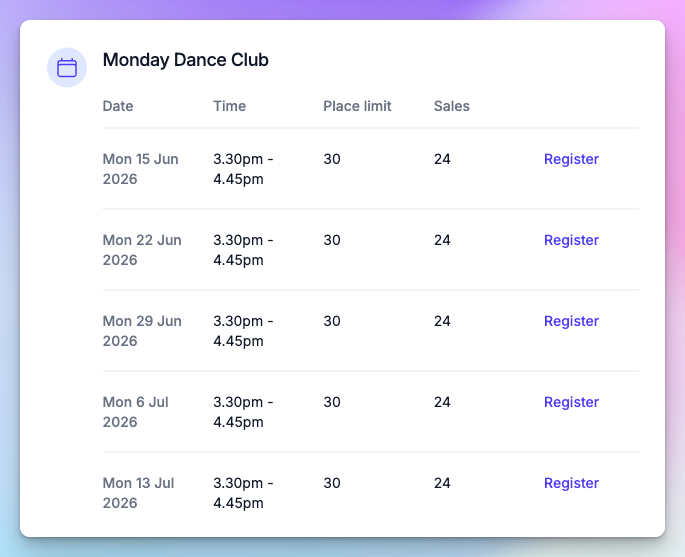
Pembee is booking and class management software built specifically for activity providers running recurring classes, courses, and camps, for kids, adults, or both. It's the tool we'd reach for when a term should behave like a term, not like ten loose tickets.
This is the decision moment in the post, so we'll be concrete about what changes when you move.
Best for: Class, course, and camp providers who've outgrown event-style ticketing and want term enrollment, family accounts, and real reporting in one place.
Key features:
- Term and course enrollment with easy re-enrollment next block, which is the exact thing Bookwhen makes manual.
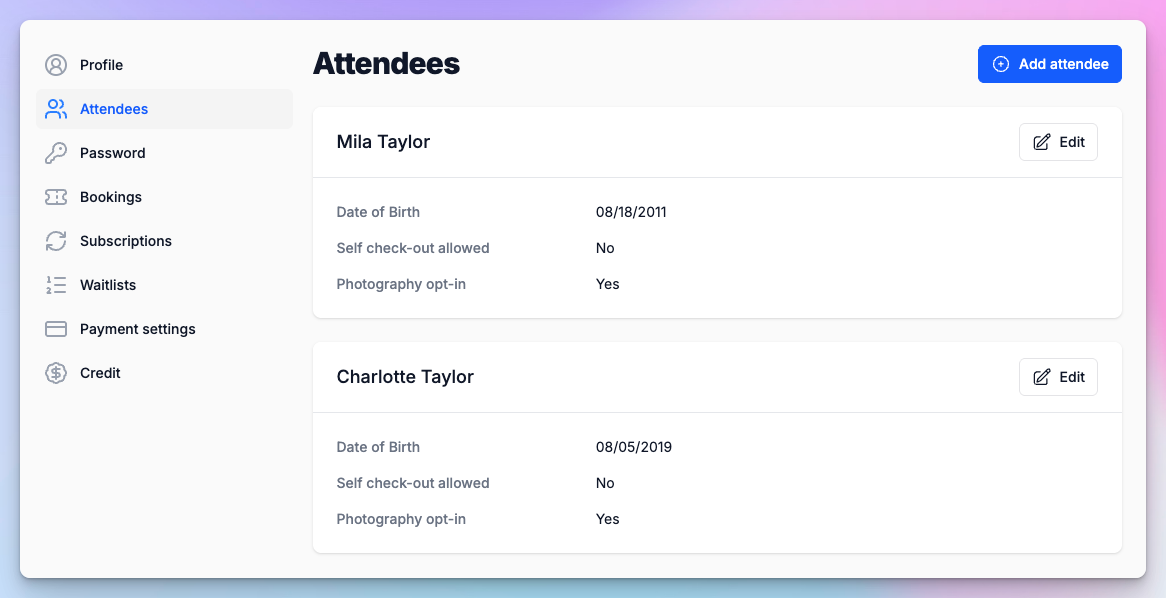
- Parent accounts that hold multiple children, plus reusable child profiles so families don't retype medical and consent details every season (closes Bookwhen's family-accounts gap).
- Live registers and automated waitlists that fill spaces for you instead of via email.
- Sibling and multi-session discounts, discount codes, deposits, and installment plans.
- Apple Pay, Google Pay, payment links, subscription plans, and tax-free childcare support for UK providers.
- Per-class, per-term, and per-promotion reporting, so you can see which programs to grow.
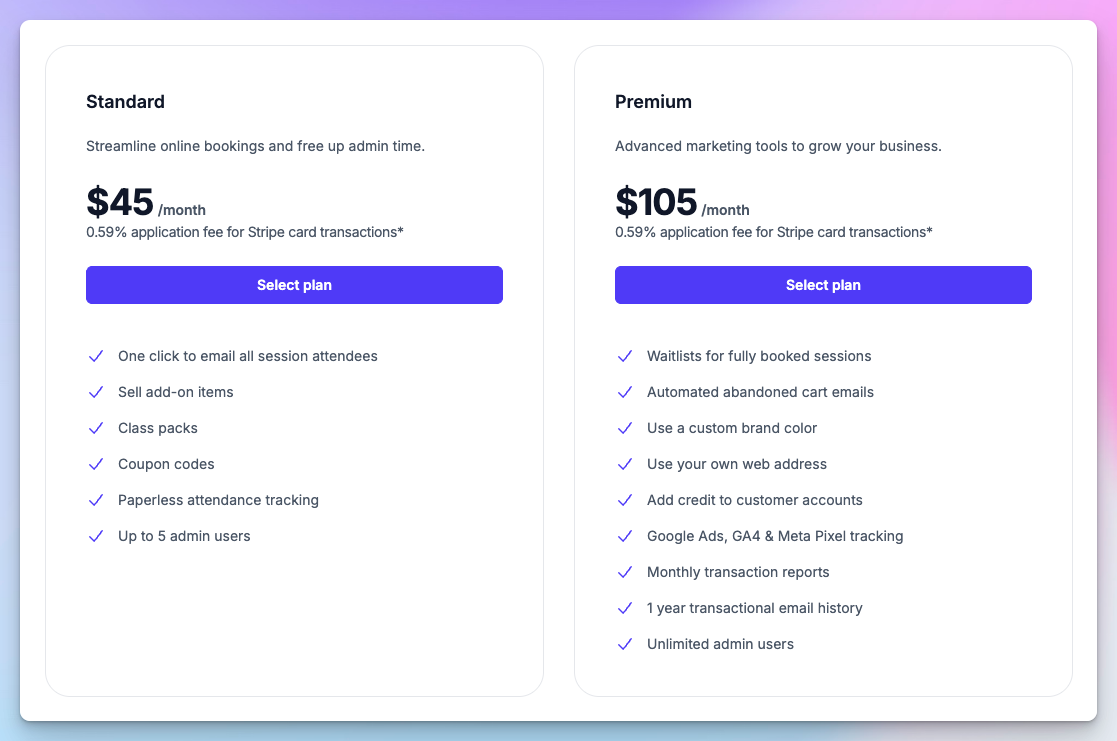
Pricing: Starts at $45/mo for unlimited bookings, with a 30-day free trial and no credit card required. Annual billing includes two months free. See Pembee's transparent pricing for the full breakdown. Pricing checked June 2026.
How it compares to Bookwhen: Pembee is built around the recurring pattern Bookwhen treats as an edge case. You get term enrollment, family accounts, branded mobile-first booking, and class-level reporting as standard, where Bookwhen needs workarounds for each. Bookwhen wins on having a genuine free tier and a longer track record; Pembee wins the moment your week is structured programs rather than ad-hoc events.
Pros:
- Purpose-built for activity providers: recurring scheduling, registers, waitlists, discounts, comms, payments, and waivers in one system.
- Reviewers highlight how easy it is to set up and how responsive support is. Pembee holds 4.9 ★ on Capterra.
- Modern, branded booking pages that work as well on a phone as on a laptop.
Cons:
- Smaller integrations marketplace than incumbents like Acuity or Mindbody.
- Newer to market, with fewer reviews (23 on Capterra) than the larger tools here.
- Membership and merchandise selling are still on the roadmap rather than live today.
Migration from Bookwhen: Export your attendee and contact data from Bookwhen and import it into Pembee. Our team can help map your programs and registration forms before you go live, so you switch between terms without disrupting bookings. For a feature-by-feature view, see how Pembee compares to Bookwhen in detail.
What users say: Pembee's Capterra reviews are 100% positive so far (4.9 ★, 23 reviews), with the recurring themes being ease of use for both staff and customers, and fast, helpful support. The honest caveat is sample size: it's a smaller review base than the legacy tools.
Verdict: If you run recurring classes, courses, or camps and want a modern, branded booking experience for adults and kids alike, Pembee is the strongest Bookwhen alternative on this list. Start with the Pembee overview if you want to see it in context.
#2. Class4Kids, best for UK kids' activity clubs
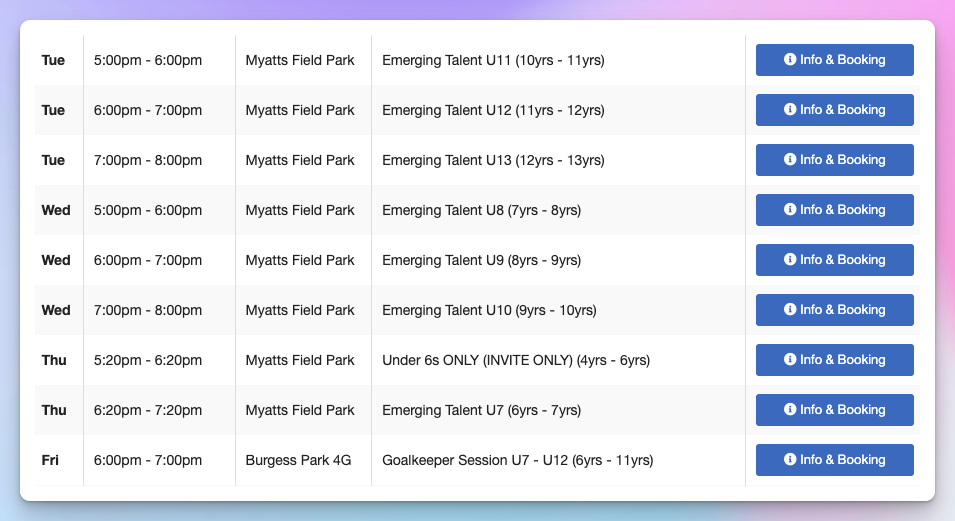
Class4Kids (now also branded ClassForKids) is a UK-focused booking platform built specifically for children's activity clubs: dance, gymnastics, football, swimming, and similar.
Best for: UK kids' clubs that want term-based block booking and parent accounts out of the box.
Key features:
- Term and block booking designed around the UK school calendar.
- Parent accounts holding multiple children, like Pembee (closes Bookwhen's family gap).
- Automatic term re-runs and registers that save weekly admin.
- Built-in payments and waiting lists.
Pricing: Around $50/mo, with no free trial or free version, and percentage-based booking fees in some cases. Pricing checked June 2026.
How it compares to Bookwhen: For a kids' club, Class4Kids beats Bookwhen on term logic and family accounts, which is exactly where Bookwhen struggles. Where it falls short of a broader tool is audience: it's built for UK children's activities, so adult-only or mixed adult-and-kids providers will find it narrow.
Pros:
- Strong term and register logic for children's clubs.
- Reviewers consistently praise responsive customer support (4.8 ★ on Capterra, 99 reviews).
- Time-saving automation like automatic term re-runs.
Cons:
- The most common complaint on Trustpilot is parent-side payment control: some parents report being unable to cancel a subscription or remove a card, leading to unwanted charges.
- Limited integrations (reviewers note no Zapier or CRM connection).
- UK-centric and weak for adult or mixed audiences.
Migration from Bookwhen: Export contacts and attendees from Bookwhen and import them; expect to rebuild your term structure inside Class4Kids, since the data models differ. No self-serve trial means you'll likely set up via their team.
What users say: 4.8 ★ on Capterra (99 reviews), with support and admin time savings as the standout praise. The payment-control friction shows up more on Trustpilot than Capterra, so weigh both.
Verdict: If you run a UK kids' activity club and nothing else, Class4Kids is a credible Bookwhen alternative. Mixed providers serving adults too will hit its limits.
#3. Acuity Scheduling, best for solo, appointment-based providers
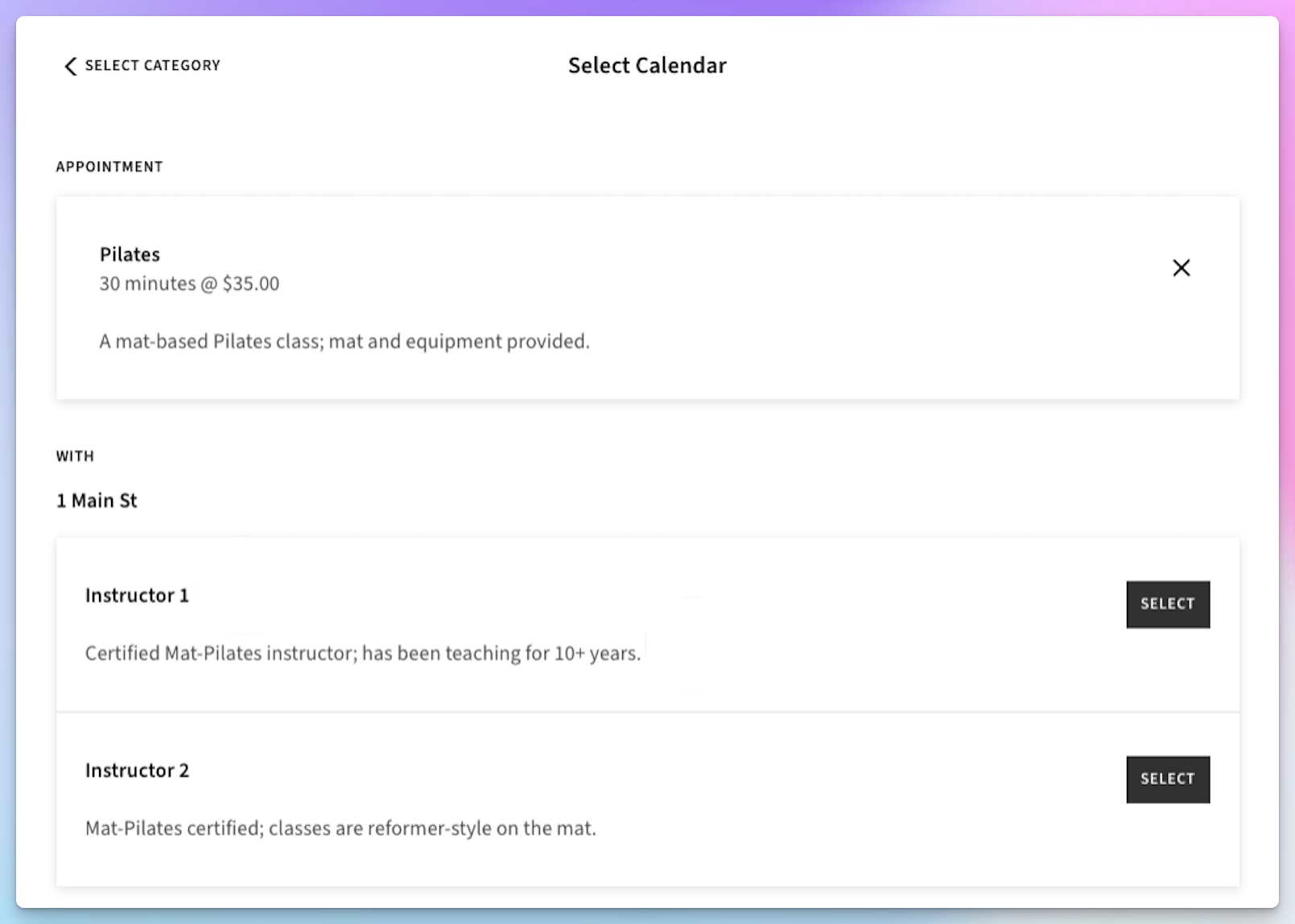
Acuity Scheduling (owned by Squarespace) is appointment scheduling software with a clean booking experience and a deep integrations marketplace.
Best for: Solo practitioners and appointment-first providers booking 1-on-1 sessions.
Key features:
- Polished, customizable appointment booking pages.
- Calendar sync, intake forms, and automated reminders.
- A large integrations marketplace.
- Package and gift-certificate selling.
Pricing: Starts at $20/mo (Starter), up to $61/mo (Premium), with a 7-day free trial and no permanent free tier. Pricing checked June 2026.
How it compares to Bookwhen: Acuity beats Bookwhen on the polish of the individual booking flow and on integrations. But it's appointment-first: there's no real class, term, or family logic, so for recurring group programs it's a sideways move from Bookwhen, not a fix.
Pros:
- Reviewers praise easy setup and a clean client-facing page (4.8 ★ on Capterra, 5,600+ reviews).
- Deep integrations marketplace.
- Strong for 1-on-1 scheduling.
Cons:
- No native class rosters, term enrollment, or family accounts.
- Reviewers note limited reporting depth and slower support at times.
- Pricing climbs as you add calendars and staff.
Migration from Bookwhen: Straightforward for contact data, but you'll be restructuring around appointments rather than classes, which may not match how you work.
What users say: 4.8 ★ on Capterra (5,600+ reviews); the recurring praise is ease of use, the recurring critique is reporting depth and multi-practitioner fit.
Verdict: A great tool if your business is genuinely 1-on-1 appointments. If you run group classes and terms, it won't close the gaps that drove you off Bookwhen.
#4. SimplyBook.me, best for a free or low-cost tier with more automation
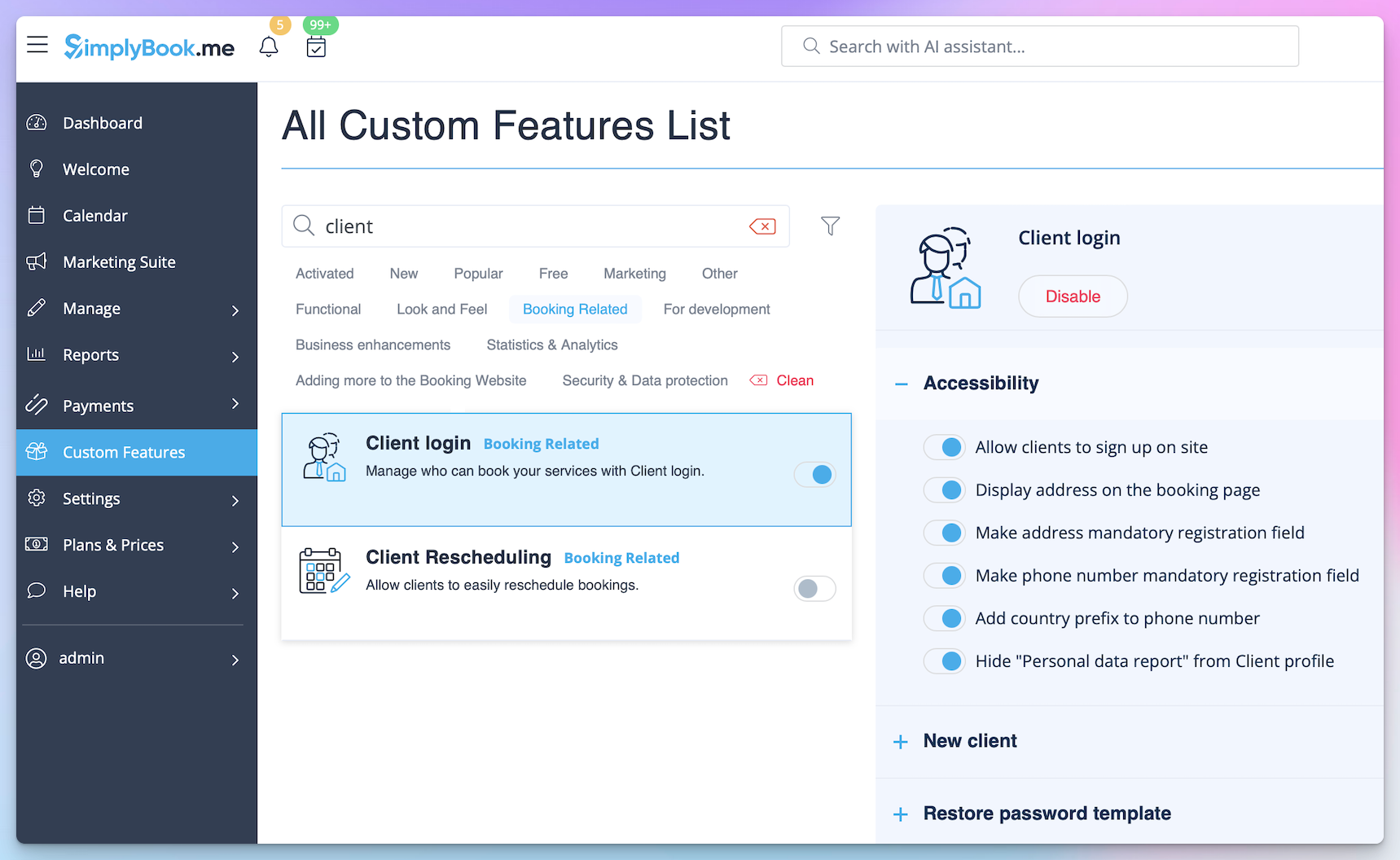
SimplyBook.me is a flexible scheduling platform with a free tier and a large catalog of add-on features, from memberships to QR-code passes.
Best for: Budget-conscious providers who want more automation than Bookwhen without paying much.
Key features:
- Free tier (50 bookings/mo) plus low-cost paid plans from $9.90/mo.
- Class scheduling, memberships, and packages.
- Marketing tools: coupons, gift cards, and referrals.
- Branded client app and admin app.
Pricing: Free tier, then $9.90/mo (Basic) up to $59.90/mo (Premium), with a 14-day trial of premium features. SMS credits and booking packs cost extra. Pricing checked June 2026.
How it compares to Bookwhen: SimplyBook.me matches Bookwhen's free-tier appeal and adds more automation and customization. It still isn't built around term enrollment or family accounts, though, so it closes the automation gap more than the recurring-program gap.
Pros:
- Highly customizable and feature-rich at an affordable price (4.6 ★ on Capterra, 1,265 reviews).
- Strong automation and marketing tools.
- Free tier and branded apps.
Cons:
- Reviewers report bugs, slowdowns, and a setup that can get config-heavy.
- Support is described as inconsistent.
- No first-class family or parent accounts.
Migration from Bookwhen: Export and import contacts is doable; budget time for feature configuration, since much of SimplyBook.me's power lives in optional modules you switch on.
What users say: 4.6 ★ on Capterra (1,265 reviews); praised for flexibility and value, criticized for occasional glitches and a learning curve.
Verdict: A solid pick if your priority is low cost plus automation. If you need clean term and family management, you'll be working around the same gaps you have today.
#5. Bookeo, best for tours, activities and group bookings
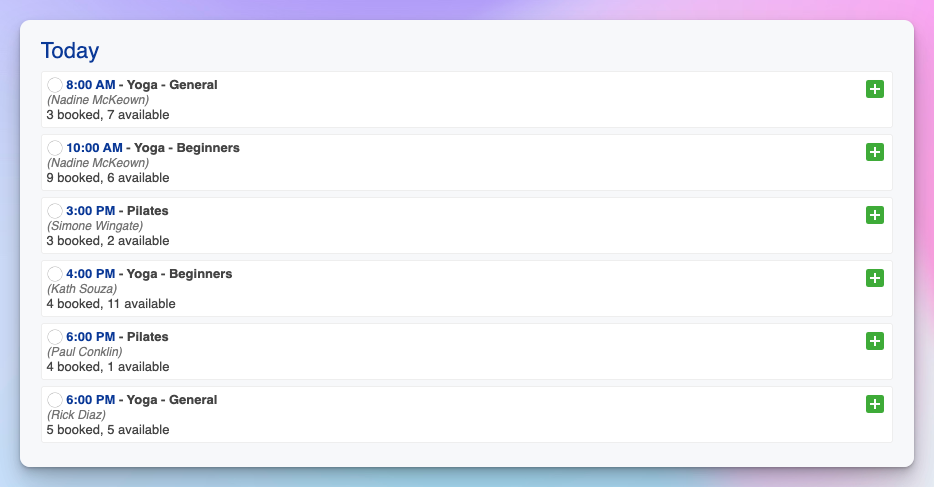
Bookeo offers separate modules for appointments, classes and courses, and tours and activities, with strong capacity and multi-language handling.
Best for: Providers running tours, activities, and group bookings who need solid capacity management.
Key features:
- Real-time availability and group capacity control.
- Printable registers and automated reminders.
- Vouchers, credits, and multi-language booking.
- Flat subscription with no per-booking fees.
Pricing: The Classes and Courses plan starts at $39.95/mo, with a 30-day free trial and no per-booking fees. Pricing checked June 2026.
How it compares to Bookwhen: Bookeo is stronger than Bookwhen on capacity and group logistics and has no per-booking fees. It's lighter on recurring-term enrollment, and reviewers find its interface dated, so it trades one set of compromises for another.
Pros:
- Configurable for varied group and capacity needs (4.3 ★ on Capterra, 103 reviews).
- Prompt support and steady feature updates.
- Flat pricing with no booking fees, plus multi-language support.
Cons:
- Reviewers describe a dated interface on both admin and customer sides.
- SMS costs extra and there's no phone support.
- Repeating events can behave unexpectedly when edited.
Migration from Bookwhen: Manageable contact import; you'll rebuild your schedule inside Bookeo's module structure.
What users say: 4.3 ★ on Capterra (103 reviews); configurability and support are the strengths, the interface is the recurring gripe.
Verdict: Worth a look if you run tours or activity-style group bookings. For school-term classes with family management, it's not a clean upgrade.
#6. Mindbody, best for multi-location fitness and wellness
Mindbody is a feature-deep platform for fitness and wellness businesses, with a consumer marketplace that helps clients discover studios.
Best for: Multi-location fitness and wellness studios that want a deep all-in-one platform and marketplace reach.
Key features:
- Class scheduling, memberships, and recurring billing.
- Consumer marketplace for discovery.
- Native client and admin mobile apps.
- Detailed business reporting.
Pricing: Starts around $99/mo per location and climbs to $499/mo or more, with payment processing and some commissions on top. No self-serve free trial; demo only. Pricing checked June 2026.
How it compares to Bookwhen: Mindbody has far more depth than Bookwhen and genuinely strong reporting. But it's the opposite of what most Bookwhen leavers want: pricier, heavier, and contract-based. Reviewers cite long lock-in contracts and billing disputes.
Pros:
- Powerful all-in-one scheduling and billing once you've learned it (4.0 ★ on Capterra, 2,991 reviews).
- Marketplace exposure to new clients.
- Strong reporting and a polished member app.
Cons:
- Reviewers report long contracts, billing and overcharging disputes, and slow support.
- Expensive and complex for small providers.
- Oriented to individual class and appointment booking, not term enrollment or family accounts.
Migration from Bookwhen: Heavier than the others here; expect an onboarding process and contract rather than a quick self-serve switch.
What users say: 4.0 ★ on Capterra (2,991 reviews); praised for breadth once mastered, criticized for cost, contracts, and support.
Verdict: The right tool for a growing multi-location studio that needs depth and marketplace reach. For most Bookwhen leavers it's more platform, cost, and commitment than they're looking for.
#7. Eventbrite, best for one-off ticketed events
Eventbrite is an events platform built for ticketing and discovery, from workshops to large public events.
Best for: Providers running one-off ticketed events who want reach and easy ticketing.
Key features:
- Free to publish events, with strong discovery.
- Straightforward ticketing and check-in.
- Built-in promotion and email tools.
- Handles events of any size.
Pricing: Free to publish; paid tickets carry a service fee (around 3.7% + $1.79 per ticket) plus payment processing. Pro plans ($15 to $100/mo) add email volume. Pricing checked June 2026.
How it compares to Bookwhen: Eventbrite beats Bookwhen on discovery and on one-off ticketing reach. It's even further from recurring classes than Bookwhen is, though, with no term enrollment or family logic, so for structured programs it's a step in the wrong direction.
Pros:
- Easy to create, list, and manage events (4.6 ★ on Capterra, 5,782 reviews).
- Strong discovery and promotion reach.
- No upfront cost to publish.
Cons:
- The single most-cited complaint is high per-ticket fees.
- No recurring class, term, or family management.
- Reporting is event-level, not program-level.
Migration from Bookwhen: Easy if you're only running one-off events; not relevant if your core is recurring classes.
What users say: 4.6 ★ on Capterra (5,782 reviews); loved for ease and reach, disliked for fees.
Verdict: Great for occasional one-off events and discovery. If you run terms and courses, it won't solve what sent you looking.
When Bookwhen is still the right choice
If you mostly run ad-hoc events or simple drop-in sessions, want a genuine free tier under 50 bookings a month, and don't need family accounts, term enrollment, or class-level reporting, Bookwhen is likely still your best fit, and switching would cost you more than it saves. It's quick to set up, reliable, and well supported, and reviewers rate it highly for good reason. The case to move only gets strong once recurring terms, parent and child management, and per-program reporting turn into daily friction. If that's not you yet, stay put.
Which Bookwhen alternative should you pick?
For class, course, and camp providers leaving Bookwhen, Pembee is the strongest fit: it turns terms into terms, gives parents one account for every child, and reports at the class and program level. Among the runners-up, Class4Kids suits UK kids' clubs, Acuity suits solo appointment providers, SimplyBook.me suits budget-focused automation, Bookeo suits tours and group activities, Mindbody suits multi-location fitness, and Eventbrite suits one-off ticketed events. And if your week is genuinely simple drop-in events, staying on Bookwhen is a perfectly reasonable call.
If you do run structured courses, after-school clubs, camp registration, or a dance studio, the fastest way to know if Pembee fits is to try it. Start a 30-day free trial, no credit card required.
FAQs
What is the best Bookwhen alternative for class-based businesses?
It depends on how you run your programs. For one-off events you might prefer Eventbrite, and for solo appointments Acuity Scheduling. But if you run ongoing classes, courses, after-school clubs, or camps for adults, kids, or both, Pembee is built specifically around that recurring model and is usually the better long-term fit.
Is Pembee only for kids' activities?
No. Pembee works for adult-only, kids-only, and mixed providers. Plenty of customers run primarily adult classes or workshops and value the modern interface, reporting, and repeat-enrollment tools just as much as children's activity providers do.
Can I switch from Bookwhen to Pembee without losing data?
Yes. You can export attendee and contact data from Bookwhen and import it into Pembee. The exact steps depend on your current setup, and the Pembee team can walk you through mapping your programs so the new system is ready before you go live.
How long does it take to move from Bookwhen to Pembee?
For smaller setups with a few programs, the switch often takes days once you've decided how to structure your schedule and forms. Larger multi-location organizations take longer to map every program and location, but the time usually pays off in smoother operations.
Does Pembee support different payment options?
Yes. Pembee handles secure online payments through Stripe and can be set up for full upfront payment or installment plans, plus Apple Pay, Google Pay, and payment links. You can also record offline methods like bank transfers while keeping everything in one place.
How do I decide whether to stay with Bookwhen or switch?
Ask whether you mainly sell tickets to occasional events or run structured terms and programs, whether you need a modern branded booking experience on mobile, how much repeat enrollment and self-service matter, and whether you need class-level reporting. If your answers lean toward structured programs and repeat attendees, a specialist Bookwhen alternative like Pembee is likely the stronger fit.