


A competitive dance season costs families anywhere from $3,000 to more than $10,000 per dancer, once you add tuition, team fees, costumes, entry fees and travel. Fundraising won't erase that bill. The right two or three fundraisers can pay for the team's costumes or every group entry fee, though, and that takes real pressure off parents.
The dance team fundraisers that raise the most for the effort are youth dance clinics, ticketed showcases, dance-a-thons and local business sponsorships. Product sales like cookie dough are the easiest to start, but they net less per dancer and per volunteer hour.
Below are 25 ideas grouped by type, a comparison table with our profit and effort estimates, a month-by-month season calendar, and the booster club rule that can cost a team its tax-exempt status.
Start with what your season costs
"We need to raise money" is a hard goal to rally families around. "We're covering every group entry fee this season" is easy. So before you pick a single fundraiser, put a number on the bill you want to pay.
Here's what a competitive season typically costs per dancer, using figures from that same parent budgeting guide, published by a Utah dance studio:
| Cost | Typical range per dancer |
|---|---|
| Group routine entry (per competition) | $50-$75 |
| Duet or trio entry (per competition) | $80-$120 |
| Solo entry (per competition) | $125-$200+ |
| Catalog costume | $75-$150 |
| Semi-custom costume | $150-$250 |
| Custom costume | $300-$700+ |
| Team warm-ups and gear | $150-$300 per season |
| Hotel for an out-of-state competition | $400-$700+ for two nights |
Now do the math for your team. Take a 16-dancer team with three group routines attending four regional competitions at about $60 per dancer per entry: 16 x 3 x 4 x $60 = $11,520. That's group entry fees alone, before a single costume or hotel room.
You probably won't raise $11,520 in one go, but you can pick a slice of it. "All group entries for the first two competitions" ($5,760) or "new costumes for the big number" are goals families understand and dancers can sell.
For a sense of scale, one fundraising platform's data on 30 dance fundraisers run between January 2025 and August 2026 found they raised an average of $6,430 each, or $254 per participant, with an average donation of $36. If you run a studio team, it also helps to be clear with families about what tuition covers and what's billed separately; our guide on how much to charge for dance classes breaks down the usual split.
Dance team fundraising ideas at a glance
Here's how the main fundraisers compare on cost, return and the hours your volunteers will put in. These are our estimates built from published price points and typical turnout, not guarantees, and your network size will move them a lot.
| Idea | Upfront cost | Typical net | Volunteer hours | Best for |
|---|---|---|---|---|
| Youth dance clinic | Low (T-shirts, venue) | $1,200-$5,500 | 15-25 | School and studio teams |
| Ticketed showcase | Venue, sound, lighting | $1,000-$5,000 | 40-60 | Teams with polished routines |
| Dance-a-thon | Near zero if sponsors cover the DJ | $2,000-$15,000 | 20-30 | Large teams and schools |
| Business sponsorships | None | $50-$500 per sponsor | 10-15 | Competition teams |
| Restaurant night | None | $100-$600 | 2-4 | A quick win in any month |
| Product sale | None with most vendors | $25-$110 per dancer | 8-12 | An easy add-on |
| Car wash | $50-$100 in supplies | $300-$1,000 | 25-35 | Summer |
| Good-luck grams | $30-$80 in supplies | $200-$800 | 6-10 | Competition season |
Divide net by volunteer hours and the pattern is clear. Clinics and sponsorships return the most per hour. Car washes return the least, which is worth knowing before you spend a hot Saturday holding a sign.
Event fundraisers that use your dancing
Your team's biggest asset is the thing it does every week. These events charge people for dancing, teaching or performing, so they raise more than selling someone else's product. They're ordered roughly by net per volunteer hour.
1. Host a youth dance clinic
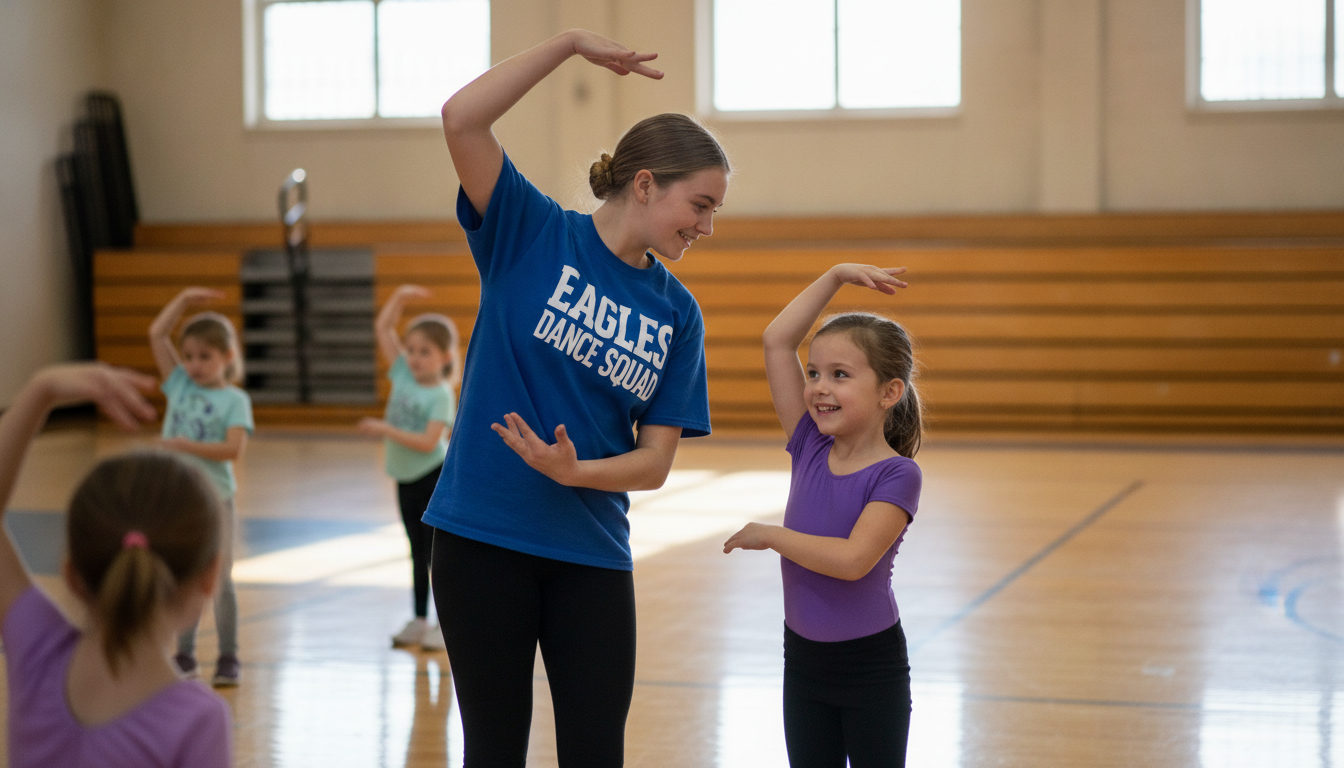
Your older dancers teach kids in kindergarten through eighth grade a short routine over a Saturday morning or two to three hours after school, and the kids perform it at a halftime game or your showcase. Charge $40-$65 with a T-shirt included.
The numbers stack up quickly. A clinic revenue table from a pom-pom supplier shows 40 kids at $40 netting $1,200 and 100 kids at $65 netting $5,500 after shirts and facility costs. Two Utah high school cheer programs reported $8,237 against a $5,000 goal (Provo High, charging $45) and $3,253 against a $2,000 goal (American Fork High). Clinics also recruit next year's team.
The hard part is admin. Before the day you need registrations, waivers, emergency contacts, allergy info, T-shirt sizes and payment for every child. Take sign-ups online with our dance studio software, set a capacity cap, offer a sibling discount code and open a class waitlist when you sell out. Our dance registration form template lists every field to collect.
2. Put on a ticketed showcase
Run a preview night before competition season with your team routines, a few solos and a parent dance for comic relief. Charge $10-$15 for adults and less for kids, then add extras: reserved front-row or cushioned VIP seats, concessions, a raffle and a bake sale at intermission.
Sell tickets online in advance so you know your headcount, can cap seating at the venue limit and aren't counting cash at the door. Our event booking system handles ticket types like adult, child and VIP in one checkout. For running order, themes and staging, see our dance recital ideas.
3. Run a dance-a-thon
Dancers collect pledges and then dance for a set time, usually two to three hours for middle and high schoolers. Open flat-donation pages online two weeks before, then add per-song bonus pledges on the day to keep momentum up.
One dance-a-thon organizer says most groups plan theirs in six to eight weeks and the typical student raises about $140. Ask a local business to sponsor the DJ and prizes so your costs stay near zero. Theme each hour by decade or style (disco, 2000s pop, line dancing) and give prizes for the top fundraiser and best costume.
4. Teach an adult "learn the routine" night
Invite parents, teachers, alumni and neighbors to learn a short combo from one of your competition routines. Charge $20-$30, keep it to 90 minutes and finish with a group performance that someone films for social media.
It's an easy sell because adults will pay to laugh at themselves for a good cause. It suits college and adult teams especially well, since your audience's friends are adults too. Add a cash bar only if your venue's license and your school or studio rules allow it.
5. Run a parent night out
Older dancers run a three-hour evening of dance games, pizza and a movie for younger kids so parents get a Friday night off. Charge $25-$35 per child, with a sibling discount.
Staff it with background-checked adult chaperones as well as dancers, keep a sensible staff-to-child ratio and confirm your venue or studio insurance covers the event (our guide to dance studio insurance covers what policies usually include). For the games themselves, pull from our list of dance games for kids.
6. Host a summer or holiday dance camp
A half-day camp during spring break, winter break or summer is a bigger lift than a clinic, but it raises more and you can repeat it every year. Charge $150-$250 per week for three-hour mornings, with a daily theme and a Friday performance for parents.
You'll need a lead adult instructor, a clear daily schedule and solid registration with medical info and pickup authorizations. Our camp registration software covers weekly bookings, payment plans and sibling discounts.
7. Throw a Halloween "Monster Mash" dance party
October suits a family dance party: costumes, a DJ, a "Thriller" lesson led by your dancers, a costume contest and a candy station. Charge $10 per child or $25 per family. It's cheap to run in a school gym or your studio, and it brings in younger families who may sign up for your clinic or classes later.
8. Book holiday performances and community gigs
Perform at tree lightings, holiday markets, senior living communities, school assemblies and halftime shows. Some hosts pay a small flat fee, and others let you collect donations. These gigs also introduce your team to the businesses you'll ask for sponsorship next season.
Competition-season fundraisers
These ideas only make sense for dance, and most fit around competitions and recitals you're already attending.
9. Sell good-luck grams and candy grams
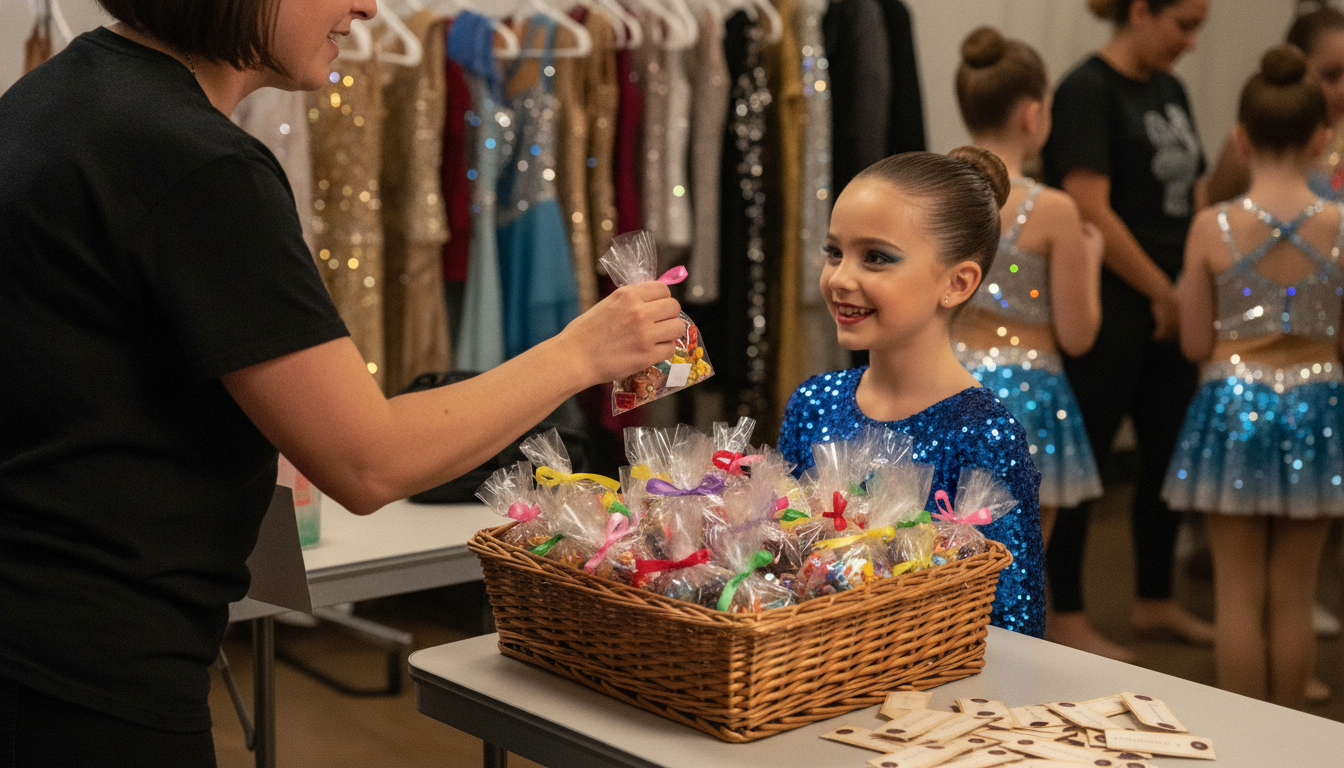
Parents, grandparents and friends buy a $2-$5 note with candy or a small charm, and the team delivers them to dancers backstage at a competition or recital. Take pre-orders online so volunteers aren't handling cash in a crowded dressing room, and bag and label everything the night before. Supplies run $30-$80, so almost everything else is profit.
10. Sell program and choreography shoutouts
Families and fans pay to put a message in your showcase or recital program. Try three tiers: $10 for a name, $25 for a name and short message, and $50 for a photo shoutout. Set a firm deadline two weeks before printing and collect messages through an online form so nobody has to retype handwritten notes.
11. Find sponsors for a costume or routine
Ask a local business to fund one specific number. A $500 sponsor covers roughly one group routine's entry fees at a competition for a mid-sized team, or a set of catalog costumes for a small group. Thank them on stage, on social media and on a banner at your showcase. A concrete ask like "sponsor our jazz number" is easier to say yes to than a general donation request.
12. Pre-sell recital flowers
Families buy flowers at recitals anyway, so sell them yourself. Take pre-orders for bouquets at $15-$25 and buy wholesale from a local florist or warehouse club. Buying wholesale and selling at bouquet prices leaves a healthy margin, and pre-orders mean you don't end up with unsold flowers.
13. Drop a spirit wear collection
Hoodies, jackets, tumblers and T-shirts with your team logo, in dancer, family and fan versions. Open a short order window in August or September so items arrive before the first competition, and price with a $5-$15 markup per item. Tumblers and hoodies in the $25-$40 range usually sell best.
14. Hold a used costume and dancewear swap
Every studio has bins of outgrown jazz shoes, leotards and retired costumes. Collect donations, price them low ($3-$20) and run the sale at registration night or your showcase. Families save money, the team keeps the profit and leftover costumes become props or recital extras.
Easy product and community fundraisers
These are the classic fundraisers. They raise less per hour than the events above, but they're simple to add to a season.
15. Product sales: cookie dough, popcorn, candles
Dancers take orders from family and friends over a two-week window, and the vendor ships in bulk for sorting. One vendor quotes up to 55% profit on $20-$22 tubs of cookie dough and 40% on popcorn, with no upfront cost. Check the margin and the minimum order before you sign up, and avoid running a product sale during competition weeks when families are already paying fees.
16. Restaurant spirit nights
Ask a local restaurant to donate a share of sales from your supporters on a set evening. Chipotle returns 25% of event sales, provided the fundraiser hits a $150 minimum, and many local restaurants offer 10-20%. It's the easiest fundraiser to put on the calendar: share the flyer, then show up and eat.
17. A car wash with a twist
Car washes are labor-heavy for what they raise, so make yours memorable. Dancers wear team shirts, a speaker plays music and the team performs a 60-second routine on the corner every half hour to wave in traffic. Ask a gas station or auto shop for space and water, and sell drinks too.
18. Raffle or silent auction
Run it at your showcase, where you already have a crowd. Ask local businesses for gift baskets and add dance-specific items: a private lesson with a teacher, a front-row recital seat, or a choreographed birthday party. Raffle laws vary by state, and some states require a license, so check your state's rules before you sell a single ticket.
19. An online crowdfunding page
Set up a page with one specific goal and a deadline, such as "$2,400 for new competition costumes by March 1." Add a short video of the team rehearsing and a progress bar. Keep the goal small enough to hit, and use it as a final push before nationals.
20. Bottle and can drive
If you're in one of the 10 states with a container deposit law, such as California, Michigan, New York or Oregon, families can drop off bags of bottles and cans for the team to redeem. It costs nothing and suits a Saturday after the holidays when everyone's recycling bins are full.
21. Dance photo day
Partner with a local photographer to offer individual and family portraits at the studio or school, with the team keeping an agreed share of each session fee. It works well in the fall, when families want holiday card photos.
22. Holiday gift-wrapping booth
Ask a local store or mall for a table during December weekends and wrap gifts for donations. Supplies are cheap, dancers can work in two-hour shifts and most shoppers will give a few dollars per gift.
Get local business sponsors
Sponsorships are easy to overlook. They take a little prep, raise a lot per hour and come back year after year if you treat sponsors well.
23. Sponsor tiers for local businesses
Offer three clear levels so businesses can pick:
- $100: logo on your website and a thank-you post on social media
- $250: logo on the back of the team's spirit wear
- $500: banner at the showcase, a program ad and a shoutout from the stage
The best prospects are businesses that want families as customers: orthodontists, pediatricians, physical therapists, chiropractors, real estate agents, local gyms and dancewear shops. Ask in August or September, before annual budgets are spent.
Bring a one-page sheet with a team photo, your competition schedule and your reach (number of families, social followers, showcase attendance). Ask every dancer to bring two or three leads from their own family's contacts. For more ways to build local partnerships, see our dance studio marketing strategies.

24. In-kind sponsors
Not every sponsor gives cash. A print shop can cover programs and banners, a DJ can play your dance-a-thon for free, a pizza place can feed parent night out and a hotel can donate a block of rooms near nationals. Every in-kind gift is money you don't have to raise, so ask for it alongside your cash tiers.
25. A sponsor-a-dancer wall
Create a wall at your studio or showcase (and a matching online page) where family friends and local businesses "sponsor a dancer" at $25, $50 or $100. Each dancer gets a star with their sponsors' names. The money goes into the team pot, not toward that dancer's bill, which matters for the reason in the section below.
A season fundraising calendar
Most teams do best with two to four major fundraisers per season plus one or two low-effort extras. Timing matters as much as the idea itself. Here's how to spread them out:
| Month | Fundraiser | Why then |
|---|---|---|
| August-September | Sponsor drive, spirit wear order | Business budgets are open; gear arrives before the first competition |
| October | Youth dance clinic, Halloween dance party | Fall sports give you a halftime slot for clinic kids to perform |
| November-December | Product sale, holiday performances, restaurant night, gift wrapping | Holiday gifting and seasonal gigs |
| January | Showcase preview, bottle drive | Routines are ready and families want to see them before competitions start |
| February-April | Good-luck grams, program shoutouts | You're at competitions every few weekends |
| April-May | Nationals crowdfunding push, dance-a-thon, recital flowers | Travel bills arrive and recital crowds are big |
| June-July | Summer camp, car wash | School's out and the weather helps |
Avoid stacking a product sale on top of the weeks when competition fees are due. Families who've just paid a $400 entry bill are slow to buy $22 cookie dough, and the asks start to feel relentless.
How to split the money fairly (and the booster club rule)
How you share fundraising money depends on who runs the team. Get this wrong and the consequences go well beyond a few upset parents. This isn't legal advice, so check your setup with an accountant or attorney.
School booster clubs that are 501(c)(3) charities. Money you raise has to benefit the team as a whole. Crediting each family's sales to their own dancer's bill, often called "individual fundraising accounts," can count as private benefit to those families.
The leading case is Capital Gymnastics Booster Club v. Commissioner, T.C. Memo. 2013-193, decided on August 26, 2013. Families earned points based on the fundraising profit they generated, and those points reduced what they owed for their own child's competition costs. The Tax Court upheld the IRS decision to revoke the club's tax-exempt status. Alston & Bird's summary of the case is a readable overview for board members.
Compliant ways to use the money instead:
- Spend it on team-wide costs: group entry fees, choreographer fees, bus rental, team props
- Reduce every dancer's fees by the same amount
- Offer need-based scholarships with a simple, confidential application
Studio-run competition teams. Most studios are for-profit businesses, not 501(c)(3)s. Donations to them aren't tax-deductible for supporters, and fundraising income is business income. Tell sponsors and families this plainly, and talk to your accountant about how to record it.
School teams. Check your district's rules on fundraiser approval, food sales, online payments and who can sign contracts with vendors before you book anything.
Fundraising isn't the only route, either. Grants and community funds can cover equipment and access costs; our guides to funding for gymnastics clubs and grants for afterschool programs cover sources that also suit dance programs.
Tips to raise more without burning out families
- Give every fundraiser one named goal. Show a progress thermometer at the studio and online, and update it weekly.
- Assign one parent lead per fundraiser. Rotate the role so the same five parents aren't running everything.
- Take sign-ups and payments online. Cash boxes and paper forms are where money goes missing and volunteer hours disappear. Announce each fundraiser by email (our guide to email marketing for kids activity providers has templates) and share rehearsal clips using our social media marketing tips.
- Give dancers a personal target tied to the team goal. "Sell 10 showcase tickets" or "find three sponsor leads" is clearer than "help out."
- Thank people publicly within a week. Post the result ("we covered group fees for all four competitions") and tag your sponsors.
- Track net and hours for every fundraiser. At the end of the season, drop the one with the worst return per hour and repeat the best one.
Key takeaways
- Start with a specific bill, like group entry fees or costumes, and set a dollar goal for it.
- Youth clinics, showcases, dance-a-thons and sponsorships raise the most per volunteer hour.
- Product sales and restaurant nights are easy extras, not your main fundraiser.
- Plan two to four major fundraisers per season and keep them away from fee deadlines.
- If a 501(c)(3) booster club runs your team, don't credit fundraising to individual dancers' bills.
- Collect registrations, tickets and payments online to save volunteer time and avoid cash problems.
Pick the bill first, then the fundraiser
The teams that fund their season well don't run more fundraisers. They pick the bill they want to pay, choose two or three fundraisers that fit their size and calendar, and run the clinic or showcase first because it raises the most per hour and recruits next year's dancers. If you're putting together your studio's budget for the year, our dance studio business plan shows how fundraising fits alongside tuition and recital income.
FAQs
What is the most profitable fundraiser for a dance team?
Youth dance clinics and ticketed showcases usually raise the most per volunteer hour, because you're charging for something only your team can offer. A clinic with 100 kids at $65 can net around $5,500. Dance-a-thons can raise the largest total if your team and school have a big network of supporters.
How much should each dancer fundraise?
Divide your team goal by the number of dancers to get a per-dancer target. As a benchmark, one platform's data on 30 dance fundraisers found participants raised $254 each on average. Keep targets realistic for families with less time or a smaller network, and make it a team effort rather than a personal quota.
How many fundraisers should a dance team do in a season?
Two to four major fundraisers, plus one or two low-effort extras like a restaurant night, works for most teams. More than that and families start ignoring the asks. Spread them across the season so none land in the same weeks as competition fee deadlines.
Can fundraising money go toward one dancer's fees?
Not through a 501(c)(3) booster club. Crediting individual families for their own sales can count as private benefit, and a gymnastics booster club lost its tax-exempt status over exactly this in 2013. Use the money for team-wide costs, equal fee reductions or need-based scholarships instead.
What are good fundraisers for a small dance team?
Restaurant nights, business sponsorships, good-luck grams and a clinic capped at around 30 kids all work with only a handful of dancers. They need little upfront money and few volunteers. A small team can also join forces with another team or class at the studio for a bigger event like a showcase.
What are good high school dance team fundraisers?
High school teams do well with youth clinics for elementary and middle schoolers, halftime performances, dance-a-thons and restaurant nights. You have access to a gym and a built-in audience at games. Check your district's fundraiser approval process and food sale rules before you schedule anything.
How do you get businesses to sponsor a dance team?
Offer clear tiers (for example, $100, $250 and $500) with specific benefits like logos on spirit wear or a banner at your showcase. Approach family-focused businesses such as orthodontists, pediatricians and real estate agents in August or September. Bring a one-page sheet with a team photo, schedule and reach.
How far ahead should we plan a dance fundraiser?
Give a clinic or showcase six to eight weeks to book a venue, open registration or ticket sales and promote it. A dance-a-thon needs a similar runway to collect pledges. Restaurant nights and good-luck grams can come together in two to three weeks.
Are donations to a dance team tax-deductible?
Only if the team is run by a registered 501(c)(3), such as a school booster club or nonprofit, and the donor receives nothing of equal value in return. Donations to a for-profit studio's competition team aren't tax-deductible. Be upfront with sponsors about which applies to you.