


Almost everyone writing about forest school training is selling a forest school course. That is why prices for what looks like the same Level 3 certificate run from under £500 to over £1,250, why nobody mentions that the first aid is extra, and why the cheapest courses in the results are the ones most likely to lock you out of the sector's own recognition scheme. Here is the whole market in one place, priced and sourced.
Here is the short version. To lead a forest school in the UK you need the Level 3 Certificate for Forest School Leaders, a regulated qualification of roughly 180 hours and 18 credits. Expect to pay between £897 and £1,260 for the course, plus around £150 for the 16-hour outdoor and paediatric first aid certificate, and budget up to 12 months from your first taught day to certification. Level 1 is an awareness course and Level 2 qualifies you to assist, not to lead.
What forest school training actually teaches
Forest school is an ethos, not a syllabus. Training is built around the six guiding principles (a long-term programme in a natural space, learner-led sessions, supported risk-taking, qualified practitioners, development of the whole learner and a community of learners) rather than a fixed set of lessons. That is why two courses at the same level can look completely different day to day and still award the same certificate.
What is consistent is the ground covered: child development and play theory, inclusive practice, ecology and woodland management, practical skills (fire lighting, tool use, knots, cordage and shelter building), risk-benefit assessment, and session planning and evaluation.
One operating rule matters more than the rest, and it is the reason the Level 3 exists. As Muddy Faces sets out in its qualifications hub, a forest school programme cannot run unless at least one qualified Level 3 Forest School Leader is present. Assistants, volunteers and Level 2 holders support that person. They do not replace them. Our guide to building a forest school curriculum covers what those sessions look like once you are qualified.
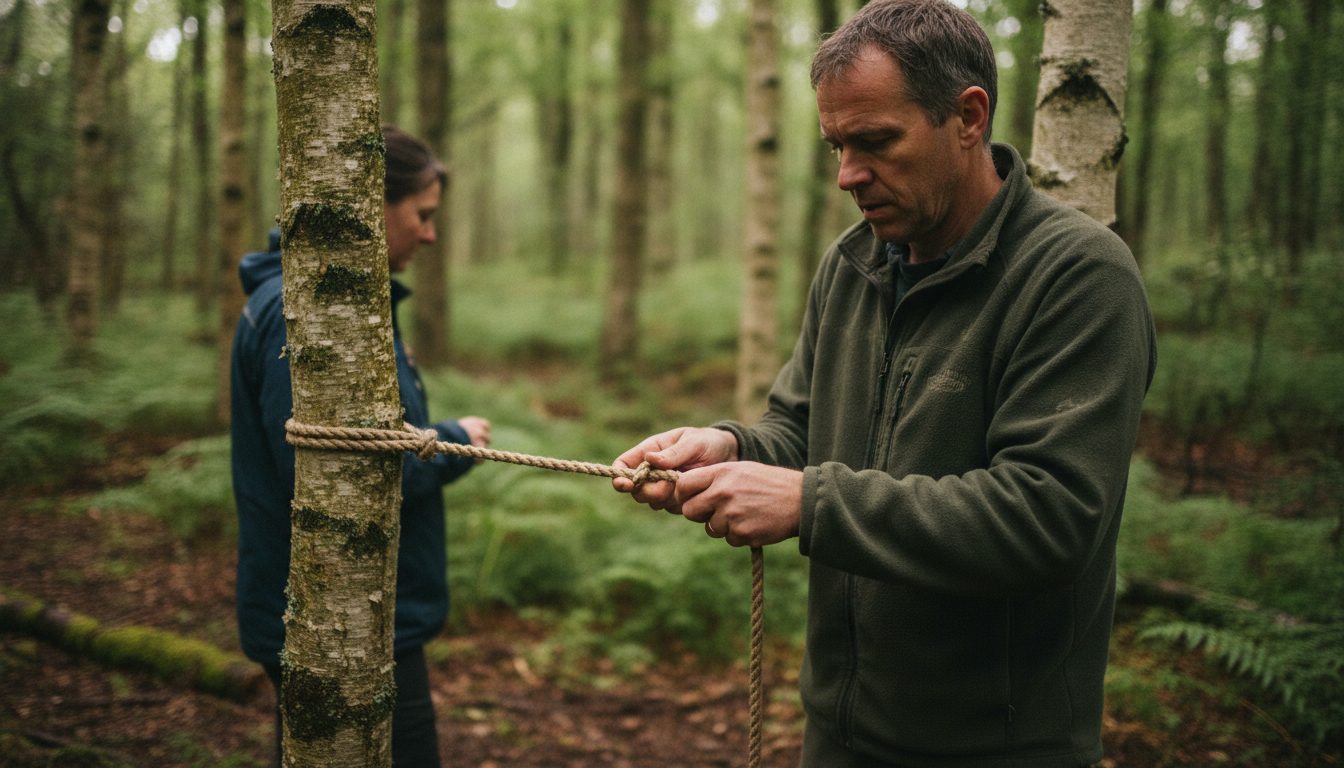
The three levels of forest school training
There are three levels in general use, plus a top-up route for people who already hold a Level 2. The hours and credits are fixed by the qualification. Almost nothing else is.
| Level | What it qualifies you to do | Total hours | Credits | Typical taught days | Typical UK price |
|---|---|---|---|---|---|
| Level 1 Award in Forest School Ethos and Principles | Understand the ethos and help out occasionally. Does not qualify you to assist or to lead. | 30 | 3 | 2 | £197 to £250 |
| Level 2 Award for Forest School Assistants | Assist a qualified Level 3 leader. Cannot run a programme. | 60 to 70 | 6 to 7 | 4 to 6 | £300 to £550 |
| Level 3 Certificate for Forest School Leaders | Set up and run your own programme and take responsibility for other staff. | About 180, of which roughly 96 are guided learning hours | 18 | 5 to 10 | £897 to £1,260 |
| Level 2 to 3 top-up | Upgrade an existing Level 2 to full leader status. | Varies | 18 | About 6 | Rarely published, ask providers |
Hours and credits come from the Forest School Association's qualifications page. Taught days and the top-up structure come from Forest School Training's levels page. Prices are from our own survey of provider websites, checked in 2026.
Level 1: the taster
Thirty hours, three credits, usually two days, open from age 16. It gives you the ethos, some background theory and a taste of the practical skills. The FSA is blunt about what it does not do: the Level 1 "does not equip you to run Forest School".
It is useful for a teaching assistant supporting sessions someone else leads, a volunteer parent, or a head teacher deciding whether to commit the school before funding a leader. It is the wrong purchase for anyone who already knows they want to lead, because you do not need Level 1 or Level 2 before starting a Level 3. Forest School Training says so in its FAQ, and every provider we surveyed accepts direct entry.
Level 2: the assistant
Roughly 60 to 70 hours, six or seven credits, four to six taught days, and an age floor of 18 or 19 depending on the provider. You will need an enhanced DBS. Assessment runs to about ten tasks plus assisting on three sessions led by a Level 3 leader and writing up what you observed, with up to seven months to complete.
There is a strategic point here that providers have no reason to raise. Level 2 costs £300 to £550, and moving up later means paying for a separate top-up course on top. If leading is the goal, going straight to Level 3 is almost always cheaper and faster. Level 2 earns its place if you want to work as an assistant, or if you are 19 and cannot lead until 21 anyway.
Level 3: the leader qualification
This is what the sector means when it says "qualified". Around 180 hours of total qualification time, 18 credits, and roughly 96 of those delivered as guided learning. You sit two named practical assessments, a Practical Skills Assessment covering tool use, fire, knots and shelters, and a Delivery Assessment where a tutor observes you running a session. Around those sits a portfolio and a run of at least six sessions with a real group.
What is not standardised is the teaching. For the same 18-credit qualification our survey found five taught days at The Outdoors Group, six plus two assessment days at Wiltshire Wildlife Trust, eight at Sussex Wildlife Trust, nine at Forest School Training and ten at Get Out More CIC. The 180 hours and the 18 credits do not move, so fewer taught days does not mean less work. It means more of the 180 hours lands on you, at home, unsupervised. Count the days before you compare the prices.
Beyond Level 3
To train other people you need a route of your own. The FSA expects trainers to hold their Level 3, at least two years of post-qualification leadership experience, a teaching qualification at Level 3 to 5 (an Award or Certificate in Education and Training, or the older PTLLS, CTLLS and DTLLS awards), a first aid certificate of at least 16 hours, and both professional indemnity and public liability cover. Level 4 outdoor learning and forest school trainer awards formalise this step.
What Level 3 forest school training costs in the UK
Nobody publishes a cross-provider price list, because every deep guide on this topic is written by a company selling one course. Here is ours: published 2026 fees from nine provider websites, running from Devon to Newcastle. Confirm the current figure before you book.
Four things fall out of that data.
The mid-point is close to £1,000 to £1,050. Anything far below that band deserves a question about delivery format. Anything far above should be buying you something specific: first aid, equipment or a longer taught block.
Compare like with like on first aid. Land & Leaf Collective's £1,160 includes forest school first aid. Scotswood Garden prices it separately: £950 for the course plus £140 for first aid, so £1,090 all in. Set those two side by side and the real gap is £70, not £210, and that is before travel to a second venue. Others push the cost off the page entirely: The Hive expects you to hold an outdoor first aid certificate before you enrol, and The Outdoors Group makes its own first aid course compulsory on top of the fee.
Watch the VAT. The Outdoors Group publishes £1,050 plus VAT. Grossed up that is roughly £1,260, the highest fee here, even though the headline number looks mid-range.
Surcharges and instalments are both common. Sussex Wildlife Trust adds £105 for out-of-county trainees. The Therapy Adventure spreads its fee at £75 a month, and several providers split payment across three instalments.
Where these providers publish an awarding organisation, it is ITC First at Get Out More CIC, Scotswood Garden and The Outdoors Group, AIM Qualifications at The Hive and Sussex Wildlife Trust, and NOCN at Wiltshire Wildlife Trust, all FSA-supported bodies covered in the four-nations section below.
At the other levels, Get Out More CIC charges £500 for its Level 2 and Wiltshire Wildlife Trust £550. Level 1 starts from around £197.
The true cost of qualifying
The course fee is roughly two thirds of what you will spend in your first year. Here is the rest of it.
| Item | Typical UK cost | Notes |
|---|---|---|
| Level 3 course | £897 to £1,260 | Check whether VAT and first aid are included |
| 16-hour outdoor and paediatric first aid | £140 to £200 | Aligned to Institute for Outdoor Learning outdoor first aid guidance |
| Enhanced DBS check | £49.50 government fee, £60 to £90 through an umbrella body | No government fee for volunteer roles |
| Safety boots with steel or kevlar toe | £40 to £80 | Mandatory kit on some Level 3 courses |
| FSA individual membership | £40 a year | £5 off for paying by recurring subscription |
| Public liability insurance | £168 a year through the FSA's Birnbeck scheme, less a £10 member discount, or around £192 through the Institute for Outdoor Learning plus about £30 membership | Required in practice by landowners, schools and the FSA scheme |
| Year one total | Roughly £1,325 to £1,890 | Before travel, tools and kit |
One correction while you are budgeting, because it is repeated widely on course pages. Public liability insurance is not a statutory requirement for a sole trader running forest school sessions. What the law compels is employers' liability cover, minimum £5m, from the moment you employ anyone, under the Employers' Liability (Compulsory Insurance) Act 1969. Public liability is contractual: landowners, schools, nurseries and the FSA Recognised Provider scheme all ask for it, so you will carry it either way. Just know which obligation is which.
Who can take the Level 3
Entry requirements are broadly consistent across providers, though the age floor moves a little.
- Age. 21 or over to lead a programme. Some providers take trainees from 19, but you cannot take charge until 21.
- A prior qualification, or the experience to replace it. Either a Level 2 or above in teaching, early years, youth work or playwork, or at least two years leading groups of children.
- An enhanced DBS check (Disclosure Scotland in Scotland). Apply early, because turnaround can run to several weeks.
- A group and a site. Access to a real group, usually 6 to 12 children, and somewhere to run a minimum of six sessions of around two hours. No provider will sign you off without it.
- First aid. A 16-hour outdoor and paediatric certificate, or a three-day First Aid at Work certificate, held by the end of the course.
- No prior forest school qualification. Level 1 and Level 2 are not prerequisites.
The group and site requirement is the one that catches career changers. If you are leaving an office job with no current setting, sort it before you pay a deposit. A local primary school, a nursery, a Scout or Guide group, a community woodland or an after-school club will often host a trainee run in exchange for free sessions. Get that agreement in writing, with dates, before day one.
What the course involves, and where people get stuck
Taught days usually come in blocks. A common pattern is two weeks of teaching set five to six months apart, so you can run your pilot sessions in the gap and bring the evidence back. Others spread days across a year or run monthly weekends.
The portfolio is the real workload. Get Out More CIC publishes the clearest breakdown we found: 20 assessment tasks, 17 written assignments of roughly 1,000 words each feeding into a Forest School Handbook, six sessions planned and delivered, and a three-month deadline to submit after the taught element ends. Forest School Training requires 100% of coursework completed to standard, so there is no partial pass. Most providers allow up to 12 months from your start date, with fast-track routes running five to seven months.
Now the part no provider will tell you. The taught days are the easy bit. Roughly 84 of the 180 hours are yours to complete alone, and the stall point is almost always the written portfolio, usually because the trainee booked before securing a group and a site and then ran out of runway to deliver six sessions.
Three things fix that. Line up your six sessions before day one. Write each assignment in the week you cover the topic. Treat the three-month deadline as real, because resubmission and re-registration fees are not cheap. Our list of forest school activity ideas is a good starting point for that pilot run.
The online course trap
Search for forest school training and you will find Level 3 courses at a fraction of the face-to-face price. Online-heavy routes advertise from around £487, and online-only Level 3s sell at about £997. The certificates are usually real and often Ofqual-regulated. The problem is what happens next.
The FSA sets out three facts that no cheap online course page mentions. Two come from its recognition policy for forest school qualifications, the third from its qualifications page linked earlier:
- Level 3 forest school courses must deliver a minimum of 60% of their guided learning hours face to face, rising to 80% for the revised RQF qualifications.
- In an FSA member survey, 97% of respondents opposed purely online training.
- Since 1 February 2018, Level 3 qualifications gained on courses delivered purely online have not been accepted for the FSA Recognised Forest School Provider scheme.
In practice an online-only Level 3 can leave you holding a valid certificate that will not get you onto the recognition scheme, at exactly the point where schools, nurseries, landowners and insurers are increasingly asking for it. Some online routes also assess practical skills by video and photo submission and expect you to find your own placement, which puts the hardest logistical part of the qualification entirely on you.
The rule to take away is simple. Ask any provider what percentage of guided learning hours are delivered face to face, and get the answer in writing before you pay a deposit. A confident answer takes ten seconds. A vague one tells you what you need to know.
England, Wales, Scotland and Northern Ireland
The FSA supports eight awarding organisations, seven of which have obtained its endorsement. Which one certificates you depends largely on where you train.
| Nation | Framework | Awarding organisations you will see |
|---|---|---|
| England | RQF, regulated by Ofqual | NOCN, Open College Network West Midlands, AIM Qualifications, ITC First, LASER Awards, Skills and Education Group Awards, Qualifications Network UK |
| Wales | Qualifications Wales framework | Agored Cymru, Level 3 Certificate in Leading Forest School |
| Scotland | SCQF | Newbattle Abbey College |
| Northern Ireland | No separate forest school awarding organisation identified | Practitioners typically take an England-awarded qualification |
Two practical notes. Welsh trainees should check they are enrolling on the Agored Cymru Leading Forest School qualification and not the separate Agored Outdoor Learning suite, which the FSA has not been able to recognise for the trainer route. And we could not find a Northern Ireland-specific awarding organisation, which is worth saying plainly rather than glossing over: NI practitioners generally train on an England-awarded course.
Qualifications are portable across the four nations in everyday practice, but if you have a specific employer or funding scheme in mind, confirm before you book. You can check whether a qualification is genuinely regulated on the Ofqual register.
Will the training pay for itself?
Training providers avoid earnings talk, so nobody runs this sum. We will. The figures below come from advertised freelance rates, job listings and published session prices we checked in 2026, not from a survey with a sample size, so treat them as a working range rather than a benchmark.
The most useful figure is the freelance day rate, because most qualified leaders work sessionally and to term times. A Level 3 leader typically commands £150 to £250 a day. If you run your own sessions instead, specialist private providers charge £25 to £45 per child for a two-hour session with 5 to 16-year-olds, community sessions run £5 to £25, holiday programmes £150 to £350 a week, and forest school nursery full days £80 to £150. Add 30% to 50% in London and the South East, and take 20% to 30% off in northern England and Scotland.
Employed roles are harder to pin down. Entry-level positions sit around £19,000 with typical figures nearer £21,000, while aggregator averages run far higher because they mix full-time outdoor education roles into the same job title. Term-time-only and part-time contracts dominate the sector, so treat any single average with suspicion.
The break-even maths is straightforward:
At a year-one cost of around £1,500 and a freelance day rate of £175, you clear the cost in roughly nine delivery days. Running your own sessions instead, at £30 per child for a two-hour session with ten children, that is £300 gross per session and about five to six sessions before the training has paid for itself, before venue hire, insurance and travel.
Funding can shorten that further. Learning through Landscapes runs Local School Nature Grants for schools and early years settings in England, Scotland and Wales, bundling a staff outdoor learning training course with a Climate Curriculum Kit and around £500 of equipment. Several independent trainers offer instalment plans, and a few hold half-price places for low-income applicants. They will not advertise those. Ask.
If you plan to charge parents directly, read up on Tax-Free Childcare payments before you set a session price, because eligibility changes what families actually pay you.
Ten questions to ask before you book
Adapted from the FSA's guidance on choosing a trainer and extended with the commercial checks it leaves out.
- What percentage of guided learning hours are delivered face to face? A good answer is a number, at or above 60%, offered without hesitation.
- Which awarding organisation certificates the qualification, and is it FSA-recognised? They should name it immediately. Vagueness here is the biggest red flag on the list.
- Is the qualification on the Ofqual register? Some courses use "Level 3" descriptively rather than as a regulated qualification level.
- Are you an FSA Endorsed Trainer? Endorsement means passing a three-stage quality assurance process. Plenty of good trainers are not endorsed, but if they are, that is one fewer thing to check.
- Is first aid included, and does it cover outdoor and paediatric content? A 16-hour outdoor certificate that skips paediatric content will not satisfy most settings.
- Is the price inclusive of VAT? A £1,050 fee plus VAT is a £1,260 fee.
- How many taught days do I get, and how much of the 180 hours am I doing alone? Compare days, not just price.
- What is the portfolio deadline, and what does a resubmission cost? Ask whether re-registration with the awarding body carries its own fee.
- Do I need to supply my own group and site, and will you help me find one? Some providers help with placements. Most do not.
- Are you connected to a local forest school network? Ongoing CPD after you qualify is worth more than the certificate on its own.
One more thing to weigh: format. Intensive weeks, monthly weekends and days spread across a year all exist, and they suit very different lives. Pick the one that fits your job and your childcare, not the one that saves £80.

What your Level 3 does not cover
Passing the Level 3 qualifies you to lead sessions. It does not make you a business, and the gap surprises people. Still on your list afterwards:
- Insurance. Public liability from around £160 a year, plus employers' liability the moment you take on staff.
- Land and permission. A written agreement with the landowner, plus a permit on council, Wildlife Trust or Forestry England land.
- Ofsted registration. Required in England if you care for children under the age of eight for more than two hours a day. It is also what unlocks Tax-Free Childcare payments.
- Safeguarding. A named Designated Safeguarding Lead and written policies. Not part of the Level 3 syllabus.
- Tool and site tickets. Chainsaw use and tree work are separate competency qualifications.
- The admin. Bookings, waiting lists, payments, consent and medical forms, registers, and the wet-weather message that has to reach 30 parents at 7am.
Our full guide on how to start a forest school covers the first five. The last is where we come in: our forest school booking software takes registrations, payments, consent forms and attendance off your kitchen table, and our pricing is built for small providers running a handful of sessions a week.
Key takeaways
- The Level 3 Certificate for Forest School Leaders is the qualification that matters. Level 1 is awareness, Level 2 is assisting, and you need neither before starting Level 3.
- Level 3 courses cost £897 to £1,260, with the mid-point close to £1,000. Check for VAT and first aid before comparing.
- Budget £1,325 to £1,890 for year one, not the headline fee. First aid, DBS, boots, membership and insurance all sit on top.
- Ask what percentage of guided learning hours are face to face. An online-only Level 3 can shut you out of FSA Recognised Provider status.
- Secure your group and your site before day one. The portfolio, not the taught days, is where trainees stall.
- At a £175 day rate, roughly nine delivery days clears the cost of qualifying.
FAQs
Do I need a qualification to run a forest school in the UK?
There is no single law that says "you must hold a Level 3". In practice you do need one, because a forest school programme cannot run without a qualified Level 3 leader present, and schools, nurseries, landowners and insurers all ask for the certificate.
How much does forest school training cost?
Level 1 starts from around £197, Level 2 runs £300 to £550, and the Level 3 costs £897 to £1,260 depending on the provider and whether VAT and first aid are included. Add first aid, DBS, boots, membership and insurance and a realistic year-one figure is £1,325 to £1,890.
How long does Level 3 forest school training take?
Around 180 hours of learning time, delivered as five to ten taught days plus independent study and a portfolio. Most providers allow 12 months from your start date, with a three-month submission deadline after the taught element. Fast-track routes complete in five to seven months.
Do I need Level 1 and Level 2 before Level 3?
No. Every provider we surveyed accepts direct entry to Level 3 if you meet the entry requirements. Level 2 is worth taking only if you want to work as an assistant, or if you are under 21 and cannot lead yet.
Can I do forest school training online?
Partly, not entirely. The FSA requires at least 60% of guided learning hours face to face, rising to 80% for revised RQF qualifications, and has not accepted purely online Level 3 qualifications for its Recognised Provider scheme since 1 February 2018.
What first aid qualification do forest school leaders need?
A 16-hour outdoor first aid certificate that includes paediatric content, or a three-day First Aid at Work certificate. Expect to pay £140 to £200 and to hold it by the end of your Level 3. A few providers make their own first aid course compulsory even if you already hold one.
How old do you have to be to be a forest school leader?
You must be 21 to take charge of a programme. Some providers accept Level 3 trainees from 19, and Level 2 is open from 18 or 19, but leadership responsibility starts at 21. Level 1 is open from 16.
What can I earn as a forest school leader in the UK?
Freelance leaders typically charge £150 to £250 a day. Running your own sessions, private providers charge £25 to £45 per child for two hours, community sessions £5 to £25, and holiday programmes £150 to £350 a week. Employed salaries commonly sit near £21,000.
Which awarding body should my forest school qualification come from?
The FSA supports eight: NOCN, AIM Qualifications, ITC First, LASER Awards, Skills and Education Group Awards, Qualifications Network UK, Agored Cymru in Wales and Newbattle Abbey College in Scotland. What matters more is that it is on the Ofqual register (or its national equivalent) and FSA-recognised.
Is forest school training worth it?
For anyone who wants to lead their own programme, yes, because the Level 3 is the gate. At a £1,500 all-in cost and a £175 day rate it pays back in roughly nine delivery days. The caveat is that the certificate alone does not create the work. Insurance, land permission, safeguarding and a way to take bookings all come after it. :::cta heading: Booking software for your first forest school programme body: Set your terms up once and they rebook themselves every season, with waiting lists that fill cancelled places and a wet-weather message that reaches every parent at 7am. buttonLabel: Find out more buttonUrl: /solutions/forest-school-booking-software screenshot: forest-school :::