
Mindbody vs Vagaro: Pricing, Fees, Reviews & a Clear Winner


Mindbody and Vagaro will both run your timetable and take your payments. What separates them is who each one was built for, and what it costs you to find that out.
We compared them on class and course tools, appointments and retail, ease of use, support, payment fees and total cost, using current pricing and what their own users say in reviews.
Below is a straight answer on Mindbody vs Vagaro, plus a third option if you read both feature lists thinking "that is not quite my business."
The quick verdict
- Choose Mindbody if courses and enrollments are your core product, you need rooms, resources or reserved spots, or the Mindbody app brings you paying clients, and your revenue can absorb $79 per location with no trial first.
- Choose Vagaro if you are price-sensitive, appointment-led or running a straightforward weekly timetable, want to test before you pay, and want to leave without a contract fight. Budget for the add-ons you need.
- Consider a third option if a parent enrolls a child for a whole term, often across venues you hire by the hour. Neither tool is priced or shaped for that.
The rest of this post shows the evidence behind each call.
Mindbody vs Vagaro at a glance
| Software |
Mindbody
★★★★☆ 4.0 (2,993)
|
Vagaro
★★★★★ 4.7 (3,647)
|
Pembee
Best for activity providers
★★★★★ 4.9 (23)
|
|---|---|---|---|
| Best for | Multi-location wellness and fitness businesses selling classes and enrollments | Salons, spas and small appointment-led studios watching the budget | Activity providers running recurring classes, courses and camps |
| Starting price | $79/moper location | $23.99/moper bookable calendar | $45/moflat, up to 5 admin users |
| Free trial | ✗ Nodemo only | ✓ 30 days | 30-day trial |
| Payment processing | Not published | 2.2%-2.75%by business size | 0.59%plus Stripe fees |
| Contract | Not published | ✓ None | ✓ None |
| Courses and term enrollments | ✓ Yes | Partialbuilt as workshops | ✓ Yes |
| Rooms, resources and reserved spots | ✓ YesAccelerate tier and up | Partialno reserved spots | ✗ No |
| Family accounts with per-child details | Partialno dependent logins | Partialpermissions list | ✓ Yes |
| Consumer marketplace | ✓ Yes3M+ monthly shoppers | ✓ Yessmaller reach | ✗ No |
| POS and retail inventory | PartialPOS, not retail-led | ✓ Yes | ✗ No |
Ratings from Capterra, checked August 2026. Pricing from each vendor's official US pricing page, checked August 10, 2026. Partial means the capability exists but is limited or needs a workaround: Vagaro builds multi-week courses out of workshops, and both tools' family features stop short of a full per-child record.
What is Mindbody?
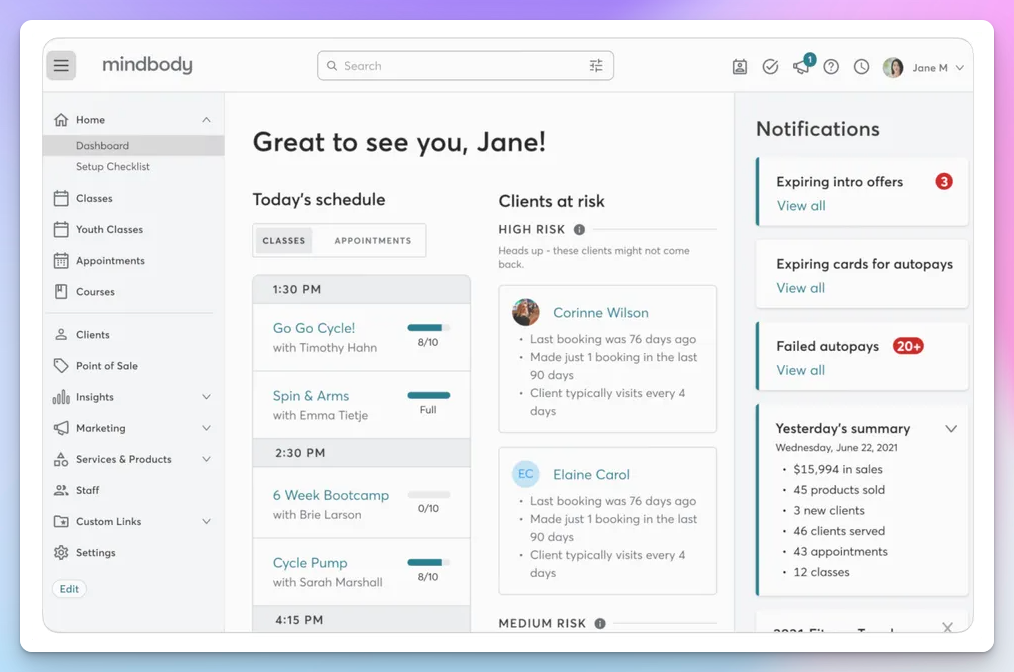
Mindbody is business management software for wellness and fitness, sold on the back of a consumer marketplace. Its own pricing page leads with access to more than 3 million monthly shoppers, which tells you the pitch: you are not only buying scheduling, you are buying distribution. The product is built for businesses that run classes, courses and enrollments, manage rooms and resources, and often operate more than one site.
Where Mindbody is strong:
- Group program depth. Enrollments and courses, room and resource management, client Pick-a-Spot for reserved places in a class, and promo codes are named features from the Accelerate tier up. This is the deeper of the two class toolkits.
- Reporting and analytics. The most consistent theme in 4 and 5 star Capterra reviews, with one operator calling the report suite second to none. Analytics is also the headline upgrade on both paid tiers above Starter.
- Marketplace reach. The Mindbody app is a genuine acquisition channel with real consumer demand behind it, and no boutique competitor matches its audience.
- All-in-one breadth for a mature wellness business. Positive reviewers describe running the whole operation from it: point of sale, payments, memberships, staff, marketing, and more than 100 third-party integrations.
Where users struggle:
- Cost escalation is the dominant complaint theme. The Better Business Bureau records 55 billing complaints out of 103 total in the last three years, covering unexpected charges, price rises after promotional periods, and disputed early-termination fees. One long-time Capterra reviewer reports a subscription that climbed past $1,000 CAD a month.
- Contract friction. The second BBB category is sales and advertising issues (17 complaints), mostly about contract terms, hidden fees and renewal conditions customers say were not clearly disclosed. Mindbody's own FAQ says cancellation depends on your plan and billing terms, with no published month-to-month guarantee.
- Support quality. Capterra's customer service sub-rating is 3.8 out of 5. One founder writes that support is nearly impossible to reach and that AI responses arrive instead of a person. BBB logs 13 customer service complaints covering missed support appointments and delayed replies.
- Day-to-day complexity. Ease of use scores 3.9 on Capterra. A general manager describes the scheduling interface as unnecessarily complex for daily use, and an owner says the mobile app lacks essential features, forcing them back to a laptop for simple tasks.
Its rating profile is polarized rather than mediocre: roughly 1,400 five-star reviews sit alongside about 248 one-star reviews, so around 8.6% of all reviews are one star.
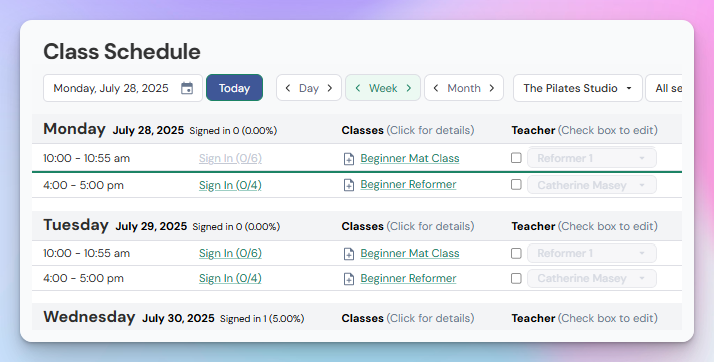
Pricing: Starter is $79 per month per location, with unlimited users included. Accelerate and Ultimate are quote only, so both require a sales call. There is no free trial and no free version, only a demo. Contract terms are not published. Card processing rates are not published either; the pricing page says only that there are no monthly fees and no minimums. Marketplace bookings carry a commission of 20% of a new client's first eligible purchase excluding tax, capped at $30 and charged once per client, and that fee does not apply to your own branded app or website booking. Pricing checked August 2026.
If Mindbody is the tool you are trying to move away from rather than move to, our Mindbody alternatives guide covers the wider field, and we have also put it head to head with a newer class platform in Momence vs Mindbody.
What is Vagaro?
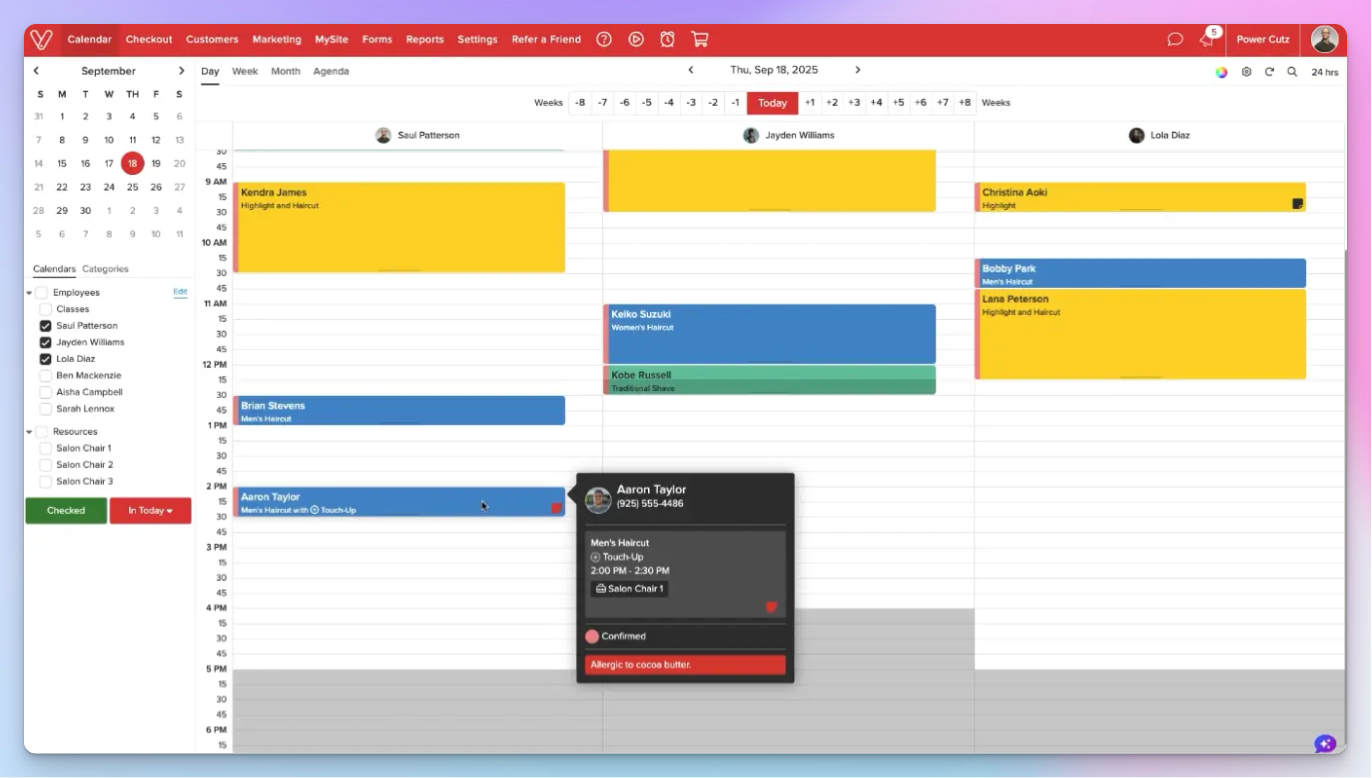
Vagaro is salon and spa software first, fitness second: an all-in-one, low-priced, modular platform aimed at solo practitioners and small multi-staff businesses. The billing unit tells the story, because you pay per bookable calendar, so a one-person business genuinely pays a one-person price. Point of sale, retail, payroll, a website builder, video streaming and its own consumer marketplace all sit on top, almost all sold a la carte.
Where Vagaro is strong:
- Price and value. The most-cited positive theme in Capterra reviews, with reviewers naming the flexible a la carte structure specifically. The entry price is roughly a third of Mindbody's.
- Ease of use. Capterra scores ease of use at 4.6 out of 5 against Mindbody's 3.9. Reviewers describe a clean interface and a booking flow that is straightforward for clients.
- Support. The customer service sub-rating is 4.6 out of 5 against Mindbody's 3.8, and the live chat gets named repeatedly, with representatives described as knowledgeable.
- Breadth of the catalog. Point of sale and retail, inventory, payroll, the MySite website builder, forms, a check-in app, QuickBooks sync, email and text marketing, a branded app, video streaming and the Vagaro Marketplace.
Vagaro handles classes properly, and it is worth stating plainly because the tool often gets written off as appointment-only. Its documentation covers classes (one session), workshops (a series where adding an attendee registers them for every session), recurring class scheduling with bulk edits across a series, and waitlists in the base plan. Family and Friends lets a parent add children of any age with per-person permissions for who can view, book and pay, and memberships and packages can be shared across a family. What it lacks against Mindbody is depth: no reserved-spot equivalent, no room and resource layer at Mindbody's level, and term-style enrollment has to be assembled out of workshops.
Where users struggle:
- Add-on creep is the dominant complaint theme. The headline price is not the price. Reviewers say the add-ons increase the cost exponentially and that Vagaro charges extra for almost every feature, with one spa owner saying they up charge for everything.
- Payment processing and hardware reliability. This is the top BBB theme, with 34 complaints in three years covering duplicate or phantom charges, transactions marked successful without being captured, and connectivity problems with PayPro and PayPro Mini card readers that force manual entry at checkout.
- Checkout friction and forced client accounts. Capterra reviewers report that checkout takes far longer than competitors because of the click count, and several want guests to be able to book without creating an account, noting it may deter clients.
- Billing after cancellation. BBB logs continued charges after account closure, unsubscribe failures, and troubleshooting that stretched past 45 days with representatives going quiet mid-dispute. In fairness, Vagaro is BBB accredited with a B+ rating, where Mindbody is not accredited at all.
Its rating distribution is much flatter than Mindbody's: roughly 2,800 five-star reviews against about 50 one-star, so around 1.4% of reviews are one star.
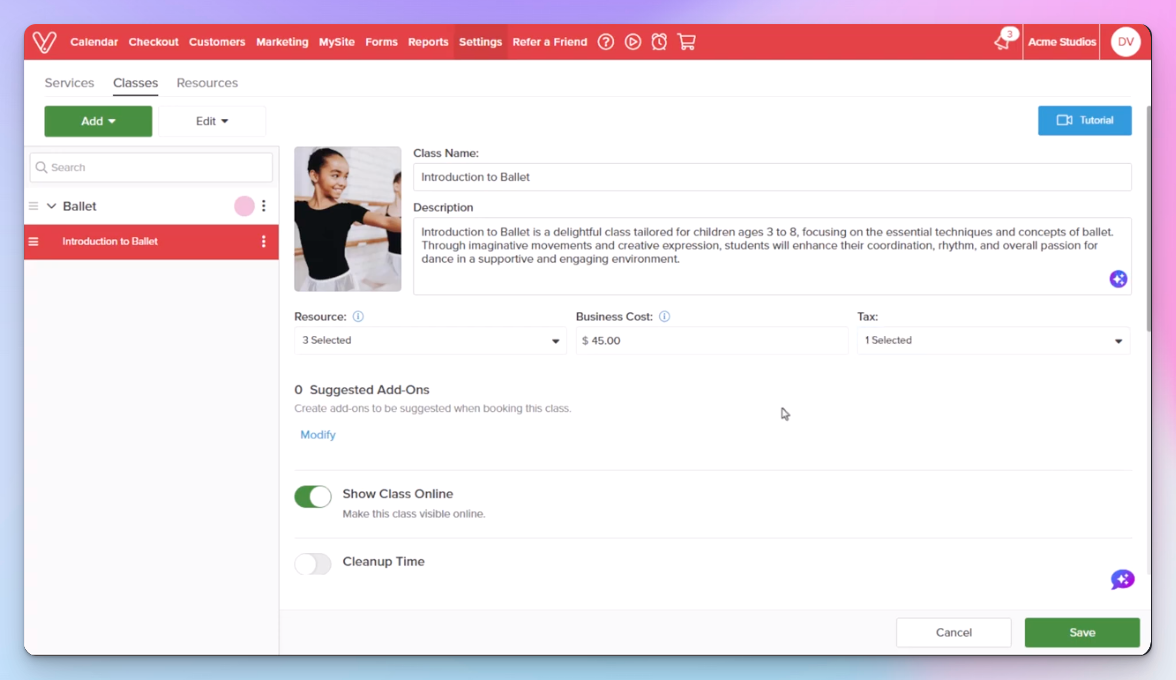
Pricing: From $23.99 per month for one bookable calendar, advertised as a limited-time rate. Each additional calendar adds $10 per month, topping the single-location ladder at $83.99 per month for seven or more calendars. Multiple locations are quoted. There is a 30-day free trial covering everything except email marketing, text marketing and the branded app, and no contract: Vagaro's own wording is that you can cancel at any time, for any reason, with no fee. Card processing runs 2.2% to 2.75% depending on business size, with merchants under $4,000 a month paying 2.6% plus $0.10 on swiped, dipped and tapped transactions, and merchants above that paying 2.2% plus $0.19 with a $10 monthly fee. Marketplace bookings carry a one-time 20% fee on a new client's first appointment. Add-ons are priced separately, including intake and consent forms at $10 a month, the online shopping cart at $10 a month (required for deposits and no-show fees on online bookings), payroll at $20 plus $6 per employee, and QuickBooks sync at $20. Pricing checked August 2026.
If you are weighing Vagaro against a broader shortlist than this one, our Vagaro alternatives guide runs through the options.
Mindbody vs Vagaro: feature by feature
Class scheduling and group programs
Mindbody was built with group programming in mind. Enrollments and courses are first-class objects, and from the Accelerate tier up you get room and resource management, client Pick-a-Spot so members can reserve a specific place in the room, and promo codes. If your schedule involves shared studios, equipment allocation or numbered spots, this is the more complete toolkit.
Vagaro handles the everyday version well. It separates classes from workshops, where a workshop is a series and adding an attendee signs them up for every session. Recurring classes can repeat daily, weekly, monthly or yearly, you can bulk edit across a series, and waitlists are in the base plan rather than an add-on.
The difference bites at the edges rather than the center. A weekly yoga timetable runs fine on either. A twelve-week course with reserved bikes, a room booking and a promo code is a job Mindbody was designed for, and one Vagaro asks you to assemble.
Edge: Mindbody for enrollments, rooms and reserved spots, though Vagaro is enough for a straightforward weekly timetable.
Appointments, POS and retail
Vagaro comes at the market from the salon chair. Appointment booking is its center of gravity, and around it sit retail inventory, a full point of sale, payroll at $20 plus $6 per employee, a free card reader with Vagaro Merchant Services, a check-in app and QuickBooks sync. Capterra reviewers cite that range as a top reason they stay.
Mindbody has point of sale and integrated payments on every plan, and plenty of studios sell retail through it. It is not built as a retail or payroll product though, and nothing in its plan structure suggests otherwise. Inventory sits inside the same point of sale rather than in a dedicated retail product, and staff payroll is not part of the platform at all.
If a meaningful slice of your revenue crosses a counter, or you want staff payroll inside the same system, that is Vagaro's home turf. If retail is a rack of water bottles by the door, either will cope.
Edge: Vagaro on retail depth, payroll and hardware.
Client acquisition and the marketplace
This is the one Mindbody wins without argument. The Mindbody app puts your classes in front of what the company describes as more than 3 million monthly shoppers, and no competitor at this price point has an equivalent audience. The cost is a 20% commission on a new client's first eligible purchase excluding tax, capped at $30, charged once per client and only on marketplace-sourced bookings.
Vagaro runs its own marketplace and charges a one-time 20% fee on a new client's first appointment when they find you through it. The mechanics are similar. The reach is not.
Whether that matters depends entirely on where your clients come from. If you fill classes through the app, Mindbody's fee is customer acquisition cost and a cheap one. If your students come from schools, referrals and local word of mouth, you are paying for a shop window nobody walks past.
Edge: Mindbody, decisively, for businesses that get real bookings from marketplace discovery.
Ease of use and onboarding
Vagaro scores 4.6 out of 5 for ease of use on Capterra. Reviewers call the interface clean and the client booking flow efficient, and you can start a 30-day trial yourself without speaking to anyone.
Mindbody scores 3.9. A general manager describes the scheduling interface as unnecessarily complex for daily use, and an owner reports that the mobile app lacks essential features, sending them back to a laptop for simple tasks. There is also a recurring reliability thread in reviews about tasks marked complete reappearing the next day and purchases not always clearing inventory. Because there is no free trial, evaluation runs through a sales demo, so you learn how the product feels only after you have committed.
That last point is the real gap. One tool lets you find out for yourself in an afternoon; the other asks you to take a salesperson's word for it.
Edge: Vagaro, decisively.
Support and reliability
Vagaro's customer service sub-rating is 4.6 out of 5 on Capterra, with the live chat singled out repeatedly and representatives described as knowledgeable. It is BBB accredited with a B+ rating and 34 complaints over three years, the largest cluster of which is payment processing and card-reader reliability, so support responsiveness does not mean the platform is trouble-free.
Mindbody's customer service sub-rating is 3.8. One founder writes that support is nearly impossible to reach and that AI responses arrive instead of a human. Mindbody is not BBB accredited and carries 103 complaints over three years, 13 of them explicitly about customer service.
Some of that gap reflects scale and account mix: Mindbody serves larger, more complex businesses, and its upper tiers include Technical Account Management. If you are buying at the entry tier, though, you are buying the entry-tier experience, and that is where the difference is widest.
Edge: Vagaro, with the caveat that Mindbody's premium support tiers are a different product.
Payments and processing fees
Vagaro publishes its rates: 2.2% to 2.75% depending on business size, with merchants under $4,000 a month at 2.6% plus $0.10 for swiped, dipped and tapped transactions and merchants above that at 2.2% plus $0.19 with a $10 monthly fee. Keyed transactions cost more. You can model your margin before you sign up.
Mindbody does not publish processing rates at all. The pricing page commits only to no monthly fees and no minimums, which tells you nothing about the percentage you will actually pay.
Predictability is the whole story here. Vagaro's published ladder is not flawless in practice, since card-reader reliability and duplicate charges are its top BBB complaint theme, but you can at least do the math in advance. For reference, our own payments run through Stripe with a 0.59% application fee on top of Stripe's rates.
Edge: Vagaro on transparency, not on flawlessness.
Pricing, contracts and total cost
Mindbody starts at $79 a month per location with unlimited users, which suits one busy site with several staff. Accelerate and Ultimate, where analytics, rooms, resources, Pick-a-Spot and marketing automation live, are quote only. There is no trial, contract terms are not published, and the BBB record shows 55 billing complaints and 17 sales and contract-disclosure complaints in three years.
Vagaro starts at $23.99 a month for one calendar and climbs $10 per extra calendar to $83.99 at seven or more. There is a 30-day trial, and cancellation is explicitly free and unconditional. The catch is add-on creep, its own top complaint theme: consent forms are $10 a month, and taking deposits or charging no-show fees on online bookings needs the $10 shopping cart module. Add four or five of those and the gap to Mindbody's entry price narrows.
Even after the add-ons, Vagaro is cheaper to start, cheaper to leave, and honest about the ladder in a way Mindbody is not.
Edge: Vagaro, clearly.
The verdict
Vagaro takes five of the seven dimensions, and it would be dishonest to manufacture balance. It is cheaper, easier, better supported, more transparent about fees, and it lets you try before you buy. For most single-site studios and appointment-led businesses, that is the answer.
But Mindbody's two wins are the two that decide the purchase for a class-led business at scale. If enrollments, rooms, resources and reserved spots are how your schedule actually works, or if marketplace discovery brings you paying clients every month, no amount of Vagaro's cost advantage closes that gap. Choose Mindbody with your eyes open on the trade: no trial, quote-only upgrades above Starter, unpublished processing rates, and a billing meter that ticks per location.
Switching is not symmetrical. Moving from Mindbody to Vagaro means checking your contract terms first, since BBB complaints reference 12-month terms and early-termination fees, then exporting client and purchase history, rebuilding your schedule and memberships, and re-onboarding clients who currently book through the Mindbody app. You will lose that discovery channel, so if it is producing revenue, count it as part of the cost. Going the other way is contractually painless, because Vagaro cancellation carries no fee, but you rebuild inside a more complex product with no trial to test it in and per-location billing to absorb. In both directions, if the tool you have is working, the migration is rarely worth it for price alone.
If you read both columns thinking neither of these matches how your business runs, the next section is for you.
The third option: what if neither fits?
Both tools assume the person booking is the adult who shows up, paying for themselves, session by session. If you run recurring group programs where a parent enrolls a child for a whole term, that assumption breaks in four places at once.
Start with the billing unit. A provider running Monday at a church hall, Wednesday at a leisure center and Saturday at a school gym is a multi-location business on Mindbody's meter at $79 each, while being one person in reality. Vagaro's per-calendar model prices you per coach instead.
Then the family: Mindbody's Family Accounts gives dependents no login of their own and bars under-13s from the app entirely, while Vagaro's Family and Friends is a permissions list built for sharing salon memberships. The term itself is a workaround in both. And both marketplaces charge 20% on a new client's first booking to put you where nobody browses for a kids' gymnastics term.
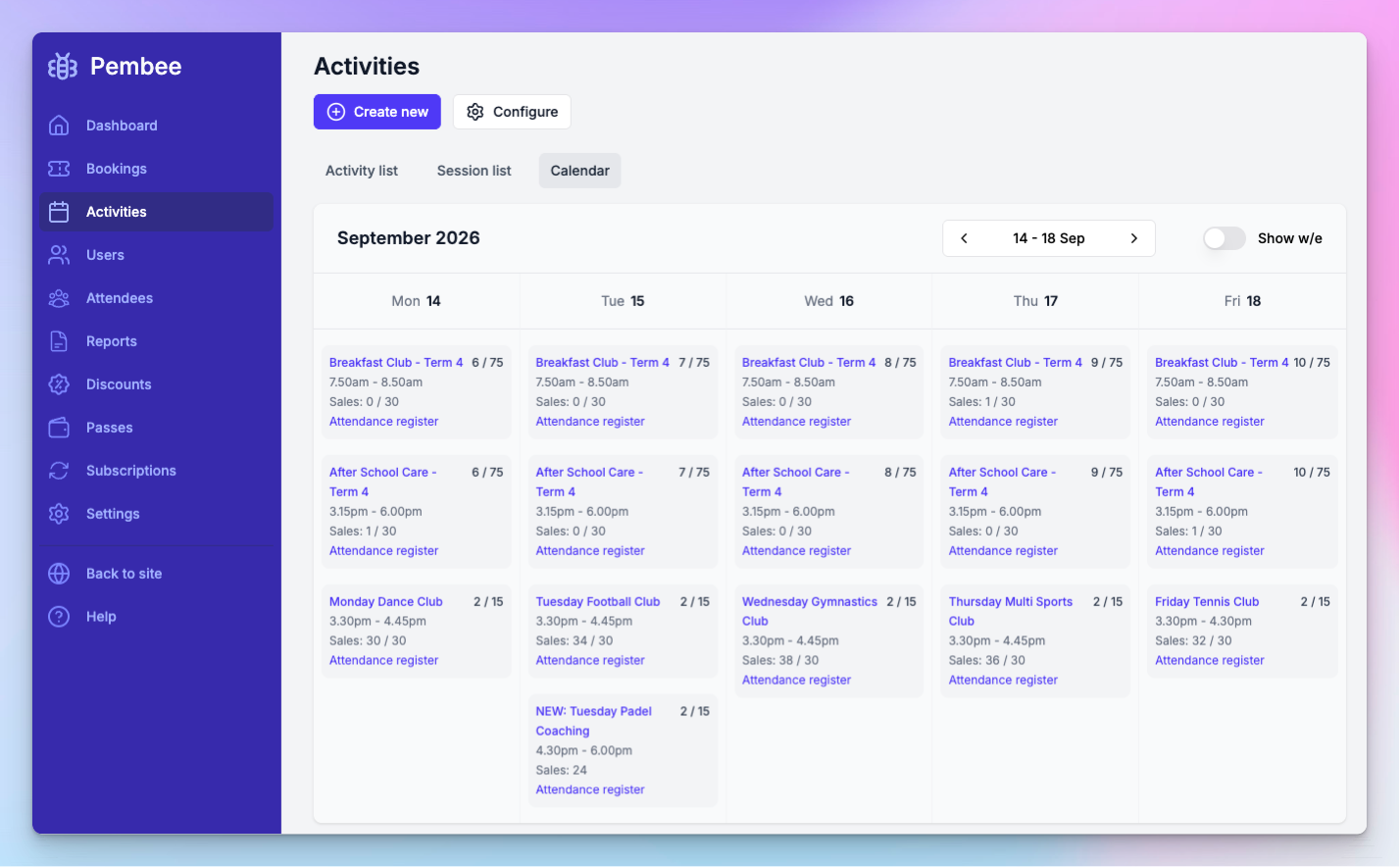
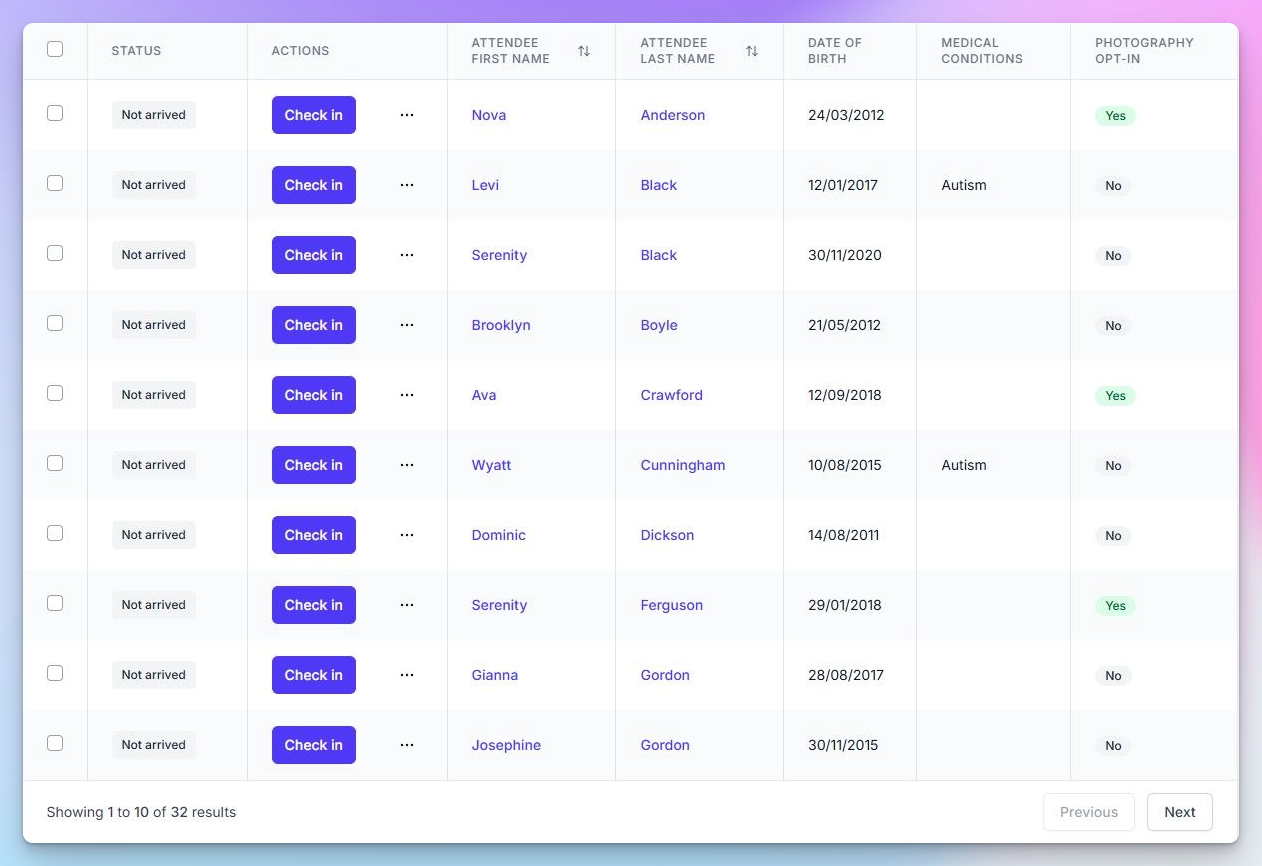
We built our platform for that shape of business, whether that is a dance studio, a gymnastics club, a school-holiday camp provider or an after-school club. Term and course bookings come first rather than as a workshop workaround. Customizable forms capture medical details, consent and emergency contacts at sign-up, so the information sits on the booking instead of in a folder. Registers work on a phone at the venue. Monthly subscriptions, class passes and trial tickets cover the ways activity providers charge. Pricing is flat per business, so hiring a second hall on a Saturday does not change your bill.
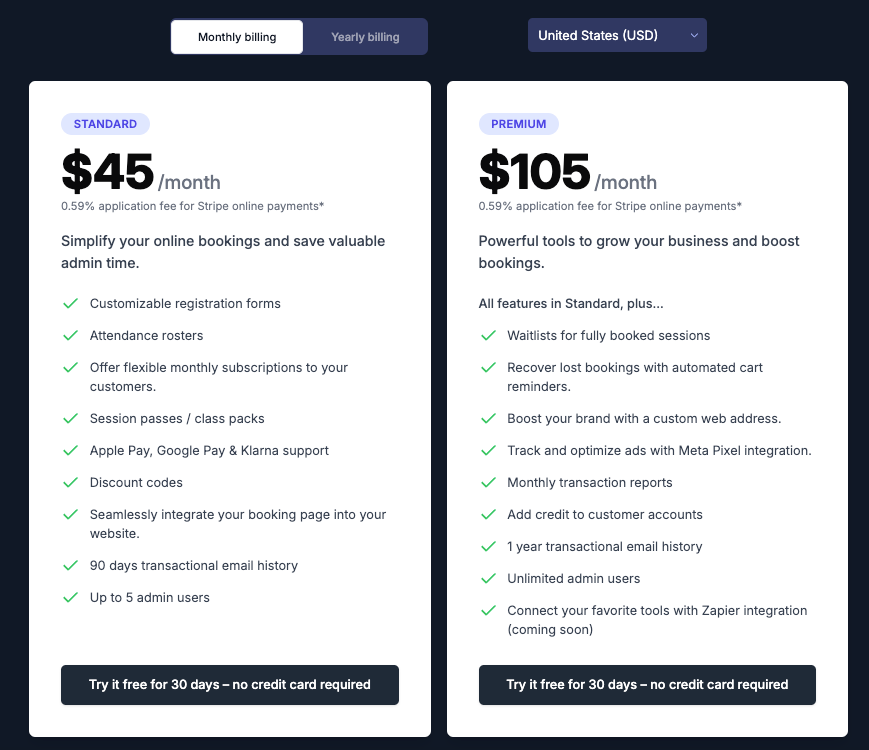
Pricing: Standard is $45 per month including up to 5 admin users. Premium is $105 per month and adds waitlists, automated recovery emails, a custom domain, monthly reports and unlimited admin users. Card payments run through Stripe with a 0.59% application fee on top of Stripe's own rates. The 30-day free trial needs no card, and there is no contract. Pricing checked August 2026.
Where Mindbody or Vagaro still beats us:
- No consumer marketplace. Nothing on our side matches the Mindbody app's 3 million monthly shoppers or the Vagaro Marketplace. We run the business you already have; we do not send you clients.
- No point of sale, retail inventory or payroll. If you sell product over a counter or run staff payroll in-platform, Vagaro is built for that and we are not.
- A smaller integrations catalog than Mindbody's 100-plus list, and no room and resource management or reserved spots in class.
Switching: Most providers move at a term boundary, taking a client export from their current tool and setting up the next term's classes fresh rather than migrating history. Setup is self-serve inside the 30-day trial, and we help with the import.
What users say: We hold 4.9 out of 5 from 23 reviews on Capterra, with 5.0 for customer service and 5.0 for value for money. That is a far smaller review base than Mindbody's 2,993 or Vagaro's 3,647, so read it as fit with a specific audience, not as proof of scale.
Which one should you pick?
If your schedule runs on enrollments, rooms and reserved spots, or if marketplace discovery is a real acquisition channel, Mindbody earns its price and its sales call. If you are appointment-led, price-sensitive or running a straightforward class timetable, Vagaro wins on cost, ease of use, support and the freedom to leave. That verdict holds whichever way your shortlist was leaning when you started reading.
The third case is the one neither tool was designed for: recurring programs where a parent enrolls a child for a term, across venues you hire by the hour. That is the business we built for, and if it sounds like yours, it costs nothing to find out.
FAQs
Is Mindbody better than Vagaro?
Not for most small businesses. Vagaro wins on price, ease of use, support ratings and fee transparency, and it has a 30-day free trial where Mindbody has none. Mindbody is the better choice in two specific cases: when you need real enrollments with rooms, resources and reserved spots, or when the Mindbody app's consumer marketplace brings you paying clients.
How much does Mindbody cost per month?
Mindbody's Starter plan is $79 per month per location, with unlimited users included, as of August 2026. The Accelerate and Ultimate tiers, which add analytics, room and resource management, reserved spots and marketing automation, are quote only and require a sales call. There is no free trial, card processing rates are not published, and marketplace bookings carry a 20% commission on a new client's first purchase, capped at $30.
How much does Vagaro cost per month?
Vagaro starts at $23.99 per month for one bookable calendar, with each extra calendar adding $10 up to $83.99 per month at seven or more, as of August 2026. Add-ons are billed separately, including consent forms at $10 and the online shopping cart at $10, which you need to take deposits or charge no-show fees on online bookings. Card processing runs 2.2% to 2.75% depending on business size.
Is Vagaro good for fitness studios and class-based businesses?
Yes, for a straightforward timetable. Vagaro supports classes, recurring class series with bulk editing, workshops for multi-session programs, and waitlists in the base plan. Where it thins out is depth: there is no reserved-spot booking, no room and resource layer at Mindbody's level, and term-length courses have to be built as workshops.
Can you switch from Mindbody to Vagaro?
Yes, but check your Mindbody contract before you start. Cancellation terms are not published, and BBB complaints reference 12-month terms and early-termination fees. Beyond that, expect to export client and purchase history, rebuild your schedule and memberships in Vagaro, and re-onboard any clients who currently book through the Mindbody app, since that discovery channel does not come with you.
What is the best alternative to Mindbody and Vagaro?
It depends on how your business is shaped. Appointment-led salons and spas usually land on Vagaro, and multi-site wellness chains usually stay with Mindbody. For providers running recurring group programs, courses and camps, especially where a parent books on behalf of a child, we built our platform for exactly that: term enrollments, family details, registers, waitlists and payments in one place, priced per business rather than per location. If your classes are adult fitness instead, our [fitness class booking software](/solutions/fitness-class-booking-software) page covers how the same term and class-pass model works for yoga, pilates and HIIT timetables.