
Swim Lesson Pricing in the UK: Rates, VAT and Your Margins


A 30-minute group lesson at a Pembrokeshire council pool costs £6.70. A few hundred miles east, an Essex swim school charges £16 for the same half hour. Both are priced correctly. The gap comes from ratios, who owns the water and VAT, and if you copy the wrong benchmark you either undercharge into a loss or price yourself out of your area.
In the UK, council and leisure trust swimming lessons typically cost £5 to £10 per 30-minute group lesson, independent swim schools charge £11 to £17, baby and pre-school franchises £16 to £21, and private 1:1 lessons £22 to £35 (£45 to £65 in London). Most schools sell lessons in termly blocks or by monthly direct debit.
Below are the real price points we found, then the pool-hire, teacher, VAT and billing maths that sets your own swim lesson pricing. All prices were checked in October 2026.
Swimming lesson prices in the UK at a glance
Most UK cost guides quote wide ranges with no sources. The table below uses published 2026 price lists from named councils, swim schools and franchises, so you can see what each format really costs and what ratio sits behind the price.
| Format | Typical ratio | Per lesson (30 min) | Published examples |
|---|---|---|---|
| Council or leisure trust group | 1:8 to 1:12 (up to 1:20 for advanced) | £4 to £10 | Pembrokeshire £6.70 (£4 with a Passport concession); Bury Leisure £73 for 10 lessons (£7.30) |
| Independent swim school group | 1:4 to 1:6 | £11 to £13 | Happy Swimming £11; SafelySwim £11.50; Strokes Swim School £12 |
| Small group or boutique pool | 1:3 | £13.50 to £17 (£38.50 in London) | SafelySwim beginners £13.50; Strokes boutique pools £16 to £16.50; Blue Wave (SW London) £38.50 |
| Baby and pre-school (parent in water) | Small groups | £13.50 to £21 (£30 in London) | SafelySwim baby and toddler £13.50; Puddle Ducks (Herts, Luton, MK) £19.50 to £21; Blue Wave parent and toddler £30 |
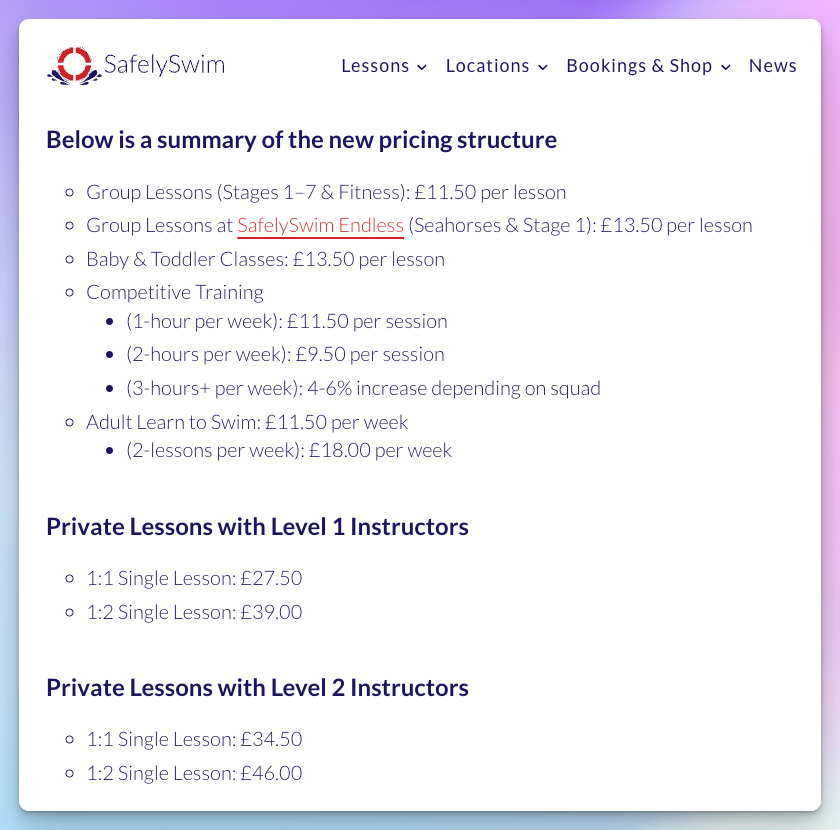
| Semi-private | 1:2 | £16 to £23 per swimmer (£46 in London) | Pembrokeshire £16.10 each; SafelySwim £39 to £46 per pair; Blue Wave £46 each |
| Private | 1:1 | £22 to £35 (£45 to £65 in London) | Pembrokeshire £23.40; SafelySwim £27.50 (Level 1 teacher) or £34.50 (Level 2); Blue Wave £63 |
| Holiday crash course | 1:1 to small group | £240 to £330 per 5-day course in London | Blue Wave October half-term: 1:2 £240 per child, 1:1 £330 |
| Adult learn to swim | Small groups | £7.30 to £18 | Bury £7.30; SafelySwim £11.50; 3S Swim (London and Essex) £17 to £18 |
The Swimming Teachers' Association's survey of 238 providers found the same split. In the public sector, 84% charge £5 to £10 for a 20 to 30-minute lesson, while over two-thirds of private swim schools charge £11 or more.
Location moves prices more than anything except ratio. Blue Wave's 1:3 group in Wimbledon costs £38.50 a lesson, more than double Strokes' 1:3 boutique price in Essex. London pool hire runs to £125 to £155 an hour, teachers cost more, and families there are used to paying it. Outside the capital, the £11 to £13 band for a group of four to six is where most independents sit.

Why council lessons cost half as much (and why you shouldn't match them)
Parents compare you with the leisure centre. Before you drop your price to close the gap, look at what the council is really selling.
Bigger groups
Better, the leisure centre brand run by the charitable trust GLL, publishes its ratios. At The Link Centre in Swindon, foundation classes run at one teacher to eight swimmers, development classes at 1:12 and academy classes at 1:20. Most independents sell 1:3 to 1:6. In the same hour of water, the council teaches two to four times as many swimmers, so each one costs far less.
They own the water
A council pool is open anyway. Lessons fill programmed time in a building the council already heats and staffs with lifeguards, so there's no separate hire bill. An independent renting a school pool pays £50 to £125 an hour before a single swimmer arrives, and that cost lands on every place you sell.
Concessions and VAT
Councils subsidise residents through concession schemes. Pembrokeshire's Passport to Leisure card cuts the £6.70 lesson to £4, which drags the "average" council price down further. Councils and non-profit leisure trusts can also often treat lessons as VAT-exempt under the sporting services rules for local authorities and eligible bodies. An independent swim school with employed teachers usually can't, which we cover below.
Compete on availability, not on £6
You're selling something different: smaller groups, faster progress and a place this term. That last point matters more than most owners realise. When the STA asked families whose children weren't learning to swim why not, 63% cited a lack of available lessons and only 20% pointed to cost. In most areas the bottleneck is teachers and pool space, not price. Racing the council to the bottom gives away margin you need to pay teachers and hire water.
What a swimming lesson costs you to run
Your price floor is your cost per filled place. Three things set it: pool hire, teachers and the overheads you spread across every lesson.
Pool hire
School pools are where most independents start, and their published hire rates vary widely. Colton Hills in Wolverhampton charges £50 an hour, Tarleton Academy in Lancashire £56.50 + VAT, Battle Abbey School £73, Springwood Primary in Manchester £80 + VAT, and City of London School £125 on weekdays or £155 at weekends.
Watch the VAT line. If you aren't VAT-registered you can't reclaim it, so Tarleton's £56.50 + VAT costs you £67.80 an hour. Budget on the gross figure. Our guide to starting a swim school in the UK covers how to find and negotiate pool time.
Teachers
Budget £18 to £25 an hour for an experienced Level 2 teacher, more in London. Helpers and assistants cost less, but anyone you employ aged 21 or over must earn at least the National Living Wage of £12.71 an hour. Employees also bring employer's National Insurance and pension auto-enrolment on top of the hourly rate.
Cost your own time too. If you teach every class yourself and pay yourself nothing, your price only works until you need a second teacher. Our guide on becoming a swimming teacher covers qualification costs if you're training staff.
Overheads you spread across every lesson
These are small individually and add up quickly:
- Insurance. Howden's Swim England swim school package starts from £152 a year at £5,000 turnover and rises with turnover. See our guide to swim school insurance.
- Affiliation. Swim England swim school membership costs £119 (Standard) or £389 (Premium) a year.
- Awards. Badges and certificates cost around £2 to £2.50 per swimmer per award.
- Data protection. The ICO fee is £52 a year for Tier 1, or £47 by direct debit.
- Everything else. Booking software, marketing, kit, floats and first-aid supplies.
A small school running four pool hours a week can easily spend £3,000 a year on these. Spread over 36 weeks, that's 144 pool hours, or about £21 an hour.
Worked example: cost per swimmer in a hired school pool
Here's one hour at Tarleton's gross rate, with two Level 2 teachers at £20 an hour each. Each teacher runs two 30-minute classes back to back, so the hour has four classes. The left column runs groups of five; the right runs boutique groups of three.
| Per pool hour | Groups of 5 | Groups of 3 |
|---|---|---|
| Pool hire (£56.50 + VAT) | £67.80 | £67.80 |
| Two teachers at £20 an hour | £40.00 | £40.00 |
| Overheads (£3,000 over 144 hours) | £21.00 | £21.00 |
| Total cost | £128.80 | £128.80 |
| Places available | 20 | 12 |
| Places filled (about 85%) | 17 | 10 |
| Cost per filled place | £7.58 | £12.88 |
| Profit per hour at £13 a lesson (after 2% payment fees) | £87.78 | Loss of £1.40 |
| Profit per hour at £16 a lesson (after 2% payment fees) | £137.76 | £28.00 |
At council prices of around £7, the groups-of-five hour loses money before you've paid for a single badge. At £13 it makes about £88 an hour before tax, or roughly £12,600 across 144 pool hours. Run the same hour as groups of three and £13 doesn't cover costs; you need £16 or more. That's almost exactly where Strokes Swim School prices: £12 for groups of up to five at standard school pools, £16 to £16.50 for groups of three at boutique pools.
Fill rate matters as much as price. Drop from 85% to 75% full in the groups-of-five model and cost per filled place rises by about £1, to £8.59. A waiting list that refills cancelled places quickly is worth real money.
Private lessons
Private lessons usually share the pool with group classes, so cost them per lane. In a four-lane school pool at £67.80 an hour, one lane is about £17. Add a teacher at £20 and a £5 overhead share and the lane-hour costs about £42, or £21 for each of two 30-minute lessons.
That's why £27.50 to £34.50 works for a 1:1 outside London, with a better margin for your more experienced teachers. In London, a lane share at £125 to £155 an hour plus a higher teacher rate pushes cost per lesson towards £35, which is how prices like Blue Wave's £63 cover their costs with a margin.
How VAT changes your swimming lesson price
This is the rule that catches growing UK swim schools out, and most price guides skip it.
HMRC's VAT Notice 701/30 exempts private tuition in a subject ordinarily taught in schools, which includes swimming, when a sole trader or partner gives it personally. Lessons delivered by employees or brought-in teachers fall outside that exemption and are standard-rated at 20%, and so are lessons supplied by a limited company.
Standard-rated lessons count towards the £90,000 VAT registration threshold. Cross it and you must register and charge VAT on those lessons. For a swim school with three or four teachers, £90,000 arrives sooner than you'd think: it's about 190 swimmers paying £13 a week for 36 weeks.
Here's what VAT does to a £13 lesson and a £156 term of 12 lessons:
| Scenario | Parent pays per lesson | You keep per lesson | Parent pays per term | You keep per term |
|---|---|---|---|---|
| Exempt (you teach every lesson yourself as a sole trader) | £13.00 | £13.00 | £156.00 | £156.00 |
| VAT-registered, price unchanged | £13.00 | £10.83 | £156.00 | £130.00 |
| VAT-registered, margin protected | £15.60 | £13.00 | £187.20 | £156.00 |
Neither option is comfortable. Absorb VAT and you lose £2.17 a lesson, which takes over 40% of the £88-an-hour profit in the worked example above. Pass it on and parents see a 20% rise overnight. You can reclaim VAT on pool hire and other costs once registered, which softens the hit but doesn't remove it.
The practical answer is to plan for VAT before you hire your second teacher, not when the threshold letter arrives. Price with some headroom, and talk to an accountant about your structure, especially if you use self-employed teachers, where the treatment depends on the detail of the arrangement. Our swim school business plan guide covers the structure decision.
The industry knows this holds schools back. In the STA's survey for its #STAmpOutVAT campaign, two-thirds of swim schools deliberately staying under the threshold said they could teach more swimmers if lessons were VAT-free, and the STA raised the issue with MPs again in May 2026. Until the rules change, VAT is a pricing input like pool hire.
Term blocks or monthly direct debit?
Your price per lesson is only half the decision. How you collect it changes cash flow, churn and how often parents notice what they pay.
Fitting your price to the school calendar
Most UK swim schools follow local school terms, minus half-terms and bank holidays. That typically gives 12 to 14 lessons in autumn, 10 to 11 in spring and 11 to 12 in summer, or roughly 34 to 38 lessons a year. Happy Swimming's autumn 2026 term has 12 Saturday lessons for £132. Blue Wave's runs 14 Saturdays from 5 September to 12 December, skipping October half-term.
Scotland, Wales and Northern Ireland follow different calendars (Scottish summer holidays start in late June), so publish your own dates and lesson count every term rather than assuming parents know them.
Termly payment upfront
Parents pay for the whole term before it starts, as at Strokes, Happy Swimming and Blue Wave. You get cash in hand before your pool bill is due, and the admin is simple. The downsides are a large one-off payment (£132 to £539 in the examples above), a re-enrolment scramble every term, and families who quietly drop out at term end. For mid-term joiners, charge pro-rata for the lessons left, as Happy Swimming does.
Annualised monthly direct debit
This is the leisure trust model. Better explains its monthly lesson payment as "how many lessons are delivered in a year, multiplied by the cost of each lesson. Then we divide the total into regular payments over 12 months." New members also pay a non-refundable Month-in-Hand equal to one monthly fee, and must give 21 days' notice before the payment date to cancel.
Applied to a £13 lesson: 36 lessons × £13 = £468 a year, or £39 a month for 12 months, including August when no lessons run. Cash flow is smooth and swimmers stay enrolled across term breaks, because nobody has to actively re-book. The cost is explaining the August payment. Publish the annual lesson count and the formula so parents can check the maths.
The middle option: term price, monthly instalments
You can keep a term price and let parents spread it. A £156 term becomes three or four monthly card payments. We support this in Pembee: split a term fee into monthly instalments or sell a monthly membership, with automatic retries when a card payment fails and pro-rated prices for anyone joining mid-term.
| Model | Cash flow | Admin | Parent experience | Watch out for |
|---|---|---|---|---|
| Term upfront | Lumpy, but paid before the term starts | Low, three billing runs a year | One large payment per term | Drop-outs at term end; re-enrolment churn |
| Annualised monthly direct debit | Smooth, 12 equal payments | Notice periods and mandate management | Small, predictable payments | Questions about August; publish your lesson count |
| Term price in monthly instalments | Smoother than upfront, tied to each term | Automated by your booking system | Term price, spread over the term | Failed payments without automatic retries |
Payment fees barely separate them. A £156 term paid by UK card at Stripe's standard rate of 1.5% + 20p costs £2.54, or £7.62 for three terms. A £39 monthly direct debit at GoCardless's standard rate of 1% + 20p costs £0.59, or £7.08 a year before VAT on the fee. Both land around £7 per swimmer a year, so choose on cash flow and retention.

Pricing each lesson type
Your group price anchors everything else. Here's how to set the rest of your price list around it.
Group lessons by stage
Early stages need tighter ratios, so they cost more to deliver. SafelySwim charges £13.50 for its 1:3 beginner classes and £11.50 for Stages 1 to 7. The alternative is one flat price across every stage, which is easier to explain and lets swimmers move up mid-term without a billing change. If you run a flat price, set it from your most expensive ratio, not your cheapest.
Baby and pre-school
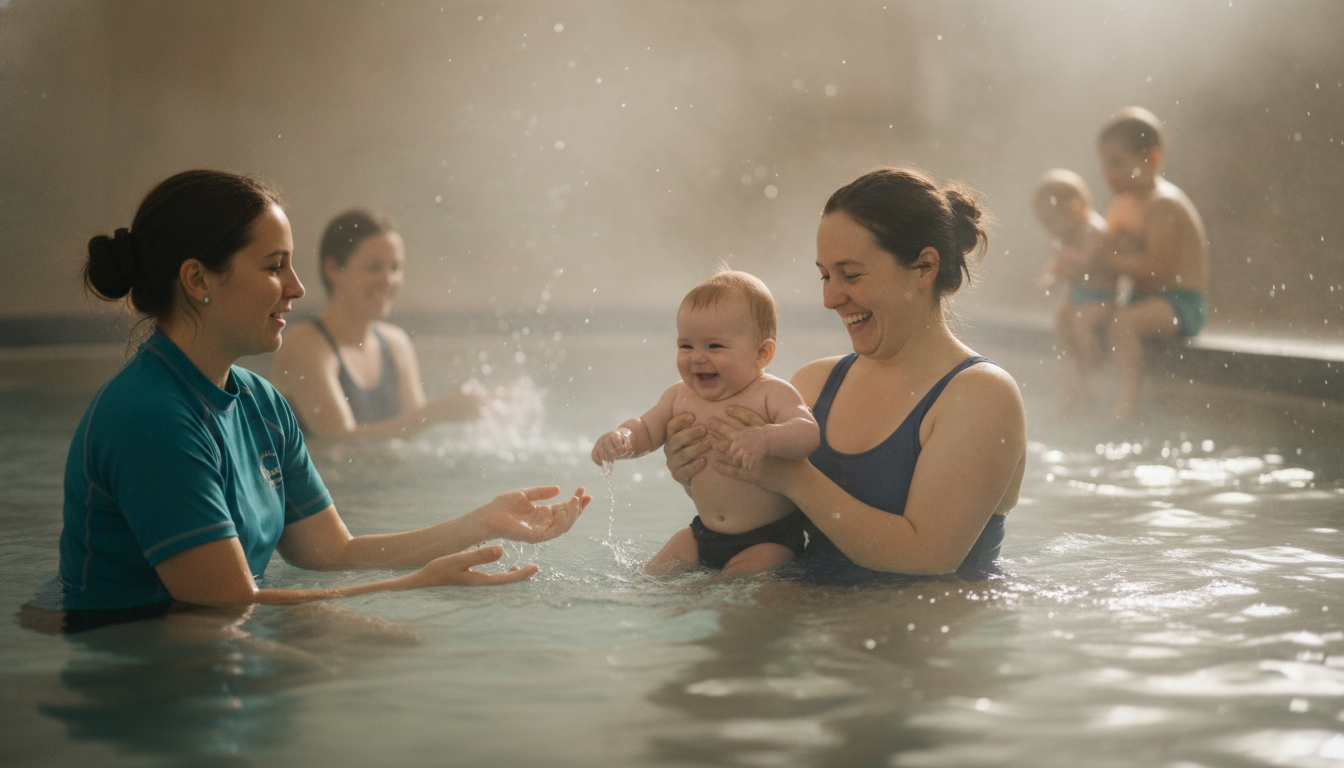
Babies need warm water, around 30 to 32°C, which rules out most school pools and pushes you towards hydrotherapy or boutique pools that charge more per hour. Groups are small because each child has an adult in the water. Franchises are your benchmark: Puddle Ducks charges £19.50 to £21 in Hertfordshire, Luton and Milton Keynes.
Weekend slots are where demand is strongest. In the STA's survey, 85% of swim schools had seen more demand for weekend lessons, and a quarter had weekend waiting lists. That supports a higher price for Saturday and Sunday mornings.
Private and semi-private
Price these per slot, not per head. A 1:2 slot shares your lane and teacher cost across two swimmers, so you can charge each swimmer less than a 1:1 and still earn more for the slot. Published prices put semi-private at roughly 70% of the 1:1 price per swimmer: Pembrokeshire charges £16.10 against £23.40, and Blue Wave £46 against £63.
Teacher level is a fair price lever too. SafelySwim charges £27.50 for a 1:1 with a Level 1 teacher and £34.50 with a Level 2 teacher, which rewards experience and keeps a cheaper entry point for nervous beginners.
Holiday crash courses
Five consecutive days at Easter, in summer or at October half-term fill the pool time your term classes leave empty. Price per course, not per lesson: Blue Wave's October half-term course costs £240 per child for 1:2 and £330 for 1:1. Crash courses are also a good offer for families on your waiting list who can't get a term place.
Adult lessons
Adults pay for privacy and small groups, and often want evening slots after work. Group prices run from £7.30 at council pools such as Bury to £17 to £18 at independents such as 3S Swim. Price adult groups at or slightly above your children's group rate, and offer 1:1s for nervous adults at your standard private price.
Discounts, Tax-Free Childcare and what parents really pay
Discounts are easy to give and hard to take back, so set rules before you need them.
Sibling discounts. SafelySwim gives 15% off for families with three or more children. A simpler model is 5 to 10% off the second child, with a cap on total discount per family. We apply sibling discounts automatically at checkout, so nobody has to remember to.
Tax-Free Childcare. For every £8 a parent pays through their account, the government adds £2, for children aged 11 or under (16 if disabled). A £13 lesson costs that parent £10.40. The catch is that parents can only pay registered providers. Swimming lessons for children aged 3 and over are usually exempt from compulsory Ofsted registration, so to accept Tax-Free Childcare you'd join the voluntary part of the Childcare Register (from £114 a year). Check with Ofsted that your setup qualifies before you promise it to parents. Our guide on accepting Tax-Free Childcare payments walks through registration, and we support Tax-Free Childcare payments in Pembee.
Intro offers. Councils run them to fill summer and taster sessions. Use them sparingly and for a set period. Don't discount off-peak slots by default; fill them with crash courses or adult classes instead.
How to raise your prices
It is tempting to hold prices for years, then raise them all at once. The evidence says rises cost fewer families than owners fear. In the STA's survey, 80% of providers had raised lesson prices in the previous couple of years, and 47% of those said they lost no customers as a result.
When. Apply rises from the start of a term, and September is the natural point because autumn booking opens in the summer (Blue Wave opened its autumn 2026 booking in July). Announce at least a term ahead where you can. If you collect by direct debit, give at least the notice your terms and mandate require.
How. SafelySwim announced its January 2026 prices on 11 December 2025 and explained why: keeping experienced instructors, small classes and staff support. Give a reason, give the new price and the date, and keep the message short. Small annual rises of 50p to £1 a lesson go down better than a £3 jump every few years.
Where. Price peak slots higher. Saturday morning lessons fill first and carry the longest waiting lists, so they can carry a premium of 50p to £1 over weekday afternoons.
Your waiting list is your best evidence of pricing headroom. If a class has six families waiting, it's underpriced. Our waitlist feature offers freed-up places to the next family automatically and shows you which slots have the deepest demand.
Missed lessons and pool closures
Term fees for missed lessons are usually non-refundable, and parents accept this when it's stated clearly at booking. Pool closures are different. Hired school pools close for exams, school events, plant failures and fouling, and you'll lose a session or two most years.
Decide in advance what you'll offer when the pool closes: a credit against next term, an extra week at the end of term, or a make-up slot in another class. Write it into your terms so nobody argues about it on the day. Our cancellation and refund policy examples include wording you can adapt.
Your swimming lesson price list checklist
Before you publish next term's prices, make sure your price list answers every question a parent will ask:
- Price per lesson and the total for the term
- Number of lessons, term dates and the dates with no lessons
- Ratio and lesson length for each class type
- How mid-term joiners are charged (pro-rata)
- What happens with missed lessons and pool closures
- Sibling discount and any cap
- Whether prices include VAT, if you're registered
- Payment options: upfront, instalments or monthly
- Notice period to leave
- Whether you accept Tax-Free Childcare
If you're comparing tools, see our pricing page or our roundup of the best swim school software for UK schools.
Key takeaways
- UK council lessons cost £5 to £10 because of large ratios, owned pools, concessions and VAT treatment. Independents charging £11 to £17 for groups of three to six aren't overpriced.
- Work out your cost per filled place first. In a £67.80-an-hour school pool, it's about £7.60 in groups of five and £12.90 in groups of three.
- Employ teachers or incorporate and your lessons become standard-rated for VAT. Plan for the £90,000 threshold before you hire.
- Term upfront and annualised monthly payments cost about the same in fees. Choose on cash flow and retention.
- Tax-Free Childcare cuts a parent's real price by 20% if you're registered.
- Raise prices a little every September. Nearly half the schools that raised prices lost no customers.
FAQs
How much do swimming lessons cost in the UK?
A 30-minute group lesson costs £5 to £10 at most council and leisure trust pools, and £11 to £17 at independent swim schools. Baby and pre-school classes cost £13.50 to £21 outside London. Private 1:1 lessons cost £22 to £35 in most areas and £45 to £65 in London.
How much should I charge for private swimming lessons in the UK?
Most independents charge £25 to £35 for a 30-minute 1:1 outside London and £45 to £65 in London. Work out your cost per lane-hour (lane share of pool hire, teacher pay and overheads) and divide by two lessons. Charge more for your most experienced teachers, as some schools do with Level 2 teachers.
Why are council swimming lessons cheaper than private swim schools?
Councils teach larger groups, up to 1:12 or 1:20 in older stages, in pools they already own and run. They also offer concession prices to residents and can often treat lessons as VAT-exempt. Private swim schools pay hourly pool hire and teach smaller groups, so each place costs more to deliver.
Do swimming lessons have VAT on them?
It depends who teaches and how you're set up. A sole trader or partner personally teaching swimming is exempt from VAT. Lessons taught by employees or contracted teachers, or supplied by a limited company, are standard-rated at 20% and count towards the £90,000 registration threshold.
Should I charge per term or by monthly direct debit?
Termly payment gives you cash before the term starts and simpler admin, but more families drop out at term end. Annualised monthly payments smooth cash flow and keep swimmers enrolled across holidays, but you'll need to explain payments in August. Splitting a term price into monthly instalments sits between the two.
How many swimming lessons are in a term?
Most UK swim schools run 12 to 14 lessons in autumn, 10 to 11 in spring and 11 to 12 in summer, following local school terms minus half-terms and bank holidays. That's roughly 34 to 38 lessons a year. Scotland, Wales and Northern Ireland have different term dates, so always publish your own.
Can parents use Tax-Free Childcare for swimming lessons?
Yes, if the swim school is registered, for example on the voluntary part of the Childcare Register, and the child is 11 or under (16 if disabled). The government adds £2 for every £8 the parent pays, so a £13 lesson costs them £10.40. Check with Ofsted that your setup qualifies before you advertise it.
How much do swimming teachers get paid per hour in the UK?
Experienced Level 2 swimming teachers typically earn £18 to £25 an hour, with London rates at the top of that range or above it. Assistants and newly qualified teachers earn less, but anyone employed aged 21 or over must get at least the National Living Wage of £12.71 an hour.
How much should I raise my swimming lesson prices by?
Small, regular rises of 50p to £1 per lesson each September tend to land better than occasional large jumps. Give at least a term's notice and a short reason, such as teacher pay or pool hire. In the STA's survey, 47% of schools that raised prices lost no customers.
Should swimming lessons cost more at weekends?
Yes, if demand supports it. Weekend slots, especially Saturday mornings, fill first, and the STA found a quarter of swim schools had weekend waiting lists. A premium of 50p to £1 a lesson for peak slots is a sensible starting point, and it nudges flexible families towards quieter weekday sessions.