
Cancellation Policy Examples: 12 Templates You Can Copy


Twelve spots in a Saturday gymnastics class. Three families cancel on Friday night, two more never turn up, and the coach and the hall are already paid for. Nobody knew they were free in time to resell them. Most cancellation policy examples are written for a hair salon, so they fall apart the moment you sell a term or a camp week.
Below are 12 to copy, plus how to set your own notice window and make the charge stick.
A cancellation policy is a published rule that states how much notice a customer must give to cancel or reschedule without penalty, what you charge if they give less, what happens if they do not turn up at all, and how refunds or credits are issued. A typical policy asks for 24 to 48 hours' notice, charges 50% of the fee for a late cancellation, and charges 100% for a no-show.
Cancellation policy vs refund policy: what each one covers
A cancellation policy governs the booking. It sets the deadline, the fee for missing it, the no-show rule, and how someone tells you they are not coming. A refund policy governs the money: who gets cash back, who gets a credit, how quickly, and by what method.
Most small operators publish one document covering both, which is fine as long as both questions get answered. The failure mode is a policy that says "cancellations require 48 hours' notice" and then goes quiet on what the customer actually receives if they give it.
Class and camp providers lean heavily toward credit rather than cash inside the notice window, and for good reason: a credit keeps the money in the business, keeps the family in your program, and still reads as fair. The YMCA of Greater Seattle, for example, issues system credit rather than refunds when an enrichment class is canceled two business days ahead. If you already sell blocks of sessions, credits fit the model you have, and our guide to selling class packs covers how to price them so the credit has somewhere to go.
What to include in a cancellation policy
Nine elements. The first six appear in nearly every policy on the internet. The last three are the ones that stop arguments, and they are the ones most often left out.
- The notice window. State it in hours before the session start, not "in advance." "48 hours before the class start time" cannot be argued with. "Reasonable notice" can.
- The late-cancellation charge. A flat fee, a percentage of the session fee, or forfeiture of the session or credit. Name the number.
- The no-show rule. Write it as its own line, separate from late cancellation, because the charge is usually different and usually higher.
- How to cancel. One named channel: a self-service portal, one email address, or one phone number. Two or more channels create an argument about whether notice was given.
- What the customer gets back. Cash refund, account credit, transfer to another session, or nothing. This is the question the customer actually cares about.
- Late arrival. A grace period, commonly 15 minutes, after which the spot is treated as a no-show.
- Exceptions. Keep them narrow and named: documented illness, bereavement, severe weather. "At our discretion" invites every customer to test the discretion.
- What happens when you cancel. Your obligation to them. Hardly any published policy includes it, and it gets its own section below.
- Effective date. Plus a line saying that changes apply to bookings made after the published date.
If you are writing this alongside your other paperwork, the same registration flow usually needs a health disclaimer for class participants too. Write them together and you only chase agreement once.

How to choose your notice window and fee
Everyone says 24 hours. Almost nobody says why. Here is the principle that actually decides it: your notice window should match the time it genuinely takes you to refill the spot. If a waiting list fills a canceled yoga place in an hour, 24 hours is generous. If it takes you three weeks to find a replacement for a term place in a small gymnastics squad, 24 hours protects nothing.
Three questions get you to the right number.
How fast do you refill? Waiting list depth and booking lead time decide this. Longer lead times also mean more no-shows, because a place booked weeks out is a guess about a future Saturday. Harvard researchers studying no-show penalties for exercise classes note that the university's own gym cut its squash court booking window from seven days ahead to three, and still shows a warning about no-shows every time a member logs in to book. Sell a camp in January for August and you are carrying eight months of life changes.
What is locked in once the session is committed? Staff hired to a ratio, a hall booked, kit or craft materials ordered, a caterer confirmed. Costs you cannot claw back are what justify a higher charge, and in the UK they are also what makes the charge lawful.
What does the spot earn? A $15 / £12 drop-in class does not justify the admin of chasing a $7.50 / £6 fee. A $400 / £320 camp week does.
Common reference points, not rules: 4 to 12 hours for drop-in classes with a deep waiting list, 24 hours for single appointments, 24 to 48 hours for higher-value 1:1 work, 48 to 72 hours for classes and courses you cannot refill at short notice, and a fixed calendar date for camps and terms. The YMCA of Greater Seattle runs the calendar version at scale, requiring summer day camp cancellations by May 1 for any refund at all, with deposits non-refundable regardless and transfers between camps allowed only up to June 1.
Then pick how strict you want to be. The three shapes below protect different things and cost different things.
| Strict | Tiered | Flexible | |
|---|---|---|---|
| Shape | Non-refundable after booking, or a long fixed cutoff date. | Refund percentage steps down as the session gets closer. | Cancel free up to a short window, credit after that. |
| Revenue protected | Highest. You keep the money whatever happens. | High. You keep a share that rises as your refill time shrinks. | Lowest in cash, but credits stay on the books. |
| Booking friction | High. First-time customers hesitate at checkout. | Moderate. Feels reasoned rather than punitive. | Low. Removes the main objection to booking early. |
| Admin load | Low to write, high to defend. Expect appeals. | Highest. Someone has to work out which tier applies. | Low if self-service. High if every cancellation is an email. |
| Complaint risk | Highest, including card disputes. | Low. The customer can see what they chose. | Lowest, until credits start expiring. |
| Best for | Camps, residentials, anything you staff and cater to a headcount. | Terms, multi-week courses, workshops. | Drop-in classes and class packs with a waiting list. |
12 cancellation policy examples you can copy
Each one is written to be published as it stands. Swap the bracketed values for yours, delete the lines that do not apply, and put a date on it.
1. The one-sentence policy
Use this at the bottom of a class page, in a booking confirmation, or anywhere you need the rule to fit in three lines.
Cancellations and reschedules made at least [24 hours] before the session start are free of charge. Inside [24 hours], and for no-shows, the full fee is payable. Cancel any time from your account at [link] or email [email@yourbusiness.com].
2. The standard appointment policy
The general-purpose version for 1:1 and small-group appointments where you hold a named time slot.
We hold your appointment exclusively for you, so we ask for at least [24 hours'] notice to cancel or reschedule. Canceled with [24 hours'] notice or more: no charge. Full refund or free reschedule. Canceled inside [24 hours]: [50%] of the service fee. No-show: the full service fee. Arriving more than [15 minutes] late: we may not be able to run the full session, and the booking is treated as a no-show. To cancel, use your account at [link] or email [email@yourbusiness.com]. We cannot accept cancellations by voicemail or social media message. In a genuine emergency, contact us. We will waive the fee once per [12 months].
3. The tiered refund policy
The structure most class and course businesses should use, because it ties what you keep to how much time you have left to refill the spot.
Refunds depend on how much notice you give us before the first session. [7 days] or more before the start: full refund. [48 hours] to [6 days] before the start: refund less a [20%] administration fee. Less than [48 hours] before the start: refund less a [30%] fee, or a full account credit if you would rather keep the value. After the first session has started: no refund. Refunds are returned to the original payment method within [10 business days]. Account credits are issued immediately.
4. The credit-first policy
No cash back, credit instead. Two things make this fair rather than hostile: a stated expiry, and a credit that works across everything you run.
We do not issue cash refunds for canceled bookings. Cancel at least [48 hours] before your session and we add an account credit for the full amount. Credits are valid for [12 months] from the date of issue, can be used against any class, course or camp we run, and can be transferred to anyone else in your household. Cancellations inside [48 hours] and no-shows are not credited.
5. The drop-in fitness class policy
Short window, because you refill fast. The spot goes to the waiting list the moment it is released.
Cancel a class booking up to [8 hours] before the start time and the credit returns to your pack automatically. The spot is offered to the waiting list straight away. Inside [8 hours], the class credit is used. Members on an unlimited pass are charged a [$15 / £12] late-cancellation fee instead. Book a spot and do not attend without canceling, and the credit is forfeited.
That short window only works if the spot is genuinely refillable, which is a matter of software rather than wording. Our fitness class booking software releases the place and offers it on automatically.
6. The multi-week course or term policy
The one nobody writes. It has to answer four separate questions: withdrawal before the term, withdrawal during it, individual missed weeks, and transfers.
Course fees cover the full [10-week] term, not individual sessions, because your place is held for the whole term. More than [14 days] before the term starts: full refund, less the [$50 / £40] non-refundable deposit. Inside [14 days], up to the first session: account credit for the full fee, less the deposit. Weeks [1 to 2]: pro-rata credit for the remaining sessions, less the deposit. Week [3] onward: no refund or credit. Individual sessions missed for any reason are not refunded. You may transfer your remaining sessions to another class in the same term, subject to space, or to another child in your household. Email [email@yourbusiness.com] at least [48 hours] before the session you want to move.
Pro-rating by hand across a full term is where most of the admin hides. A course booking system that prices part-terms at the point of booking removes the calculation entirely.
7. The kids' class and make-up credit policy
Children get sick constantly, and a refund policy written for adults reads as cruel when applied to a five-year-old with chickenpox. Make-up credits are the answer, with a cap so they stay manageable.
If your child is unwell, please keep them at home. Tell us before the class starts, through your account at [link], and we will add a make-up credit. Make-up credits: up to [3] per child per term. Valid: within the same term only. Credits do not roll over. To use one: book any class of the same type with space available, from your account. Sessions missed without notice before the start time are not credited. If there are no suitable make-up slots left before the term ends, contact us and we will refund the credited sessions.
Credits per child, per term, across multiple disciplines is exactly the sort of counting that spreadsheets lose. Our dance studio software tracks them against the family account instead.
8. The camp or holiday club policy
Camps commit staff, food and ratios weeks ahead, so the deposit is the part you protect. Make it transferable and it stops feeling like a penalty.
A [$75 / £60] deposit per camper per week is payable at booking and is non-refundable. It is transferable to another week in the same season if you tell us by [June 1]. More than [30 days] before the camp week: full refund of everything paid except the deposit. [7 to 30 days] before: [50%] refund of the balance, or a full credit toward another week. Less than [7 days] before, or once the week has started: no refund. For a documented medical reason, send us a note from your doctor and we will credit the unused days.
Deposits, transfers and sliding scales across a whole season are the reason camp registration software exists. The policy is also only one of the documents a camp needs: summer camp insurance covers what the policy cannot.

9. The workshop or one-off event policy
When the seat is the product and you cannot refill a specialist session at short notice, non-refundable but transferable is the honest trade.
Workshop places are non-refundable. We cap numbers and order materials per attendee once booking closes. Your place is transferable. Send us the name and email of the person taking it at least [48 hours] before the start and we will move the booking at no cost. If we cancel or move the workshop, you can take the new date or have a full refund, whichever you prefer.
Collect the replacement attendee's details properly when a place is transferred. Our workshop registration form template covers the fields you will need from them.
10. The membership or recurring payment policy
The one with legal exposure attached. Keep the notice period short and the cancellation route self-service.
Memberships renew automatically on the same date each month. To cancel, use the cancel option in your account at [link], or email [email@yourbusiness.com], at least [7 days] before your next billing date. Your membership stays active until the end of the period you have already paid for, and you keep access to classes until then. We do not pro-rate part months, and there is no cancellation fee.
Thirty days' notice is the traditional figure, and it is the one most likely to be challenged. See the legal section below before you publish anything longer than a week.
11. The 1:1 session policy
Coaching, tutoring and private lessons, where the slot cannot be resold at short notice.
Your coach blocks this time for you and cannot fill it at short notice, so 1:1 sessions need [48 hours'] notice to cancel or move. Inside [48 hours] the session is charged in full and, if it is part of a block, counts as used. Everyone gets one free late reschedule per [term], no reason required. Just tell us before the session start. If your coach has to cancel, the session goes back into your block and you get first choice of the next available slot.
12. The fill-in-the-blank template
Every field bracketed. Fill it in, date it, publish it.
[BUSINESS NAME] CANCELLATION AND REFUND POLICY Effective [date]. Notice window: cancel or reschedule at least [number] hours before the session start time. Canceled in time: [full refund / account credit / free reschedule]. Late cancellation: [flat fee of $X / £X] or [X% of the session fee] or [the session is forfeited]. No-show: [charge, usually the full fee]. Late arrival: arriving more than [number] minutes after the start is treated as a no-show. How to cancel: [portal link] or [email@yourbusiness.com]. This is the only channel we can accept. Exceptions: [documented illness / bereavement / severe weather]. Contact us and we will look at it case by case. If we cancel: we will offer you [an alternative session] first. If that does not work, [a full refund / a credit valid for X months]. Changes to this policy apply to bookings made after the date shown above.
When you are the one who cancels
This is the half almost nobody publishes, and it is the half that kills the "your policy is completely one-sided" email. Snow, a flooded hall, a coach off sick with no cover, a course that did not reach minimum numbers: class and camp providers cancel far more often than a dental practice does.
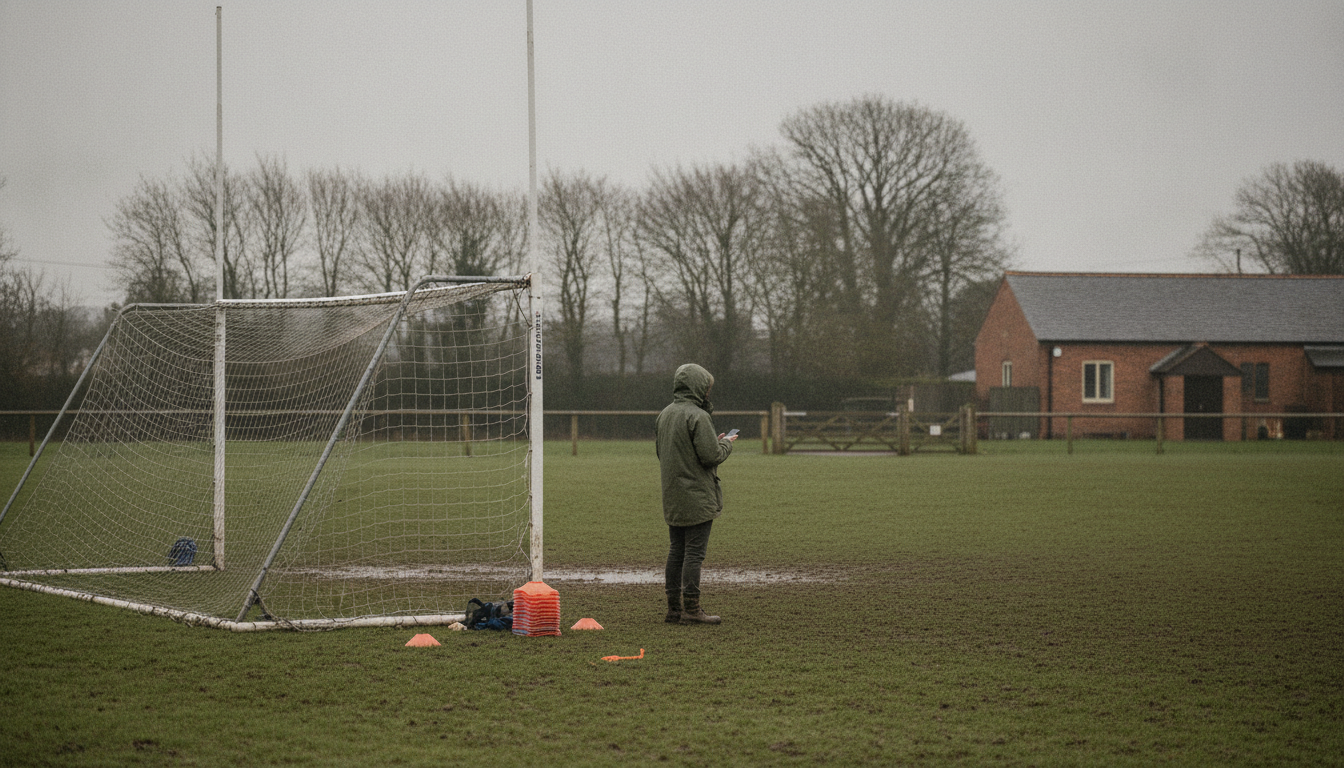
Four decisions to make before it happens rather than during it.
Refund or credit? Credit with a long expiry is the published norm, and a threshold stops single sessions creating endless admin. The YMCA of Greater Seattle issues pro-rated credit valid for 12 months toward any of its programs, but only after 3 missed days on monthly childcare and 1 missed day on session-based programs. That threshold is the part worth copying.
Reschedule rights. Offer a named alternative session before you offer money. Most people would rather have the class.
Minimum numbers. If you will cancel a course that does not fill, say how far ahead you will decide and what happens then. Every parent has been burned by a course quietly disappearing a week before it started, and publishing the decision date is the fix.
Your own late notice. If you cancel inside your own notice window, waive everything and give priority rebooking or a full refund. Holding customers to a standard you exempt yourself from is what makes a policy indefensible.
IF WE CANCEL A SESSION Weather, venue or staff: we will tell you by [text and email] as early as we can and offer a replacement session first. If none of the alternatives work for you, you receive a credit valid [12 months] or a refund for that session, whichever you prefer. Minimum numbers: if a course does not reach [6] bookings we will decide and tell you at least [7 days] before the start date, and refund you in full. Single missed sessions: credits are issued once [1] session of a weekly course, or [3] days of a monthly program, have been missed. Our own late notice: if we cancel inside our own [24-hour] window, no fees apply to you and you get first refusal on the rescheduled date.
Making the charge stick: agreement, cards and disputes
Writing the policy is the easy part. Collecting the money is where most operators find out their policy was decorative.
Get agreement at the point of booking
A policy sitting on a web page is not agreement. What you need is a timestamped record that this customer accepted these terms before this booking. That means a checkbox in the booking flow, the policy text inside the confirmation email, and the deadline restated in the reminder.
Three places, every time: the class or service page, the checkout or registration step, and the confirmation and reminder messages. If your registration form is where you collect agreement, build it properly. Our summer camp registration form template and dance registration form template both include the terms acceptance field in the right place.
Charging a card on file
Storing a card and charging it later are two different permissions, and the second one rests entirely on what the customer agreed to when they booked. State the amount or the formula in the policy, not just "a fee," so the charge that lands matches something they have already read.
Charge promptly after the missed session. A fee that appears three weeks later against a business name the cardholder half remembers is the one that gets disputed. If you are still setting this up, our guide to running a Stripe booking system covers how the card details are held and charged.
What happens if they dispute it
A cardholder can dispute a no-show fee with their bank, and the card networks have a reason code aimed squarely at this scenario. Stripe's dispute reason code guide lists American Express code C18, "No Show or CARDeposit Canceled," which covers cardholders charged a no-show fee who believe they canceled in time.
The mechanics are unforgiving. When an issuer raises a dispute, the payment is reversed immediately and your balance is debited for the payment amount plus a dispute fee. Countering costs a further fee that is only returned if you win.
The evidence that wins is exactly what the first two subsections describe. Stripe names it: the cancellation terms you presented at the time of booking, the booking confirmation showing the cardholder agreed to them, cancellation logs with timestamps, and records showing the customer did not attend. If your attendance is marked on paper and your terms live in a Word document, you have none of that. This is one of the quieter arguments for tracking class payments and attendance in one place.
The real goal is not winning disputes. It is never generating one. Clear wording plus a reminder that restates the fee does more for you than any amount of legal language.
The legal limits on what you can charge
This is not legal advice, and consumer law varies by country and by state. Check your own jurisdiction before publishing anything you plan to enforce.
In the US
The Eighth Circuit vacated the FTC's click-to-cancel amendments to the Negative Option Rule in July 2025, and in March 2026 the FTC opened a fresh rulemaking on negative-option marketing and asked for public comment.
The federal position is unsettled. State law is not. California's Automatic Renewal Law, as amended by AB 2863 for contracts entered into, amended or extended from July 1, 2025, requires that a customer who signed up online can cancel online at will, in the same medium they used to join, and that consent to the renewal terms is its own express step rather than something bundled into a general terms box. Other states run their own versions.
So the direction of travel is clear even while the federal rule is not. If you bill memberships on repeat, disclose the renewal terms up front and make canceling as easy as joining. "Thirty days' written notice by post" is exactly the sort of term that attracts attention.
In the UK
Two pieces of law matter. The Consumer Contracts Regulations 2013 give a 14-day cancellation right on most contracts made at a distance, including online bookings. There is an important carve-out: regulation 28(1)(h) removes that right for services related to leisure activities where the contract provides for a specific date or period of performance. A Tuesday 4pm ballet class for the autumn term is dated. A 10-session pass redeemable whenever is not. Get the cancellation information wrong and the cancellation period can extend by up to 12 months.
Second, under section 62 of the Consumer Rights Act 2015, a term that causes "a significant imbalance in the parties' rights and obligations under the contract to the detriment of the consumer" contrary to good faith is unfair, and an unfair term is not binding on the consumer. In practice this is why a cancellation charge you can tie to a real committed cost, the hall you booked, the ratio you staffed, the kit you ordered, stands up better than a round number picked because it sounded firm.
UK providers taking government-funded or voucher-backed places have a further wrinkle, because those payments have their own refund mechanics. Our guide to Tax-Free Childcare payments covers how the money moves back.
How to cut cancellations before the policy matters
The best cancellation policy is the one you rarely have to use. Five things move the number more than any fee does.
Send reminders, and put the fee in them. A reminder that restates the deadline and the charge does two jobs. It prompts the people who forgot, and it gives the people who are wavering a reason to cancel now rather than at the door. Turnstyle Cycle in Boston was seeing 40 to 50 no-shows and late cancels a day at its first studio, more than 15,000 a year, before it introduced a $5 late-cancel and $10 no-show fee for subscribers and one class deducted for pack holders. The owner announced the policy with the no-show numbers laid out for members, and late cancels and no-shows fell by about 75%. The fee did some of that work. Making sure every member knew the fee existed did the rest.
Make canceling easy. This feels backwards and is not. A customer who can cancel in two taps at 9pm on Sunday cancels in time, which turns a no-show into a spot you can resell. One who has to compose an email cancels at 8am on the day, or not at all.
Run a waiting list. A canceled spot only costs you money if it stays empty. An automatic waitlist offer with a hold time refills the place without you brokering who gets it.
Take payment up front. A place someone has already paid for is a place they have a reason to turn up for, or at least to cancel in time. It is why deposits exist at all.
Watch the repeat offenders. A three-strikes rule, where prepayment becomes required after a third late cancellation, is easier to apply than a fee and provokes far fewer arguments. It also targets the small group generating most of your empty spots. Most of the mechanics here come free with any decent online booking system.

Where to publish your policy
Six places, and the policy should be identical in all of them.
- The class, course or service page, where people decide to book.
- The checkout or registration form, as a checkbox they have to tick.
- The booking confirmation email, in full, not as a link.
- The reminder message, at least the deadline and the fee.
- Your terms and conditions page.
- On the wall at reception, if you have a physical space.
One rule matters more than the rest: the version the customer agreed to at booking is the version that applies to their booking. So date your policy, keep the old versions, and never edit it silently. The same discipline applies to every consent you collect, which is why photo consent forms belong in the same versioned registration flow.
Handling your cancellation policy in Pembee
A policy is only as good as the system behind it, and most of the work is in the four or five days between someone deciding not to come and the spot being filled.
Families cancel, switch a class or request a swap from their self-service portal, so the request arrives as a booking change rather than an email at 9pm on a Sunday. That timestamp is the difference between a late cancellation and a refillable spot.
Refunds, credits and class transfers are processed from the dashboard in a few clicks. Card payments run through Stripe, and you can flag cash or bank transfer bookings as paid and reconcile them in the same place, so a refund does not mean logging into two systems.
Waitlists, on our Premium plan, offer a released spot to the next person automatically with a hold time, which is what turns your notice window into recovered revenue rather than an empty mat.
Attendance is marked from a phone or tablet mid-session and no-shows are flagged automatically, so the record the disputes section above calls for is already there when you need to show that a session ran and a customer did not attend.
Key takeaways
- Set your notice window to match how long it actually takes you to refill the spot.
- State the fee as a number or a formula, never as "a fee," and separate the no-show charge from the late-cancellation charge.
- Class and camp businesses should default to credits inside the window, with a stated expiry and no restriction on what they buy.
- Publish what happens when you cancel. It is the clause almost nobody writes and the one that ends the most arguments.
- A charge only sticks if the customer agreed to the terms before booking and you can produce the timestamp, the confirmation and the attendance record.
- Reminders that name the fee do more for your no-show rate than a stricter policy does.
- Date every version, and apply to each booking the version that was live when it was made.
FAQs
What is a 24-hour cancellation policy?
A 24-hour cancellation policy means customers can cancel or reschedule free of charge as long as they tell you more than 24 hours before the session starts. Inside that window, you charge a stated fee, commonly 50% of the session price, and usually the full price for a no-show. It is the most common standard for single appointments.
Can I charge a no-show fee?
Yes, provided the customer agreed to the policy before booking and the amount or formula was stated. Legality is rarely the problem; collection is. The cardholder can dispute the charge with their bank, so you need the booking record, the accepted terms and proof the session ran to defend it.
Should I offer a refund or a credit?
Credit keeps the money in your business and the family in your program, which is why most class and camp providers default to it inside the notice window. Make it fair by stating an expiry, commonly 12 months, and letting the credit be spent on anything you run. Offer cash refunds outside the window.
How much notice should I ask for?
Ask for the time it genuinely takes you to refill the spot. Drop-in classes with a waiting list refill in hours, so 4 to 12 hours is enough. Appointments usually need 24 to 48 hours. Terms and camps need weeks, and are better handled with a fixed calendar cutoff date than an hours-based window.
Do I have to refund if I cancel the class?
If you cancel, you should offer an alternative session first, then a full refund or a credit if none suits. Publishing this makes the rest of your policy far easier to enforce, because it removes the accusation that the terms only run one way. Set a threshold, such as crediting after one missed session of a weekly course.
Is a cancellation policy legally binding?
It depends on whether the customer agreed to it before paying and on your local consumer law. A policy buried on a terms page nobody ticked is weak. In the UK, a charge exceeding your genuine loss can be unfair and unenforceable under the Consumer Rights Act 2015, and distance bookings can carry a 14-day cancellation right.
What is a reasonable late-cancellation fee?
Tie it to what you actually lost. Common structures are 50% of the session fee for a late cancellation and 100% for a no-show, or forfeiture of one class credit from a pack. For terms and camps, a non-refundable deposit sized to your committed costs works better than a percentage.
How do I enforce a cancellation policy without losing customers?
Apply it the same way to everyone, name one narrow exception you will always honor, and let the first offense go with a friendly note that quotes the policy. Most people accept a fee they were reminded about. Almost nobody accepts one they are hearing about for the first time after the fact.
Should the policy be different for children's classes?
Yes. Illness is routine rather than exceptional with young children, so a policy built on fees will be either unenforceable in practice or resented. Capped make-up credits, commonly three per child per term, valid within the same term, handle the real situation while keeping your revenue and your class sizes stable.
Can I change my cancellation policy for existing bookings?
Apply changes to bookings made after the new version is published, and honor the old terms for bookings already taken. Retroactive changes are the fastest route to a card dispute you will lose, because the customer never agreed to the terms you are trying to enforce. Date every version and keep the old ones. The policy that works is the one the customer read before they paid, written around how long it actually takes you to refill a spot. Start with template 12, fill in the brackets, and put it in the three places that matter: the class page, the checkout, and the confirmation email. Then write the version for when you are the one canceling, because that is the section that saves you the most email.