
Dance Lesson Plans: Free Printable Templates by Age & Style


You planned a lovely 16-count combination. By minute 12 it's clear it's too hard, half the class is staring at their feet, and you have no backup. Every dance teacher has taught that class once. Good dance lesson plans stop it from happening twice, because they give each class a shape, a single goal and a fallback when things go sideways.
A dance lesson plan breaks a class into five parts: warm-up, technique, across the floor, combination or choreography, and cool-down. Set one goal per class, give each part a time and a piece of music, and build the combination a few counts at a time across the term.
Below you get time splits for 30, 45, 60 and 90-minute classes, the order of exercises for six dance styles, a copy-paste template and four complete sample plans, from creative movement for 3-year-olds to contemporary for adults. The template and every sample plan are free one-page PDFs you can print and take into the studio.
What goes into a dance lesson plan
Every style, from preschool creative movement to advanced ballet, runs on the same five parts. The content changes. The order almost never does, because each part prepares the body for the next one.
Warm-up. Raise the heart rate, move the joints through their range and preview the day's focus. If today is about pirouettes, the warm-up should already include relevés and spotting. Keep it moving: the International Association for Dance Medicine and Science (IADMS) advises against long static stretches in the warm-up and suggests saving them for the cool-down. A study in the Journal of Dance Medicine and Science found dancers jumped higher after dynamic or combined stretching than after static stretching alone.
Technique. This is where you teach the day's one or two priorities. Work simple to complex, slow to fast and supported to unsupported: a tendu at the barre before a tendu in the center, a single turn before a double.
Across the floor. Traveling steps use the whole room and test whether the technique holds up when dancers have to move through space. Give one correction before each pass and one after. More than that and nobody remembers any of it.
Combination or choreography. Here the class puts the technique to music. For most studios this block is where the recital piece lives, so it grows a little every week.
Cool-down and review. Static stretching, slower breathing and a 30-second recap of the one thing they learned. End with a bow or révérence so every class closes the same way.
At the top of the plan, add the header fields you'll want when you pick it up next week: class name, style, level, ages, length, date, objective, music, props and notes.
How to split the time for 30, 45, 60 and 90-minute classes
The five parts stay the same at every length. What changes is how many minutes each one gets. Use this table as a starting point, then adjust for your class.
| Part of class | 30 min | 45 min | 60 min | 90 min |
|---|---|---|---|---|
| Warm-up | 5 | 7 | 10 | 15 |
| Technique | 7 | 12 | 15 | 25 |
| Across the floor | 7 | 10 | 12 | 15 |
| Combination / choreography | 7 | 11 | 18 | 28 |
| Cool-down and review | 4 | 5 | 5 | 7 |
Two rules of thumb sit behind those numbers. First, roughly a quarter to a third of any class should be spent dancing to music in a combination or creative task, because that's the part students came for. Second, the younger the class, the shorter each activity. For under-6s, change activity every 3 to 5 minutes, and swap the formal technique and combination blocks for short play-based segments (sample plan 1 shows how).
Class length also affects what you can charge and how you build a timetable. If you're setting those numbers now, our guide on how much to charge for dance classes walks through tuition by class length.
The order of exercises by dance style
Order matters because each exercise warms up what the next one needs. Pliés warm the knees and ankles for tendus, tendus prepare the feet for dégagés, and jumps come last, once the body is fully warm. Change the order and you lose both safety and progression.
Here is the standard running order for six common styles. Use it when you plan a combo class, cover a style you don't normally teach or train a new teacher.
| Style | Warm-up | Technique (in order) | Across the floor | Combination | Cool-down |
|---|---|---|---|---|---|
| Ballet | Gentle pulse raise, foot and ankle articulation | Barre: pliés, tendus, dégagés (jetés), rond de jambe à terre, fondus, frappés, adagio/développés, grands battements. Center: port de bras, adagio, pirouettes, petit allegro | Chassés, glissades, grand allegro, leaps | Short center enchaînement or recital phrase | Stretch, révérence |
| Tap | Toe-heel drills, ankle circles, weight shifts | Shuffles, flaps, step-ball-change, paradiddles, cramp rolls, time steps | Traveling flaps, shuffle-ball-change, riffs | Combination built in 8s, often to a swing or pop track | Calf and ankle stretch, call-and-response rhythm review |
| Jazz | Isolations: head, shoulders, ribs, hips | Strength and stretch, jazz walks, pirouettes, kicks | Chaîné turns, jetés, leaps, jazz runs | Stylized combination with turns and a jump | Floor stretch |
| Hip hop | Bounce, rock and groove to a steady beat | Foundations: two-step, running man, top rock, wave, then drills in sets of 8 | Traveling grooves, footwork lines | Combination taught in 8s, groups performing for each other | Freestyle cypher, stretch |
| Contemporary / lyrical | Floor work, spine articulation, breath | Swings, falls and recovery, weight transfer, release technique | Traveling phrases with level changes and turns | Phrase work, often with dynamics and musicality focus | Improvisation task, stretch |
| Creative movement (ages 3-5) | Hello song, seated body-part warm-up | Simple shapes: pointed and flexed feet, rises, bends | Tiptoes, gallops, marches, skips, freeze games | Imagination dance with props on a theme | Calm stretch, bow, sticker |
The pattern repeats across every style: small joints and simple movements first, big jumps and traveling steps later, and something quiet to close. If you remember nothing else from this table, remember that jumps and leaps never go at the start of class.
Plan the music and counts, not only the steps
Dance is the one activity where the lesson plan depends on someone else's recording. A plan with great steps and no music ready falls apart while you scroll for a track. So give music its own column, and fill it in before class.
For each part of the plan, write three things: the track, where to cut it and the tempo. "Track 4, start at 0:12, fade at 1:45" saves you fumbling with a phone mid-class.
Tempo should follow the job of each section. These ranges are our own starting points, not rules, so adjust for your dancers' age and level:
- Slow (about 60 to 80 BPM): pliés, adagio, cool-down stretches. Ballet class music here is often in 3/4, which you count in waltz phrases.
- Medium (about 90 to 110 BPM): tendus, isolations, hip hop grooves and most combinations for beginners.
- Medium-fast (about 110 to 120 BPM): warm-ups that need to raise the heart rate.
- Fast (about 120 to 140 BPM): petit allegro, across the floor, hip hop drills for experienced students.
Most popular music is in 4/4 time: four beats to a bar, with dance phrases counted in eights. Two bars make one 8-count, and four 8-counts make a 32-count phrase, which is a common length for a combination section. Write your counts the way you'll say them in class:
- "5, 6, 7, 8" for the lead-in before the phrase starts
- "1, 2, 3, 4, 5, 6, 7, 8" for the main counts
- "&a1" for the quick in-between counts in tap and jazz
- Which count the phrase starts on, if it isn't 1
A few prep habits save a lot of stress. Build each class's playlist in the order you'll teach it. Keep a backup copy on a second device. Use clean versions for kids and teens, and check lyrics for anything you wouldn't want parents to hear. Licensing rules for public performance vary, so check them before you use recorded music at a recital or showcase.
A dance lesson plan template you can copy (free PDF)
Here's a fill-in template that covers everything the five-part structure needs, plus the music column and the counts. Copy it into a doc or your planning folder, or download the dance lesson plan template as a printable PDF to fill in by hand.
DANCE LESSON PLAN Class name: ____________ Style: ____________ Level: ____________ Ages: ____________ Length: ____ min Date: ____________ Teacher: ____________ Objective (one sentence): ________________________________ Focus correction for today: ________________________________ Music list (track / cut point / tempo): 1. ________________________________ 2. ________________________________ 3. ________________________________ Props / equipment: ________________________________ Warm-up (____ min) - exercises and music: ________________________________ Technique (____ min) - exercises in order: ________________________________ Across the floor (____ min) - steps and lines: ________________________________ Combination (____ min) Counts taught today: ____ to ____ Counts reviewed: ____ to ____ Cool-down and review (____ min) - stretch, recap question, bow: ________________________________ Notes for next week (who was absent, what to repeat, one carry-forward correction): ________________________________
The last line does the most work. A one-sentence note on what to repeat and which correction to carry forward means you start next week's class from where this one ended, not from memory. Keep every filled-in plan. A full season of them becomes next year's curriculum, and it's the first thing a new teacher will ask for.
Sample plan 1: Creative movement (ages 3-5, 30 minutes)
Preschool classes run on rituals, imagination and short bursts. This plan uses a seasonal "snow day" theme, but the shape underneath stays fixed every week. Thirty minutes is the right length for most 3-year-olds; 4 and 5-year-olds can handle 45.
Objective: stop and hold a shape on the music's cue.
| Time | Section | Activity | Music | Props |
|---|---|---|---|---|
| 3 min | Hello circle | Name song, each child shows a "hello" movement for the class to copy | Same hello song every week | Poly spots |
| 5 min | Seated warm-up | "Wake up" each body part: wiggle toes, point and flex feet, roll shoulders, stretch tall | Gentle, medium tempo | None |
| 5 min | Ballet in the circle | Pliés as "melting snowmen," rises as "growing icicles," pointed and flexed feet | Slow, calm instrumental | None |
| 7 min | Traveling | Tiptoes, gallops and marches across the room in pairs, then a freeze game: when the music stops, hold a snowflake shape | Upbeat with clear stops | Cones for start and finish |
| 5 min | Imagination dance | Scarves become falling snow: float, swirl, settle on the floor, rise again | Light, flowing instrumental | Scarves |
| 5 min | Cool-down | Lie down and "melt in the sun," butterfly stretch, recap ("What did we do when the music stopped?"), bow and sticker | Same goodbye song every week | Stickers |
Three habits make this age group work. Give one instruction at a time, because a three-part instruction gets you one part. Show, don't tell: do the movement and let them copy. And keep the opening and closing rituals identical every week so children know what's coming and settle faster.
Freeze dance is the workhorse here, and our list of dance games for kids has a dozen more you can drop into the traveling or imagination slots. For the parent-facing case for play-based classes, our post on the benefits of dance for children covers what this age group gains.
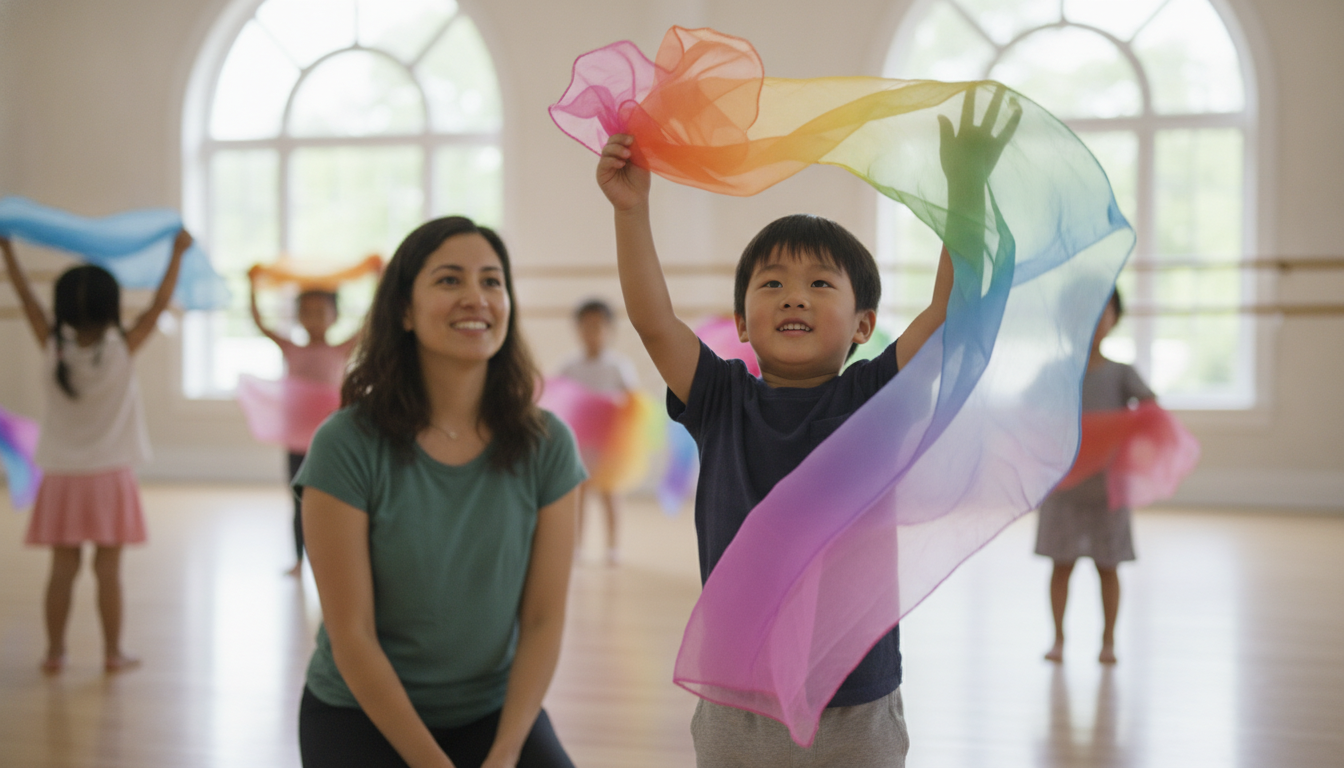
Download the creative movement plan as a printable PDF.
Sample plan 2: Ballet and tap combo (ages 5-7, 45 minutes)
Combo classes are a staple of US studios for this age, and they come with a timing problem most plans ignore: the shoe change. Build it in, or it eats your tap combination. This plan splits 22 minutes of ballet, 3 minutes for shoes and 20 minutes of tap.
Objective: keep weight over the balls of the feet in shuffles and sautés.
Ballet (22 minutes)
- Warm-up (5 min): marching, arm circles, point and flex feet seated, then stand and rise up and down on two feet.
- Technique (7 min): at the barre or a "pretend barre" (hand on hip, arm in second): pliés in first position, tendus front and side, then sautés in first, landing through the feet.
- Across the floor (5 min): ballet runs, skips and chassés in pairs, one correction before each pass ("tall like a crown").
- Ballet combination (5 min): an 8-count phrase of tendu, tendu, plié, rise with port de bras, repeated to the other side.
Shoe change (3 minutes). Line shoes up by the wall before class, and play a "beat the music" song so children race to swap shoes before it ends.
Tap (20 minutes)
- Warm-up (3 min): toe taps, heel digs and ankle circles, then marching in tap shoes to hear the sound.
- Technique (7 min): shuffles front, flaps in place, then step-ball-change. Watch weight placement: if they're back on their heels, the shuffle goes quiet.
- Across the floor (3 min): traveling flaps in lines of three.
- Tap combination (5 min): a 16-count combination built from today's steps. Teach the first 8 counts this week and add the second 8 next week.
- Cool-down (2 min): calf stretch, a call-and-response rhythm ("I tap, you tap") and a bow.
That 16-count tap combination is the seed of the recital piece. Add 8 counts every week or two and, by spring, you have a full routine the class already knows in its bones. If you're kitting out a new room for combo classes, our dance class equipment list covers barres, flooring and the speaker you'll need.
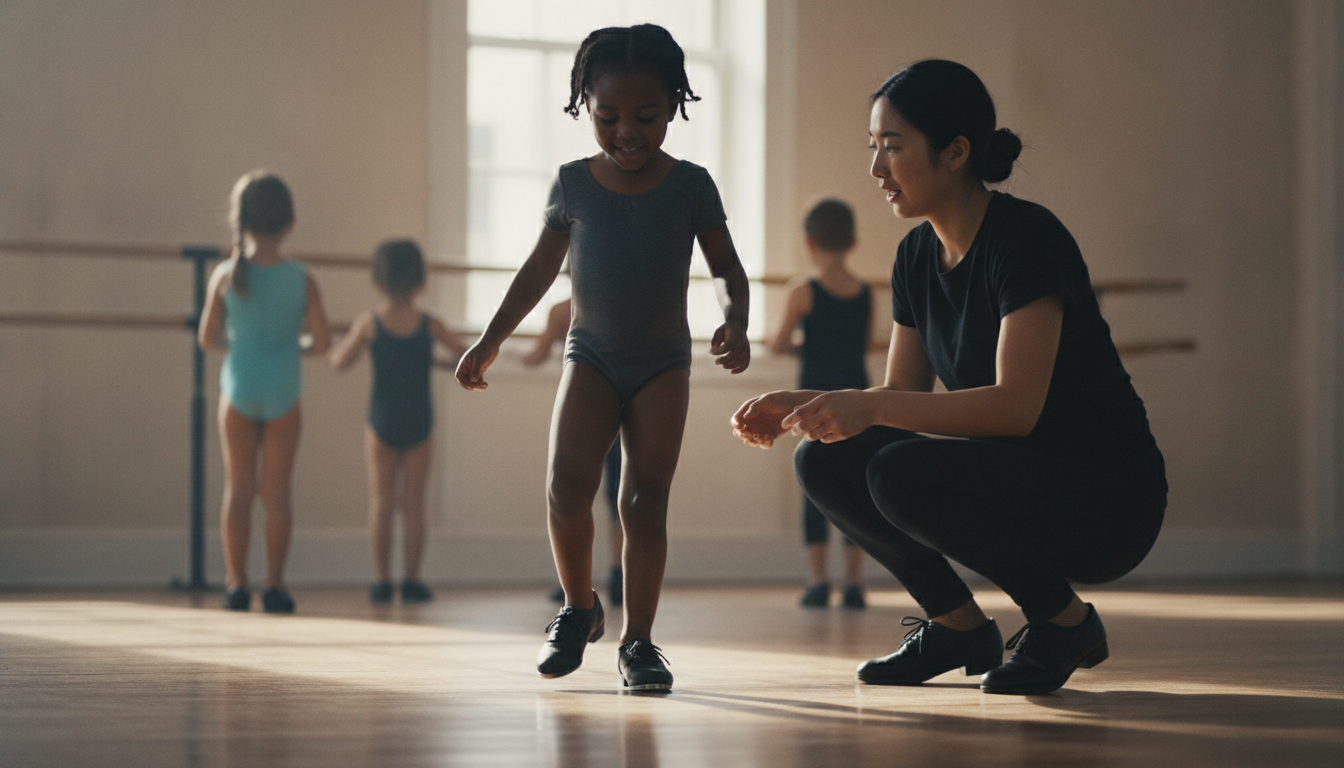
Download the ballet and tap combo plan as a printable PDF.
Sample plan 3: Hip hop (ages 8-12, 60 minutes)
Hip hop students at this age want to dance, not stand around waiting. The plan keeps them moving and saves the talking for short bursts between drills.
Objective: stay on the beat while changing direction.
- Warm-up (10 min): bounce and rock in place to a steady groove at around 90 to 100 BPM, then isolations (head, shoulders, chest, hips) and a dynamic leg warm-up of knee raises and side lunges.
- Foundations (15 min): drill three named moves in sets of 8: the two-step, the running man and a basic top rock. Teach each one slowly without music, then on the counts, then to music. Finish by linking them with a direction change on count 8.
- Across the floor (12 min): traveling two-steps and running man in lines of three, adding a quarter turn on the last 8. Change the lines' order each pass so the same kids aren't always at the front.
- Combination (18 min): teach 8 new counts and review the 16 counts from previous weeks. Teach facing the mirror first, then turn the class around to face the back wall so they can't rely on watching you. Finish with groups of four performing the full 24 counts for each other.
- Freestyle and cool-down (5 min): a short cypher where anyone who wants to can take 8 counts in the middle, then a hamstring, quad and calf stretch.
A few notes for this class. Use clean versions of every track, and keep a parent-safe playlist ready for when you hand music duties to students. Small-group performances do two jobs: they let students watch and learn from each other, and they show you exactly who's lost on which 8-count. Fix it as a group rather than singling anyone out: "Everyone, counts 9 to 16 again."
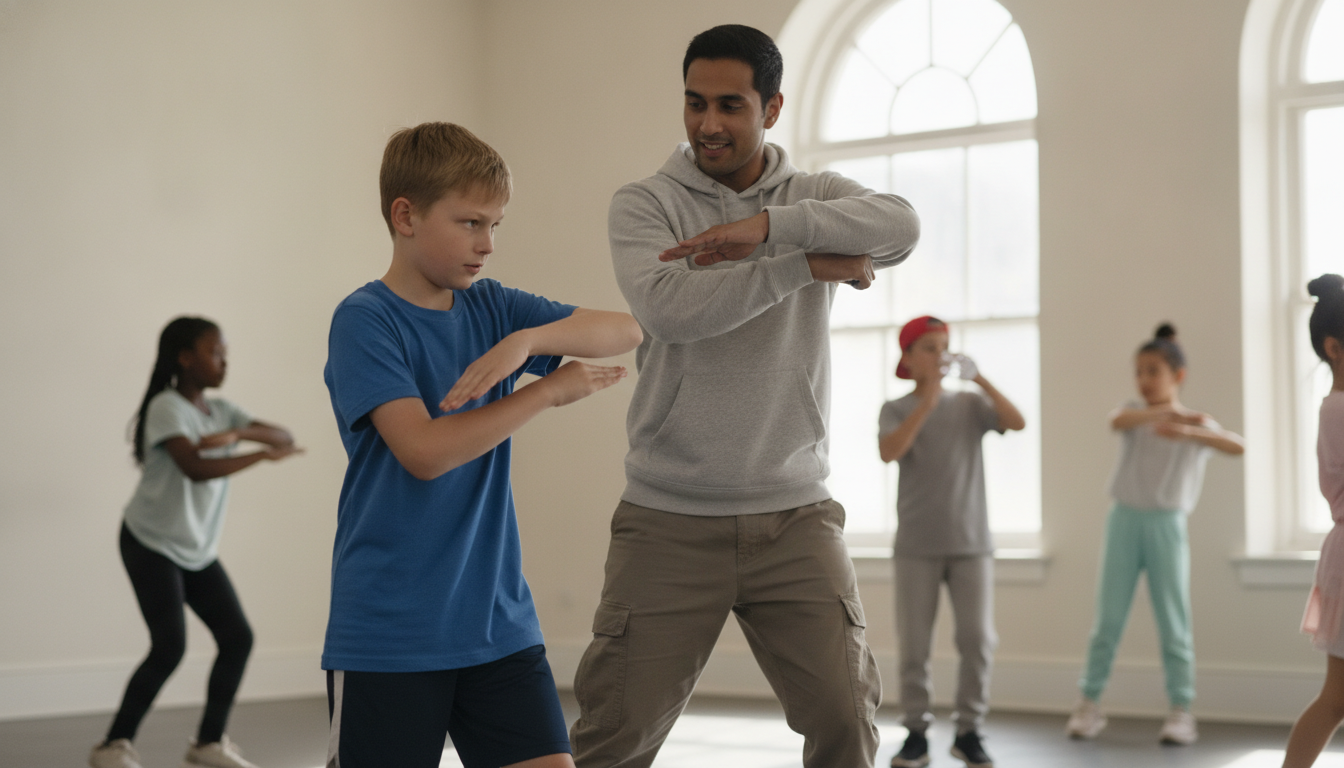
Download the hip hop plan as a printable PDF.
Sample plan 4: Contemporary for teens and adults (60-75 minutes)
Adult classes are a growing slice of many studios' timetables, from first-timers to former dancers coming back after years away. Contemporary suits both, and the same plan works for teens with a few changes. Timings below are for a 75-minute class; for 60 minutes, trim the phrase work to 18 minutes, the swings block to 10 and across the floor to 10.
Objective: use the breath to start and finish each movement.
- Floor warm-up and spine articulation (12 min): lying breath work, rolling through the spine, pelvic tilts, then seated curves and spirals. Start slow, around 60 to 70 BPM.
- Swings, falls and weight transfer (15 min): arm and leg swings, rolling down to the floor and back up, and shifting weight side to side with momentum. This is where the day's objective lives, so give each exercise a breath cue.
- Across the floor (13 min): a traveling phrase with a level change (stand, roll to the floor, rise) and a turn. Send dancers in pairs, two counts apart.
- Phrase work (25 min): teach 16 to 32 counts, depending on level. Run it with the class split into two groups so each group watches the other once.
- Improvisation (5 min): a short task, such as "dance the phrase again but only using the floor."
- Stretch and review (5 min): static stretches for hips, hamstrings and back, held now that the body is warm, and one question to close: "Where did the breath help you today?"
For adult beginners, assume no prior training. Use shorter static holds, more repetition and less new material per class. Explain why each exercise is there, because adults learn faster when they know what it's for. Offer an easier option on every floor exercise, as stiff wrists and knees are common among adults returning to dance.
For teens, add more technical challenge: higher extensions, a double turn, faster tempos and more counts per class. Teens also respond well to choice in the improvisation task, and to a say in the music.
If you want an alternative stretch-focused cool-down for adult classes, our kids yoga lesson plan has floor sequences that scale up easily.
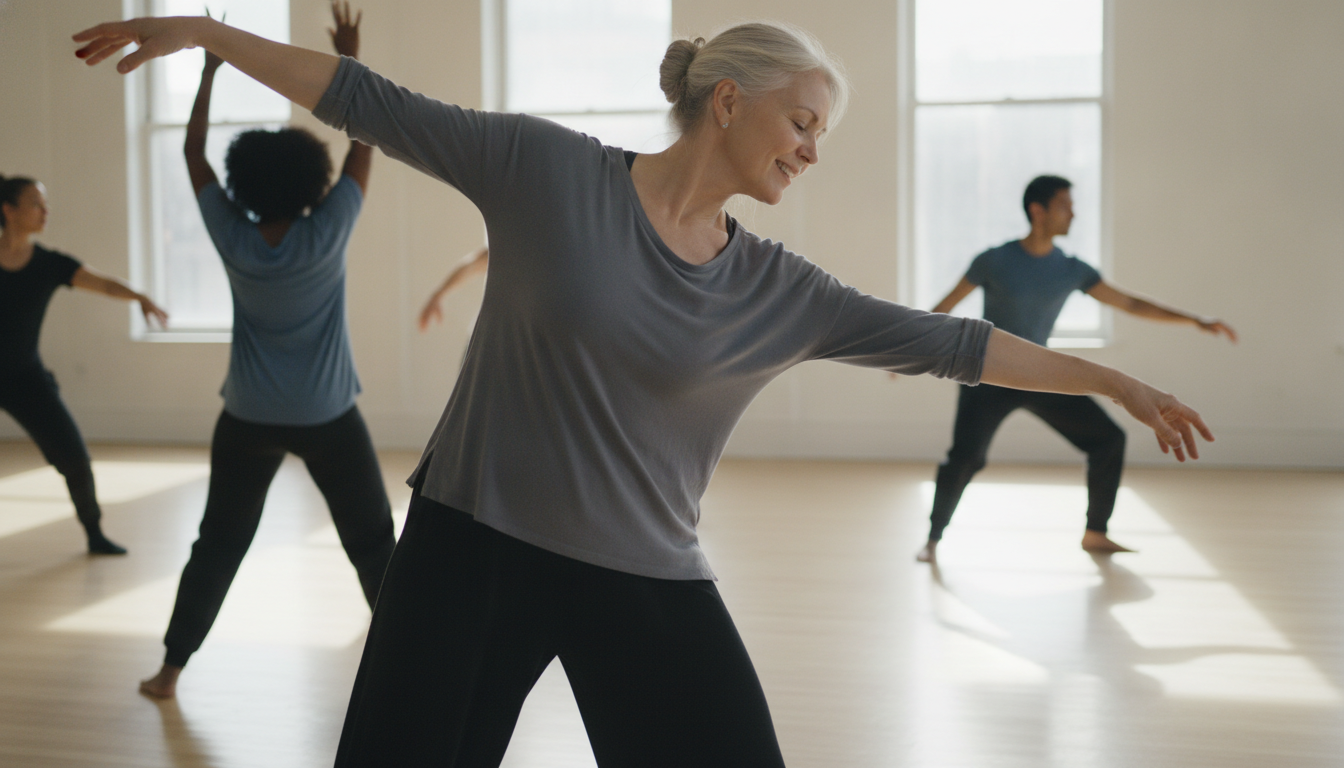
Download the teen and adult contemporary plan as a printable PDF.
From one lesson to a full season
A single plan gets you through Tuesday. A season of plans gets you to the recital without a panic in April. The trick is to link each week's objective to a bigger goal for the term, and to treat the combination as something that grows rather than something you replace.
The simplest rule: teach 8 new counts, review the rest. With that pace, a 32-count piece takes about 4 to 6 weeks to teach, leaving time to clean it. Younger classes may need two weeks per 8-count; teens and adults can often take 16 or more.
Most US studios run a season from September to May or June, ending with a spring recital. Here's how that year typically breaks down.
| Months | Focus | What the lesson plans look like |
|---|---|---|
| September-October | Foundations and level checks | Same warm-up every week, core technique, short combinations to see who's where |
| November-December | Build vocabulary | New steps each week, longer combinations, optional holiday showcase |
| January-February | Recital choreography starts | Combination block becomes the recital piece, taught 8 counts at a time |
| March-April | Clean, spacing and formations | Less new material, more spacing checkpoints, transitions and run-throughs |
| May-June | Performance | Full runs, dress rehearsal, recital |
| Summer | Intensives and camps | Short-run plans, new styles, technique catch-up |
Two checkpoints keep the season on track. Every 4 to 6 weeks, add a spacing checkpoint to the plan, where dancers learn where they stand in each section of the piece. And film a full run on the same schedule so you and the class can see progress (get consent first; our photo consent form templates cover filming too).
The season starts before the first class. September plans depend on knowing who's enrolled, their ages and any medical notes, which is why your dance registration form matters as much as your choreography. Popular classes fill fast, and a class waitlist lets you offer spots in order when someone drops out. For costume, theme and staging ideas for the end of the season, see our dance recital ideas.
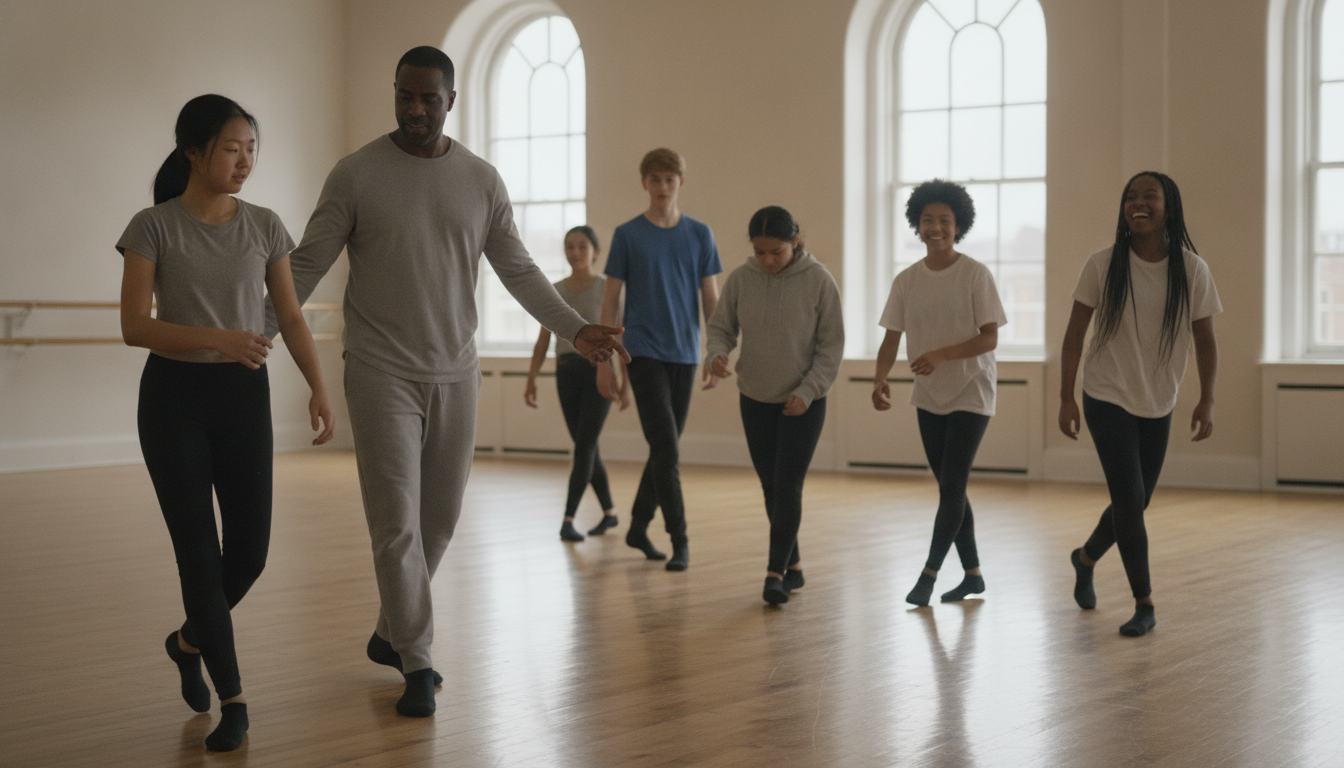
One plan, mixed levels and mixed ages
Most classes have a spread of ability. You don't need three plans. You need three versions of each exercise: easier, standard and harder.
| Part of class | Easier | Standard | Harder |
|---|---|---|---|
| Technique | Hold the barre with two hands | One hand on the barre | Repeat in the center, no support |
| Turns | Quarter or half turn | Single pirouette | Double pirouette |
| Counts | Half-time (one move every 2 counts) | Full-time | Add the "&" counts |
| Energy | Marking the movement | Full out | Full out with performance focus |
| Jumps | Sautés in first | Changements | Add a beat or a turn |
Grouping helps too. For across the floor, sort lines by level so stronger dancers go first and set the example. In the combination, rotate the front row every run so everyone gets a turn near the mirror and nobody hides at the back.
New student mid-term? Teach them the first 8 counts of the combination only and pair them with a buddy who knows the rest. They'll pick up the remaining counts by watching, and they won't feel lost on day one.
Plan B when the class doesn't go to plan
Even the best plan meets reality. These swaps keep the class useful when something goes wrong.
- Half the class is absent. Don't teach new counts, or you'll spend next week re-teaching. Use the time for cleaning, a new game or an extra pass across the floor.
- The combination is too hard. Cut it to half-time, drop the turn or teach only the first 4 counts. Write down what you changed so next week's plan starts at the right level.
- The music fails. Count out loud, clap the rhythm or switch to body percussion. Tap classes can keep going in silence, as the shoes are the music.
- Energy is too high. Move the across-the-floor block earlier to burn it off, then come back to technique.
- Energy is too low. Swap the slow warm-up for an upbeat groove and get them traveling sooner.
- The room is smaller than expected. Use a stationary combination, send dancers across the floor in pairs instead of lines, or work in sections while the rest watch.
- The class is younger or less experienced than the plan. Drop to the "easier" version of every exercise and double the time on each block.
Sharing lesson plans across your teaching team
Once a studio has more than one teacher, lesson plans stop being a personal habit and become part of how the studio runs. Consistent plans mean a 6-year-old moving up a level doesn't start from scratch, and a parent hears the same terms from every teacher.
Start with one template for every teacher (the one above works) and a shared folder organized by class and term. Ask teachers to save the filled-in plan after each class, including the notes line.
The real test is the substitute. When a teacher is sick, the sub needs one page with:
- The day's plan and timings
- The music, in order, with cut points
- Where the combination is up to (counts taught, counts still to come)
- The class roster, with any new students flagged
- Medical notes and allergies
- Pickup arrangements for younger students
Most of that last half lives in your booking system, not a lesson plan. Our class roster shows who's booked into each class along with medical notes, and our attendance tracker shows who's new or has missed a run of weeks, so a sub can see both on a phone at the studio door. If you're planning the timetable and team for a new studio, our guide on how to open a dance studio covers hiring, scheduling and the rest of the setup. New teachers can find the training side in our guide on how to become a dance teacher.
Using these plans in a school or after-school program
School and after-school dance teachers can use the same five-part plan. In public schools, it usually needs to show how it meets the National Core Arts Standards, which organize 11 anchor standards into four artistic processes: creating, performing, responding and connecting.
The five-part plan already maps onto them:
- Creating: the improvisation task or imagination dance, or students choreographing their own 8 counts.
- Performing: the combination, especially when groups perform it for the class.
- Responding: peer viewing, where students say one thing that worked in another group's performance.
- Connecting: linking a dance to a theme, story or culture, such as a weather dance in a science unit.
After-school sessions also help kids meet the CDC's recommendation that children ages 6 to 17 get 60 minutes or more of moderate-to-vigorous physical activity each day. For planning a broader after-school timetable with dance as one strand, see our guide to crafting engaging after-school lesson plans.
The short version
- Build every class from five parts: warm-up, technique, across the floor, combination and cool-down.
- Set one objective per class and one focus correction.
- Use the time-split table for 30, 45, 60 and 90-minute classes, and change activity every 3 to 5 minutes for under-6s.
- Keep static stretching for the cool-down. Warm up with dynamic movement.
- Put music, cut points and tempo in the plan, and keep a backup copy.
- Teach 8 new counts and review the rest, so the combination grows into the recital piece.
- Write a "next week" note after every class and keep a plan B ready.
FAQs
What should a dance lesson plan include?
A dance lesson plan should include a warm-up, technique, across the floor, a combination and a cool-down, each with a time and a piece of music. Add a one-sentence objective, the props you need and the counts you'll teach. Finish with a notes line for next week, covering what to repeat and who was absent.
How long should a dance class be?
It depends on age. Classes for 2 and 3-year-olds usually run about 30 minutes, 4 and 5-year-olds can manage 45, and school-age kids typically take 45 to 60 minutes. Teens and adults often train for 60 to 90 minutes, especially in ballet and contemporary.
How do you structure a dance class for preschoolers?
Use short blocks of 3 to 5 minutes: a hello circle, a seated warm-up, simple ballet shapes, traveling steps, an imagination dance with props and a calm cool-down. Keep the opening and closing rituals the same every week. Give one instruction at a time and demonstrate rather than explain.
How many counts should I teach in one class?
For most kids' classes, about 8 new counts per class is enough, with time to review what came before. Very young or brand-new dancers may need two weeks per 8-count. Teens and adults can often learn 16 to 32 counts in one class, depending on level and complexity.
Should dancers stretch before or after class?
Dynamic stretching belongs in the warm-up, and longer static stretches belong in the cool-down. IADMS advises against static stretching in the warm-up, and research on dancers has found better jump height after dynamic stretching than after static stretching alone. Muscles are also warmer and more receptive to stretching at the end of class.
How do I plan a dance class for mixed levels?
Write one plan and give each exercise an easier, standard and harder version, such as a single or double pirouette, or half-time and full-time counts. Group lines by level for across the floor and rotate the front row in combinations. Give new students the first 8 counts only and a buddy.
How far ahead should I plan recital choreography?
Most US studios start recital choreography in January or February for a May or June recital. That leaves about 4 to 6 weeks to teach a 32-count section at 8 new counts a week, then months for cleaning, spacing and run-throughs. Longer or more complex pieces need an earlier start.
What is the difference between a dance curriculum and a lesson plan?
A curriculum sets out what students should learn across a level or a year, such as the steps, skills and standards for Ballet 2. A lesson plan is what you teach in one class to move them toward that. A season of well-kept lesson plans often becomes your curriculum for the following year.
What music should I use for a dance class?
Match the tempo to the job: slow music for pliés, adagio and stretching, medium for tendus and grooves, and faster tracks for across the floor and jumps. Use clean versions for kids and teens. Build the playlist in class order and keep a backup on a second device.
What should a substitute dance teacher get?
A substitute needs the day's plan and timings, the music with cut points, and where the combination is up to. They also need the class roster with new students flagged, medical notes and pickup arrangements. Keeping all of that on one page, or in your booking system, makes a sick day much easier for everyone.