
Dance Studio Business Plan UK: Template, Costs and Cash Flow

Reading from the US? This guide has a US version written for local rules, prices and qualifications. Read the US version

Most UK dance schools don't start in a mirrored studio. They start in a church hall on a Saturday morning, with a portable speaker and a list of names. The plan that matters for a school like that isn't a 40-page document about market trends. It's the one that shows three termly fee runs paying for a whole year, including a quiet August.
A UK dance studio business plan covers what you'll teach and where, who your pupils are, your term fees, your start-up and running costs, a 12-month cash flow forecast and the number of enrolments you need to break even. If you're applying for a Start Up Loan, you'll also need a personal survival budget.
Below you'll find the template section by section, plus a worked model for a 12-class hall-hire school with real £ figures: start-up costs, a year's profit, a month-by-month cash flow, the break-even number for hired halls vs a leased studio, and how VAT changes the picture as you grow. If you're still at the earlier stage of deciding whether to go it alone, start with our guide to opening a dance studio in the UK.
Two free downloads go with this guide: a fillable business plan template (.docx) with prompts for every section, and a cash flow and break-even calculator (.xlsx) with the worked example already built in. Both open in Word and Excel, or upload straight into Google Docs and Sheets.
What a UK dance school business plan needs to do
Your plan has two jobs. The first is to tell you whether the school works at the fees you can charge and the venue you can get. The second, if you're borrowing, is to convince a lender that you've thought about how the money comes back.
For most teachers the lender is Start Up Loans, the government-backed scheme run through the British Business Bank. Its application asks for four things:
- a business plan
- a 12-month cash flow forecast
- a personal survival budget showing what you need to live on
- three months of personal bank statements
Start Up Loans publishes a free business plan template with matching spreadsheets. Use it as your document shell and fill it with the dance-specific content below, so one plan serves both jobs.
High street banks read plans in a similar way. Many lenders look for your profit to cover loan repayments with room to spare, often around 1.25 times, so a plan that only just covers the repayments in a good term will struggle.
Aim for 10 to 15 pages plus a spreadsheet. If you're funding the school from savings and nobody else will read it, a few pages and the cash flow forecast are enough. Either way, it should cover:
- A one-page summary
- You, your teaching and your business set-up
- Classes, timetable and terms
- Your local market and competition
- Fees and other income
- Marketing and your first-term enrolment plan
- Operations, safeguarding and compliance
- Start-up costs, a year-one forecast, cash flow and break-even
- Risks and funding
Before you write any of it, make one decision, because it changes every number that follows.
First decision: hired halls or your own studio?
A dance school in hired halls and a dance school in a leased unit are almost different businesses. One has low fixed costs and a timetable limited by what the caretaker can offer. The other has a five-figure rent bill, a proper sprung floor and every evening to fill.
Here's how they compare, using the worked model later in this post.
| Hired halls | Leased studio | |
|---|---|---|
| Typical cost | £8-£20 an hour outside central London | Roughly £9-£16 per sq ft a year in a regional city, plus utilities and business rates |
| Start-up spend | About £3,000-£4,000 | About £25,000-£35,000 (floor, mirrors, barres, fit-out, rent deposit) |
| Break-even (our model, at £8 a class) | About 43 class enrolments a week | About 106 class enrolments a week |
| Timetable | Only the slots you can book; Saturday mornings go fast | Yours all week; daytime can be sublet to Pilates or baby groups |
| Floor | Often concrete under lino or old parquet; unsuitable for pointe and hard on tap | A sprung floor you choose |
| Risk | Low; you can usually walk away at the end of a term | Lease length, personal guarantee, dilapidations at the end |
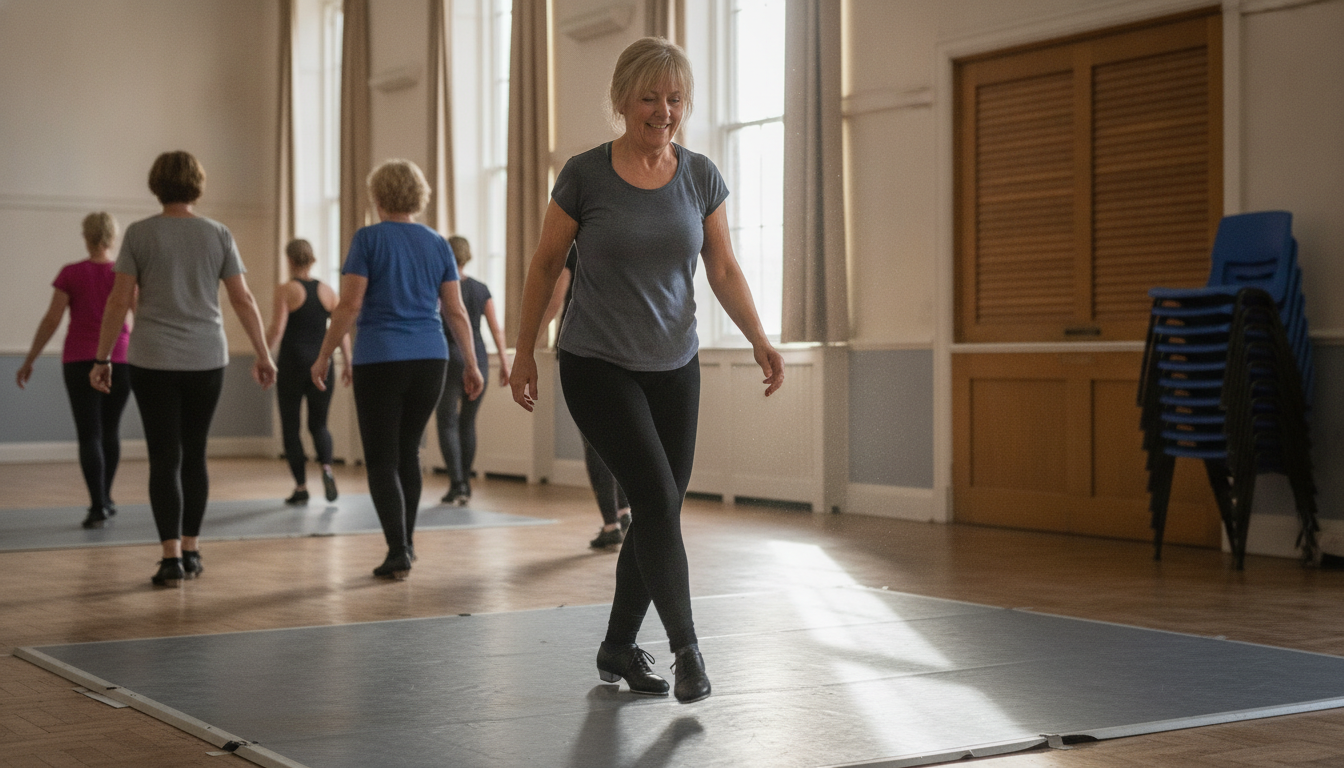
Floors are the biggest physical difference. If the hall floor won't do, Harlequin's Education Pack A gives you 30m² of portable vinyl for £899 ex VAT, enough for a small class to roll out and pack away. A sprung floor is a different league: Harlequin's Pack D, with Liberty sprung panels covering about 80m², is £12,975 ex VAT or £15,570 with VAT. If you're not VAT-registered, the £15,570 is the number that goes in your plan, because you can't reclaim the VAT.
A leased unit also brings business rates. In England, small business rate relief means you pay nothing on a single property with a rateable value of £12,000 or less, with relief tapering to zero at £15,000. Check the unit's rateable value on the Valuation Office Agency's business rates service before you sign. Scotland, Wales and Northern Ireland run their own relief schemes, so check with your council if you're outside England.
Most teachers start in halls and move once demand proves itself. Write that trigger into the plan, for example: "We'll look for our own premises when we reach 150 weekly enrolments and have waiting lists on at least two classes for two terms running." A lender reads that as discipline, and it gives you a clear test. Running a proper class waitlist from day one means you'll have the evidence when the time comes.
The dance studio business plan template, section by section
Copy these headings into your document, or start from the fillable template (.docx), which has the same sections with prompts and ready-made tables. Each heading says what to write, followed by an example from our model school: a sole trader teaching 12 classes a week in two hired halls in a market town.
1. Summary
Write this last and keep it to one page. Say what you'll teach, where, who for, what you'll charge, your enrolment and income targets for year one, and how much money you need and what it's for. Someone who reads only this page should know whether the school makes sense.
Example: Rise Dance School will teach ballet, tap, modern, street and a pre-school class to children aged 3 to 16, plus an adult tap class, in two community halls in the town. We'll run 12 classes a week across three evenings and Saturday morning, at £8 a class, billed termly. We're aiming for 96 class enrolments in the autumn term, rising to 144 by the summer, for year-one income of about £37,000 including our first show. Start-up costs of about £3,000 are covered by savings.
2. You, your teaching and your business set-up
This section sells you. List your teaching qualifications and exam board memberships (ISTD, RAD, IDTA, bbodance), the styles you can teach to exam level, how long you've been teaching and where, and any others involved. If you're teaching for another school now, say how many pupils and which grades you've taken through exams. Our guide to becoming a dance teacher in the UK covers the qualification routes if you're still building these.
Then set out your legal structure:
- Sole trader. The simplest route. You register for Self Assessment with HMRC once your self-employed income goes over the £1,000 trading allowance, and you're personally liable for the school's debts.
- Limited company. Separate legal liability, more admin. Incorporating online with Companies House costs £100 from 1 February 2026, and the annual confirmation statement is £50.
Your structure also affects VAT, which we cover further down. For a teacher running their own classes, sole trader status can keep fee income outside VAT, so don't incorporate before you've read that section and spoken to an accountant.
Finish with the school's name and brand, and check the name is free on Companies House and as a domain and social handle.
3. Classes, timetable and terms
List the styles and age bands you'll teach. A common UK split is pre-school (3 to 4), Reception to Year 2, juniors (Years 3 to 6) and seniors (Year 7 up). Add class lengths, the maximum per class, and which classes will work towards graded exams.
Base your terms on the local school calendar, with half-terms off. A typical year has an autumn term of 12 to 13 weeks and spring and summer terms of about 11 each, giving 33 to 36 teaching weeks. Our model uses 34.
| Day | Venue | Classes |
|---|---|---|
| Tuesday | Church hall | Pre-school ballet, junior tap, senior modern |
| Wednesday | Church hall | Junior ballet, junior street, adult tap |
| Thursday | Community centre | Junior modern, senior ballet, senior street |
| Saturday | Community centre | Pre-school ballet, Reception-Year 2 ballet, Reception-Year 2 tap |
Leave a slot or two for adults. A Wednesday evening tap, contemporary or ballet fitness class fills a later hall slot that children can't use, and adults tend to stay for years.
4. Your local market and competition
Lenders want proof that families nearby will pay. Build it from the ground up:
- Count the primary schools within 15 to 20 minutes' drive using the government's Get Information About Schools service, and note their pupil numbers.
- Map every other dance school in that radius: styles, price per class, exam board, whether they run shows, and which nights they teach.
- Ask the halls which evenings they have free, and when the competition uses them.
- Read local parents' Facebook groups for gaps. Common ones are no boys' street class, nothing for under-fives on a Saturday, or no adult beginners.
Put the competitor research in a simple table (school, styles, price per class, exam board, show) and finish with a two-line positioning statement.
Example: The two established schools in town teach ballet and tap and charge £8.50 to £9 a class. Neither runs street dance or a Saturday pre-school class, and parents in two local groups have asked for both. We'll lead with those classes and price at £8.
5. Fees and other income
Most UK dance schools charge per term, up front, with the fee worked out from a per-class price. Outside London, £5 to £10 a class is typical, with a 12-week term at £7.50 a class coming to £90. London and the South East sit higher. Our guide to pricing dance classes in the UK covers how to set yours against the local market.
Write down your pricing rules as well as the price:
- per-class fee and how the term total is calculated
- sibling and multi-class discounts
- any annual registration fee
- whether you offer monthly instalments
- your refund policy for missed classes (usually none, with make-up classes at your discretion)
Then list the other income, and be honest about which of it is profit:
- Exams. Exam fees of £30 to £80 per candidate mostly go straight to the board. Treat them as money passing through, plus any small admin or extra-coaching charge you add.
- The show. Ticket sales are real income. Costume fees, usually £15 to £40 per dance, normally just cover what you spend on costumes.
- Uniform resale, holiday workshops and summer intensives. Useful extras once the core school runs.
If your school joins the voluntary part of Ofsted's Childcare Register, parents can pay for eligible children with Tax-Free Childcare. Most dance schools are exempt from compulsory registration, so this is optional. Our guide to accepting Tax-Free Childcare payments explains the steps and fees.
6. Marketing and your first-term enrolment plan
The UK dance year has two big intakes: September, when families set up the year's activities, and January. Plan your marketing around them rather than spreading it evenly.
- Summer term tasters. Run free taster sessions in June and July for the September classes, and use your show as a shop window.
- Primary schools. Ask the head or office whether they'll include a flyer in book bags or a line in the newsletter.
- Local Facebook groups and a Google Business Profile. Most parents find classes this way.
- A free first class and a bring-a-friend week. Each term, they turn existing pupils into recruiters.
Give each term an enrolment target in the plan. Our model aims for 96 class enrolments in the autumn, 120 in the spring and 144 in the summer, on a marketing budget of about £1,100 for the year, with £500 spent before launch.

7. Operations, safeguarding and compliance
This section shows a lender, a hall committee and parents that the school is safe and legal. Set it out as a checklist with costs:
- Safeguarding. A written policy, a named safeguarding lead (you, at first) and training. Most hall committees will ask to see the policy before taking your booking.
- DBS checks. Since 21 January 2026, self-employed teachers can apply for an enhanced check with the children's barred list in their own right, through a registered umbrella body, rather than needing an employer to apply for them. From 5 October 2026, an enhanced check costs £41 and the Update Service, which keeps a certificate current, costs £15 a year. Get anyone working with your pupils, including a Saturday assistant, checked at enhanced level with the children's barred list.
- First aid. A paediatric first aid certificate for you, and a stocked kit at each venue.
- Insurance. Public liability for the classes, and employers' liability, which is a legal requirement once you employ anyone, even one assistant for four hours a week. See our guide to dance school insurance in the UK for what to buy.
- Music licence. The hall's own licence usually won't cover your classes. PPL PRS's TheMusicLicence for dance classes gives an example of three classes a week, 20 participants, 50 weeks a year in a village hall for £96.24 a year (26p a day) plus VAT. Get your own quote online, as the cost depends on classes and attendance.
- Data protection. You hold children's names, medical details and photos, so you'll almost certainly need to pay the ICO's data protection fee, £52 a year for a micro business or £47 by direct debit.
- Registers and records. Risk assessments for each venue, emergency contacts, medical and photo consent, and a register for every class. A digital attendance tracker keeps these on your phone and lets you see at a glance who's in the room.
- Staffing. There's no legal staff-to-pupil ratio for dance classes, but your insurer and hall may set one. Our guide to staff-to-child ratios in the UK explains where the legal ratios do apply.
- Bookings and payments. Say how parents will enrol, pay termly fees and get messages. We handle termly bookings, instalments and registers in one system, and our plans and pricing start at £30 a month with a 30-day free trial.
Start-up costs for a UK dance school
Here's what the model school spends before its first class. Hall hire is paid as it's used, so it sits in the running costs.
| Item | Hall-hire school | Notes |
|---|---|---|
| Portable sound system and headset mic | £300 | Bluetooth speaker loud enough for a hall |
| Two portable barres | £350 | Freestanding, fold flat for storage |
| Props, pre-school mats, first aid kits | £250 | Ribbons, beanbags, a kit per venue |
| Website and domain | £200 | Booking runs through your software |
| Launch marketing and open day | £500 | Flyers, banners, a free taster session |
| First year of insurance | £300 | Public and employers' liability; get quotes |
| Music licence | £350 | Estimate for 12 classes a week; get a PPL PRS quote |
| Paediatric first aid, CPD and membership | £400 | Varies by course and exam board |
| DBS check and Update Service for an assistant | £56 | Plus any umbrella body admin fee |
| ICO data protection fee | £52 | Tier 1 |
| Total | £2,758 | About £3,840 with a portable vinyl floor |
Add Companies House's £100 if you incorporate, and keep a contingency of a few hundred pounds. Some halls also ask for a term's hire in advance, about £2,000 for our timetable, so ask before you finalise the figure.
The studio route looks very different. A 1,200 sq ft unit at £12 per sq ft is £14,400 a year in rent, and landlords commonly want three months' rent as a deposit. Add a sprung floor (about £15,600 including VAT), mirrors (£2,000 to £3,000), fixed barres, changing space, signage and legal fees for the lease, and a realistic total is £25,000 to £35,000. Our estimate for the model unit came to about £30,000 before any rent was paid.
A worked example: year one for a 12-class hall-hire school
These are the assumptions behind the model. Change them to your own numbers, but keep the structure.
- Sole trader teaching all 12 classes, in two halls booked for 11.5 hours a week at £15 an hour
- One Saturday assistant aged 18 to 20, 4 hours a week at £10.85, the National Minimum Wage rate for that age from April 2026, plus 12.07% holiday pay for irregular hours
- £8 a class, billed termly up front
- 34 teaching weeks: autumn 12, spring 11, summer 11
- Class enrolments (places, not children) of 96 in autumn, 120 in spring and 144 in summer, so 8, 10 and then 12 a class
- A July show, two performances, selling about £4,800 of tickets
| Income | Calculation | £ |
|---|---|---|
| Autumn fees | 96 enrolments × 12 weeks × £8 | £9,216 |
| Spring fees | 120 × 11 × £8 | £10,560 |
| Summer fees | 144 × 11 × £8 | £12,672 |
| Show tickets | Two performances | £4,800 |
| Total income | £37,248 |
| Running costs | £ |
|---|---|
| Hall hire (11.5 hours × £15 × 34 weeks) | £5,865 |
| Saturday assistant, including holiday pay | £1,654 |
| Show venue, lighting and sound | £1,800 |
| Marketing | £1,100 |
| Accountant | £600 |
| Card fees: Stripe plus our 0.59% (about 2.3% of income) | £857 |
| Insurance, music licence, DBS, ICO, first aid and CPD | £1,158 |
| Booking and payments software | £360 |
| Total running costs | £13,394 |
That leaves about £23,900 before you pay yourself, tax and National Insurance. Be honest in the plan about what that figure is. It isn't business profit in the sense a lender uses for a company with staff. It's your income for about 12 hours of teaching a week, plus the planning, admin, choreography and show work that sit around it, which for most teachers is another 10 to 15 hours.
Exam fees are deliberately left out. Parents pay the entry fee, you pass it to the board, and the money nets to zero. Most boards also only accept entries from registered or member teachers, so build your membership fee into the CPD line. If you charge for extra exam coaching, add that as its own line once you know the numbers.
The show is in, because ticket money is real income. Costume fees are out, because in most schools they just cover the cost of the costumes.
If you hire a second teacher for four classes, compare the routes carefully. A self-employed teacher on £20 to £25 an hour costs exactly that, but HMRC looks at the working relationship, not the label, so check status with its employment status tool. An employed teacher at, say, £15 an hour costs more on paper once you add holiday pay and employer National Insurance, but the Employment Allowance of £10,500 for 2026/27 will usually cover the employer NI on a payroll this small.
Your 12-month cash flow: three fee runs and an empty August
Profit tells you whether the school works over a year. Cash flow tells you whether you can pay the hall in November. Because UK dance schools bill per term, nearly all the year's money arrives in three lumps: September, January and April. The show adds a fourth, smaller one in June and July.
This forecast runs from August, when you buy kit and start marketing, to the end of the first show in July. It uses the same numbers as the worked example and shows the balance before you take any pay. The calculator builds the same forecast from your own fees, hall hire and term weeks, with a row for your drawings so you can see where the balance dips.
| Month | Teaching weeks | Money in | Money out | Net | Running balance |
|---|---|---|---|---|---|
| Aug | 0 | £0 | £2,838 | -£2,838 | -£2,838 |
| Sep | 3 | £9,216 | £955 | £8,261 | £5,423 |
| Oct | 3 | £0 | £743 | -£743 | £4,680 |
| Nov | 4 | £0 | £965 | -£965 | £3,715 |
| Dec | 2 | £0 | £672 | -£672 | £3,043 |
| Jan | 3 | £10,560 | £986 | £9,574 | £12,617 |
| Feb | 3 | £0 | £743 | -£743 | £11,874 |
| Mar | 4 | £0 | £1,715 | -£1,715 | £10,159 |
| Apr | 2 | £12,672 | £814 | £11,858 | £22,017 |
| May | 3 | £0 | £743 | -£743 | £21,274 |
| Jun | 4 | £1,800 | £1,306 | £494 | £21,768 |
| Jul | 3 | £3,000 | £2,012 | £988 | £22,756 |
| Year | 34 | £37,248 | £14,492 | £22,756 |
Money out includes the £1,100 of start-up kit in August, which is why the year's cash surplus is about £1,100 lower than the £23,900 profit. March includes the show venue deposit and a spring marketing push, and July pays the balance on the show.
Where the cash pinches
Three points stand out, and a lender will look for all three.
August costs money before any fees arrive. The model school is about £2,800 down before its first class. Cover that from savings, or by taking autumn fees at enrolment in late July or August.
Steady pay doesn't match lumpy income. If you pay yourself £1,500 a month from September, the dashed line on the chart shows the account going overdrawn in November (-£785), deeper in December (-£2,957) and again in March (-£341). That happens even though the school makes nearly £24,000 over the year. The fix is to start with about £3,000 of savings in the business account as well as the August costs, or to take less in the autumn and more after the April fee run. Put whichever you choose in the plan, because it shows you've spotted the problem.
Your first term is your smallest. Autumn fees are the lowest of the year because the school is still filling. In year two, with full classes from September, the shape evens out.
Termly up front vs monthly instalments
Many parents prefer to pay monthly, and offering it can lift enrolments. It also spreads your income. Autumn fees of £9,216 collected over four months come in at about £2,300 a month instead of one payment in September. The cash flow becomes smoother, but you carry the risk of families leaving mid-term, and you have less cash in hand to cover August. If you offer both, model the split you expect, for example 60% termly and 40% monthly.
Use your own term dates
Our forecast uses a typical calendar. Replace it with your local authority's term dates, because a late Easter can move a week of hall hire between March and April, and the number of teaching weeks in each month drives your hall bill.
A few habits keep the cash flow healthy:
- Keep one term's running costs (about £4,000 here) in reserve.
- Take parents' exam fees before you pay the board.
- Collect costume fees before you order costumes, and presell show tickets.
- Pay the show venue deposit from the spring term's fees, not from your reserve.
Your break-even number
Break-even is the number of class enrolments you need every teaching week to cover your costs. The formula is short:
Weekly fixed costs ÷ fee per class = enrolments needed each week
For the hall-hire school, running costs excluding the show come to £11,594 a year. Spread over 34 teaching weeks, that's about £341 a week. At £8 a class, you need about 43 class enrolments a week, or 3 to 4 pupils in each of the 12 classes, to cover costs. The model school starts its first term at 96.
For the studio route, the same school's overheads without hall hire, plus £14,400 of rent, about £3,000 of utilities, extra insurance and cleaning, and a £20,000 Start Up Loan repaid over five years at 7.5% (about £401 a month) come to roughly £28,900 a year. That's about 106 enrolments a week, before you've earned anything. The studio can run more classes and sublet its empty daytime hours, so model that upside too, but the gap shows why most schools start in halls.
There's a second break-even that matters more to you: the point where the school also pays you. If you need £18,000 a year from the school, the hall-hire model needs about 98 enrolments a week once the show's net income is counted. That's slightly more than the model school's autumn intake of 96, so the first term falls just short and the spring and summer terms make up the gap.
Then look at individual classes. At £15 an hour, each class's hall time costs about the same as two pupils' fees. Once you add the assistant and the overheads, a class needs 3 to 4 pupils just to cover its share. A sensible rule for the plan: "We won't run a class with fewer than 6 pupils for more than one term. Below that, we'll merge it or move the slot."
The calculator's break-even tab works out all three numbers (costs only, costs plus your pay, and a leased studio with a loan) from your own figures.

VAT, Making Tax Digital and the three-year plan
Your first year will sit well below the VAT registration threshold of £90,000 of taxable turnover in any rolling 12 months. Your three-year plan is where VAT starts to matter, and dance schools have a quirk that's worth understanding early.
HMRC's VAT Notice 701/30 exempts private tuition when two conditions are met:
- It's given by an individual teacher acting independently, as a sole trader or partner, not by an employee or subcontractor of a business.
- It's in a subject ordinarily taught in a school or university.
So a sole trader teaching their own ballet or tap classes may find that their fee income is exempt and doesn't count towards the threshold at all. The exemption is narrower than it looks, though. In HMRC v Anna Cook, the Upper Tribunal ruled in 2021 that Ceroc classes weren't exempt. Dance is taught in schools, but the tribunal looked at whether Ceroc as a specific style is, and found no evidence that it was.
Three things follow for your plan:
- Classes taught by a teacher you employ or subcontract don't get the private-tuition exemption, so they count towards the £90,000 once you grow.
- Some styles are easier to argue than others. Don't assume every style on your timetable is exempt.
- A limited company isn't an individual teacher, so incorporating can bring fee income into VAT. That's one more reason to get an accountant's view before you change structure.
| Year 1 | Year 2 | Year 3 | |
|---|---|---|---|
| Classes a week | 12 | 16 | 22 (8 taught by an employed teacher) |
| Average enrolments per class | 8-12 | 11 | 11 |
| Fee per class | £8.00 | £8.50 | £9.00 |
| Fee income | £32,448 | £50,864 | £74,052 |
| Show and holiday workshops | £4,800 | £6,000 | £10,500 |
| Total income | £37,248 | £56,864 | £84,552 |
| Running costs | £13,394 | About £19,300 | About £32,400 |
| Before owner pay and tax | £23,854 | About £37,600 | About £52,200 |
By year three the school's total income is about £84,500, close to the threshold. If the owner's own classes are exempt, only the employed teacher's classes (about £26,900) and taxable extras such as show tickets count, so the school stays well under. If they aren't, it's one good term away from registering, and 20% VAT would take about £14,000 a year (a sixth of every pound) out of the school's income unless prices rise. Show both cases in the plan and say what you'll do, whether that's a price rise, a holding pattern below the threshold, or registering and absorbing it.
Making Tax Digital for Income Tax adds a second change. Sole traders with qualifying income, which means gross income rather than profit, over the threshold have to keep digital records and send HMRC quarterly updates. HMRC's thresholds are over £50,000 from April 2026, over £30,000 from April 2027 and over £20,000 from April 2028, each based on an earlier year's tax return. With £37,000 of gross income in year one, the model school will be inside the scheme as soon as HMRC's checks catch its first return. Choose bookkeeping software that works with Making Tax Digital from the start, and put the accountant's fee for it in your costs.
Paying yourself: the personal survival budget
Start Up Loans asks for a personal survival budget because it wants to know you can live while the business grows. List your monthly personal outgoings: rent or mortgage, council tax, utilities, food, transport, phone, childcare, debt repayments and a small buffer. Then subtract any other household income. What's left is what the school has to pay you. The calculator has a survival budget tab that feeds this figure straight into the cash flow forecast.
If you need £1,500 a month, that's £18,000 a year. The model school's £23,900 covers it in year one, with about £5,900 left for tax and National Insurance and a cushion. But as the cash flow showed, it only works if you plan around the three fee runs. Spell out in the plan how you'll pay yourself from lumpy income: a reserve in the business account, or lower drawings in the autumn.
It's also fine, and common, for the plan to say you'll keep some other income in year one. Plenty of teachers carry on teaching a few classes for another school or keep a part-time job until their own enrolments pass break-even. Lenders read that as caution, not a lack of commitment.
Risks to cover in your plan
Lenders read the risks section closely, because it shows whether you've thought past the good scenario. Name each risk, its effect and what you'll do about it.
| Risk | Impact | What we'll do |
|---|---|---|
| Lose a hall (refurbishment, new booking policy, a church event) | Classes cancelled, families leave | Termly booking agreement in writing; a second venue identified in advance |
| Teacher illness | Missed classes, refunds | A cover teacher on a short list; make-up classes in the terms and conditions |
| Low September intake | Autumn fees below plan | Summer term tasters, minimum class sizes, merge thin classes |
| Unpaid fees | Cash gap mid-term | Fees paid at booking; automatic reminders for instalments |
| Show loses money | A cash hit in July | Presell tickets, take costume fees up front, cap costume spend per dance |
| Safeguarding incident | Reputational damage, possible claim | Policy, training, enhanced DBS for all staff, insurance |
| Injury in class | Claim, loss of confidence | Risk assessments, suitable floor, warm-ups, public liability cover |
Funding a UK dance school
The hall-hire route rarely needs borrowing. Most of the model school's £2,800 start-up cost can come from savings, and the first term's fees then fund the rest of the year. A studio is different, and you'll likely need some combination of these:
- Savings. Lenders like to see some of your own money in the business, even if it's modest.
- Start Up Loans. A government-backed personal loan for business purposes of £500 to £25,000 per person, repaid over one to five years, with 12 months of free mentoring. Each founder can apply, so two partners can borrow more between them. The fixed rate rose to 7.5% for applications from 6 April 2026. On our studio example, £20,000 over five years costs about £401 a month, or roughly £24,000 in total.
- Bank loans and overdrafts. Harder to get without a trading history, but an agreed overdraft is a sensible backstop for the cash flow dips above.
- Asset finance. Some flooring and equipment suppliers offer finance, which spreads the cost of a sprung floor over several years.
- Local grants. Councils and local growth hubs sometimes run start-up grants or free advice programmes. They vary by area and change often, so check with yours.
Write the funding request in a paragraph: how much, what it pays for and which months' cash repays it. Then add the repayment to every month of your cash flow forecast and check the December balance again.
Keep the plan live each term
Your plan is only useful if you update it. At the end of every term, check these against your forecast:
- class enrolments against target, class by class
- waiting lists, and which classes to split
- fee collection: who's paid, who's on instalments, who's overdue
- cash balance against the forecast
- retention from summer into autumn, the term most families decide whether to continue
- classes below your minimum size, to merge or move
- next term's hall bookings, confirmed in writing
This is far quicker when the numbers come from your booking system rather than a spreadsheet you update by hand. With our dance studio software, termly bookings and instalments, waitlists, class rosters and registers sit in one place, so the termly review takes minutes. If you're comparing options, our roundup of the best dance studio software in the UK sets them side by side.
Key takeaways
- Decide on hired halls or a leased studio first. It changes your start-up costs (about £3,000 vs £30,000) and your break-even (about 43 vs 106 weekly enrolments).
- Build the forecast on the school year: three termly fee runs, a quiet August and a show in July.
- Plan how you'll pay yourself from lumpy income, with a reserve or lower drawings in the autumn.
- Treat exam fees as money passing through, and the show as a cash event that needs money up front.
- Get an accountant's view on the private-tuition VAT exemption before you hire teachers or incorporate.
- Use the Start Up Loans template and survival budget so one plan does both jobs.
FAQs
How do I write a business plan for a dance school in the UK?
Start by choosing your venue model, hired halls or a leased studio, because it sets most of your costs. Then work through the sections: summary, you and your set-up, classes and terms, local market, fees, marketing, operations and compliance, finances, risks and funding. The free Start Up Loans template gives you a ready-made structure and spreadsheets.
How much does it cost to start a dance school in the UK?
A dance school in hired halls can start for about £3,000 to £4,000, covering a sound system, portable barres, insurance, a music licence, DBS checks and launch marketing. Opening your own studio typically costs £25,000 to £35,000 once you add a sprung floor, mirrors, fit-out and a rent deposit. Your running costs then depend mainly on hall hire or rent.
How many pupils does a dance school need to break even?
Divide your weekly fixed costs by your fee per class. In our model, a 12-class school in hired halls at £8 a class needs about 43 class enrolments a week to cover costs, and about 98 to also pay the owner £18,000 a year. The same school in a leased studio with a loan needs about 106 just to cover costs.
Can I get a Start Up Loan for a dance school?
Yes, if you're a UK resident aged 18 or over starting a business or trading for up to five years. Start Up Loans lends £500 to £25,000 per person at a 7.5% fixed rate over one to five years, with free mentoring. You'll need a business plan, a 12-month cash flow forecast, a personal survival budget and three months of bank statements.
Do dance schools charge VAT?
Not usually at first, because most start well below the £90,000 registration threshold. Private tuition by a sole trader in a subject ordinarily taught in schools or universities can also be exempt, which may cover your own ballet or tap classes. Classes taught by staff or by a limited company don't get that exemption, so check with an accountant before you grow.
Should I set up my dance school as a sole trader or a limited company?
Most teachers start as sole traders because it's simple and cheap. A limited company separates your personal finances from the school's debts, but costs £100 to set up, £50 a year for the confirmation statement, and more in accountancy. For dance schools it can also affect the private-tuition VAT exemption, so take advice before incorporating.
Do I need a music licence to teach dance classes?
Yes, if you play recorded music in your classes, which almost every dance teacher does. The venue's licence usually won't cover you, so you'll need your own TheMusicLicence from PPL PRS. Their example of three classes a week in a village hall works out at £96.24 a year plus VAT, and you can get a quote online for your own timetable.
How long should a dance school business plan be?
If you're applying for a loan, aim for 10 to 15 pages plus a 12-month cash flow spreadsheet and a survival budget. If you're funding the school yourself, a few pages and a cash flow forecast are enough. Length matters less than the numbers being realistic and based on local research.
Can I start a dance school without my own studio?
Yes, and most UK dance schools do. Church halls, community centres and school halls hire out by the hour, usually for £8 to £20 outside central London, so your costs stay low while you build up pupils. Many schools move to their own premises only once they have waiting lists.
When does a dance school make most of its money?
With termly billing, almost all fee income arrives in September, January and April, when each term's fees are due. The end-of-year show adds ticket income in June and July. August usually brings in nothing, so plan your cash flow to cover the summer and the costs of preparing for September.