


Most people who set out to start an after school program answer the licensing question last. They pick a name, price the term, talk to a principal, and only then find out whether their state treats what they are doing as child care. That is how six months and a deposit disappear. This guide puts the questions in the order that protects your money.
To start an after school program, choose your program model, settle the licensing question with your state agency, prove demand at a specific school, register the business and insure it, secure a site that will pass inspection, hire to ratio with federal background checks, build a budget that breaks even at realistic enrollment, line up funding, then open registrations.
Before you start: pick a target school and neighborhood, set a place count, budget $15,000 to $40,000 of startup cash for a leased site and far less inside a school, and allow six to nine months from first phone call to first child.
Step 1: Choose your program model before anything else
Three models sit behind the phrase "after school program," and they are not variations on a theme. They have different licensing exposure, different startup costs and different revenue mechanics. Picking one is the decision every other step depends on.
| Model | Startup cost | Licensing exposure | Revenue |
|---|---|---|---|
| Inside a school, under contract or partnership | Lowest, often under $10,000, since space is provided and there is no fit-out | The school's exemption sometimes covers you, but only if the arrangement genuinely meets it | Per-child fees, sometimes a district contract fee on top |
| Standalone site (leased storefront, church hall, community center) | $15,000 to $40,000 typical, more with a build-out | Almost always licensed as school-age child care | Parent fees, plus subsidy payments once you are an approved provider |
| Enrichment or activity classes (chess, coding, dance, sports) | $2,000 to $8,000 | Frequently exempt, because the parent stays responsible for the child | Term fees per course, higher hourly rate, fewer hours |
The licensing column is the reason to decide this first. A founder who plans a standalone site and budgets like an enrichment class is out by an order of magnitude, and a founder who runs the school-partnership model without checking whether the school's exemption extends to a third-party contractor is operating unlicensed.
The third model is the one people underestimate. A six-week coding course at $180 a head, run twice a week for 90 minutes, earns more per staff hour than daily care and carries far less regulation. It also does not solve a working parent's 3:00 to 6:00 p.m. problem, so it will not draw on the same demand. If you are weighing it up, our explainer on what enrichment means in school covers where the line sits.
Step 2: Settle the licensing question with your state
Every guide on this topic tells you requirements vary by state and to check with your agency. That is true and useless. Here is the test underneath the variation, where the exemptions land, and what a license commits you to once you have one.
The test that decides it
Care and supervision is the trigger nearly every state uses. If a child is handed over to you, stays in your care for a set period, and is released to an authorized adult, you have taken responsibility for that child, whatever activity happens in between. Teaching them to code does not change that. Calling it a club does not either.
A class a parent stays for, or an hour-long lesson with no handover of responsibility, is a different thing. The line between the two is genuinely blurry in practice, and your state licensing agency is the only body that can draw it for your program. Find yours through the state licensing agency directory on childcare.gov, call before you sign a lease, and get the answer in writing.
How state exemptions actually work
Exemptions are narrower and more varied than founders expect, and the summaries circulating online tend to describe one state's rule as if it were national. Five real examples show the spread.
| State | What the rule says |
|---|---|
| New York | A school-age child care program is any non-residence serving an enrolled group of seven or more children under 13 outside school hours, which triggers OCFS registration or licensure |
| North Carolina | Child care means three or more children under 13 in care for more than four hours a day, so a 3:00 to 6:00 p.m. program often sits outside the definition, and recreational programs running under four consecutive months are excluded outright. Taking subsidized child care payments requires a license either way |
| Texas | Before and after-school programs run by an accredited educational facility, or by another entity under contract to it, can fall outside licensing, but a contracted operator has to show the curriculum it uses for every age has been approved |
| Arkansas | Part-time programs operating no more than 5 hours a day or 10 hours a week are exempt, and a school providing short-term custodial care of up to 20 hours a week before or after classes is outside the rules |
| California | Public recreation programs run by a city, county, school district or similar public body are exempt below 20 hours a week or 14 weeks a year, and no equivalent exemption exists for a private operator |
Those come from the rule text itself: OCFS policy 16-1 on what constitutes a school-age child care program in New York, the definition of child care in North Carolina General Statutes Chapter 110 Article 7, the Texas child care regulation exemptions list, and the Arkansas DHS minimum licensing requirements for out-of-school time facilities.
Read the California line twice. The hours-based limit belongs to public agencies, and private founders routinely misread it as a general small-program exemption. Look at your own state's rule text rather than a summary of somebody else's.
What a license commits you to
Four things come attached almost everywhere, and they set your cost base.
Staff-to-child ratios. California licenses school-age centers at 1:14 under Title 22. New York's Part 414 school-age rules run 1:10 through age nine with a group cap of 20, and 1:15 for 10 to 12 year olds with a cap of 30. Check the current figure on your own state's regulations, because ratio is what determines headcount, and headcount is most of your budget.
Space minimums. The most common standard is 35 square feet of usable indoor activity space and 75 square feet of outdoor space per child, measured net of closets, bathrooms, hallways and built-in furniture. A 40-place site therefore needs roughly 1,400 qualifying square feet indoors, which is more than most storefronts advertise.
Background checks. The federal Child Care and Development Block Grant sets a floor that applies in every state: an FBI fingerprint check, a state criminal registry check, a sex offender registry check and a child abuse and neglect registry check in every state the person has lived in over the past five years, repeated at least every five years. The comprehensive background check requirements apply to anyone with unsupervised access to children, not only the people leading activities.
Inspection-ready records. Enrollment forms, emergency contacts, medication authorizations, staff files and a daily attendance and sign-out log, current and retrievable.
We have worked two states through at full depth, and both are useful as templates even if you are somewhere else: our guide to starting a program in California covers Title 22 and the statutory exemptions, and our New Jersey guide covers the DCF Office of Licensing route.
Step 3: Prove demand at your target school before you commit
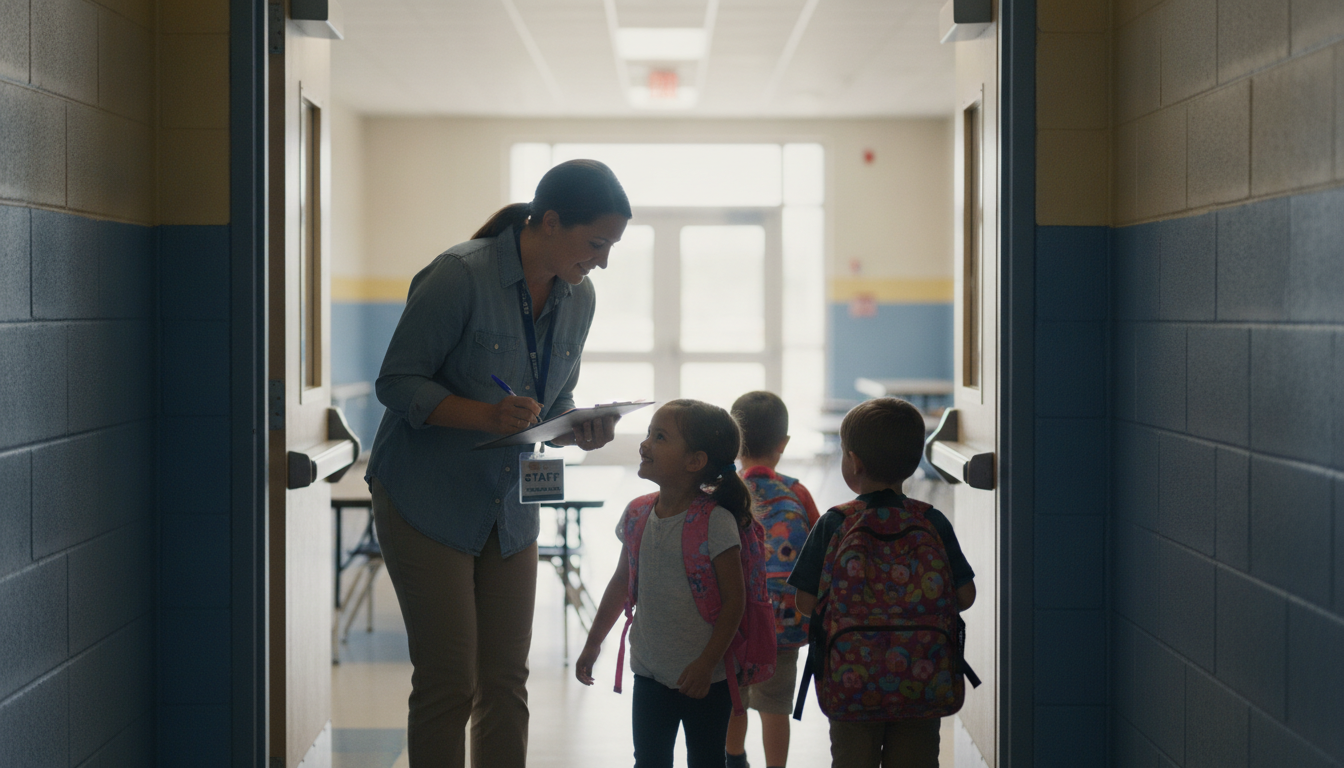
National demand is real and it is not the same thing as demand where you are. The parents of 29.6 million American children say they want an afterschool program, only about 7 million children are enrolled, and 22.6 million more would attend if a program were available to them, according to the fifth edition of America After 3PM, a survey of 30,515 US parents run by Edge Research for the Afterschool Alliance. The barriers parents name are affordability at 56%, accessibility at 49% and availability at 42%.
That tells you the market exists. It does not tell you whether 40 families at one specific school will pay your price on your days. So test it before you sign anything.
Get the school's enrollment by grade from the district's public data. Run a short survey through the PTA and the school newsletter, and ask three questions only: which days you need, what time you need pickup, and what you would pay per month. Anything longer gets abandoned.
Then set a threshold before you read the results, so you cannot talk yourself into a yes. For a 40-place program, treat 25 families who name a price and commit to specific days out of roughly 60 responses as your go signal. A warm "that sounds great" from a parent who will not name a day is not demand, and it is the single most expensive thing to mistake for demand.
Step 4: Register the business and get insured
Two decisions here, and the first one is driven by where your money will come from rather than by tax preference.
Structure. If the plan depends on public expanded learning money or grant funding, incorporate as a nonprofit, because most competitive funding in this space is written for districts, community-based organizations and 501(c)(3)s. If the plan depends on parent fees, an LLC is faster, cheaper and simpler to run. State filing fees typically land between $50 and $500. The filing is also where the name becomes official, so settle it now rather than in month one; our list of after school program name ideas is there if you are circling. The IRS user fee for a 501(c)(3) application is $275 for Form 1023-EZ or $600 for the full Form 1023. Our walkthrough of an after school program business plan covers how the structure choice flows into the financials of each route.
Insurance. You need general liability, abuse and molestation as a named coverage, workers' compensation and property cover. The abuse and molestation line matters more than any other: general liability policies exclude it, and school and district agreements routinely require it in writing before they will let you through the door. Budget $1,000 to $5,000 for year one and get it quoted rather than estimated, since the range on our insurance for camps and programs guide moves sharply with capacity and activity type.
Then write the policy set a licensor will ask for: enrollment and emergency contacts, medication, authorized pickup, behavior, safeguarding and mandated reporting, transportation, and refunds. Writing them takes a weekend. Being asked for them at inspection and not having them costs months.
Step 5: Secure a site that will pass inspection
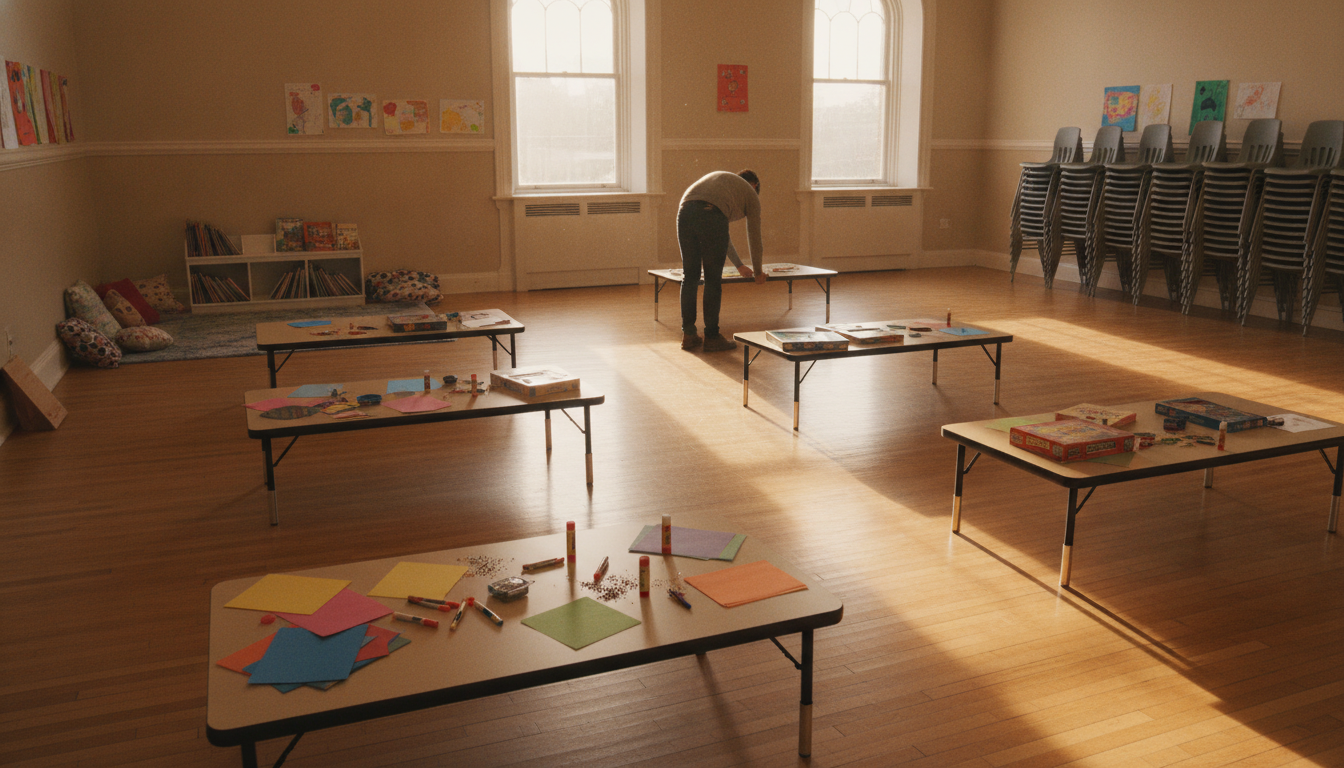
Leasing from a school, church, community center or parks and recreation department is the cheapest route into this business, and it is the reason most small programs are viable at all. A shared site removes the rent line that kills standalone operators and often comes with a playground and a kitchen already inspected.
Check these before you sign anything:
- Net indoor square footage against your intended capacity, measured the way the licensor measures it rather than the way the landlord advertises it
- Outdoor space, or a written plan for wet-weather days
- Restroom counts against the fixture ratio your state requires
- Fire clearance and zoning, which are the two items that add unplanned months and sit outside your licensing agency's control
- Lockable storage you do not have to empty every night
- A written agreement covering hours, holidays, custodial costs, and what happens the week the school needs the room for a concert
That last point deserves more attention than it usually gets. A shared-space agreement that does not name storage and setup time is the most common source of year-one friction between a program and its host, and it surfaces in October when goodwill is the only thing holding the arrangement together.
Step 6: Hire and screen staff to ratio
Staffing is a budget decision before it is a hiring decision, because ratio sets your headcount and headcount is most of your cost.
Work the number out from your state ratio and your licensed capacity, then add cover for absence on top. At 1:15 with 40 places, that is three group staff plus a site supervisor, and the supervisor is not one of the three. Programs that count the supervisor into ratio discover the problem the first time somebody calls in sick.
On pay, expect $15 to $22 an hour for group staff in most markets, and more for a supervisor carrying a qualification or a director credential. Every adult with unsupervised access needs the full CCDBG background check set from Step 2, plus first aid, CPR and health and safety training, plus whatever pre-service hours your state adds on top.
Recruit where the schedule fits an existing life: teachers who want after-hours work, college education students, coaches, and paraprofessionals already in the building. Turnover is expensive in a business this small, because recruiting, screening and training a replacement costs real money and pulls your supervisor off the floor while it happens. Stable, predictable shifts are the cheapest retention tool you have, which is a good argument for setting the schedule well ahead of each term rather than week to week.
Step 7: Build a budget from real line items
The startup figures circulating for this business are not observations. The $10,000 to $250,000 spread and the widely repeated $123,000 to $405,000 both trace back to financial-model template sites, which means they are outputs of a spreadsheet somebody built to sell spreadsheets. Build your own from line items you can quote.
Here is year one for a 40-place program on a leased community site. The fixed items are real figures from named agencies; the estimates are marked so you replace them with local quotes.
| Line | Year one | Basis |
|---|---|---|
| Entity formation | $50 to $500 | State filing fees |
| 501(c)(3) application, if you take the nonprofit route | $275 (1023-EZ) or $600 (full 1023) | IRS user fee |
| License application and orientation | $0 to $1,100 | Varies widely: California charges $968 at 31 to 60 capacity, New Jersey $165 for three years |
| Background checks, 8 to 10 adults | $80 to $900 | $10 per person in New Jersey, $50 to $90 per person for Live Scan in California |
| First aid, CPR and health and safety training | $75 to $150 per person | Provider rates |
| Fire clearance, zoning and permits | $200 to $2,000 | Varies sharply by city |
| Site deposit and minor works | $3,000 to $15,000 | Estimate, quote it |
| Furniture, equipment and activity supplies | $3,000 to $12,000 | Estimate |
| Insurance, year one | $1,000 to $5,000 | Quote it, do not estimate |
| Booking, payments and attendance software | Low hundreds | Our own pricing |
That comes to roughly $8,000 to $39,000 depending on how much work the site needs, which is why the honest headline range for a leased standalone site is $15,000 to $40,000 rather than six figures. Inside a school, where the space and the fit-out disappear from the list, it drops under $10,000.
Then the monthly picture, where the shape is completely different. Staffing dominates everything else combined. Three group staff on four-hour shifts plus a supervisor on six, across the 18 school days in an average month, runs roughly $6,500 to $7,800 before payroll taxes. Rent, insurance, snacks, supplies and payment processing sit on top of that, and none of them come close to it. Our pricing page shows what the software layer costs against those numbers, which is the smallest line on the sheet, and our roundup of the best afterschool program management software shows what the alternatives charge for the same job.
The break-even math that decides whether it works
This is the calculation nobody publishes, and it is the one that decides whether your program survives its first year.
Take a 40-place program charging $400 a month across a 10-month school year. Group staff are paid $18 to $22 an hour for a four-hour shift across 180 school days; the supervisor works six hours a day at $24 to $28. Ratio is 1:15. Now look at what happens as enrollment moves.
| Enrolled | Fee revenue (10 months) | Group staff needed at 1:15 | Rough staff cost | Left for rent, insurance, supplies and you |
|---|---|---|---|---|
| 40 | $160,000 | 3 plus a supervisor | $65,000 to $78,000 | Around $89,000. Workable |
| 32 | $128,000 | 3 plus a supervisor | $65,000 to $78,000 | Around $57,000. Thin |
| 25 | $100,000 | 2 plus a supervisor | $52,000 to $62,000 | Around $43,000. Marginal |
Read the revenue and staffing columns together. Revenue moves one child at a time. Staffing moves in blocks of 15. A program that slips from 40 enrolled to 32 loses $32,000 of revenue and saves nothing at all, because you still need three people on the floor to cover 32 children at 1:15.
Once payroll taxes at roughly 10%, rent of $1,500 to $3,000 a month, insurance, snacks and processing come out, the 25-place column is close to zero and the 32-place column pays a modest salary. That is the whole business in three rows. Occupancy, not price, is what makes the model work, which is why the enrollment work in Step 9 is a financial activity rather than a marketing one.
Treat every input here as illustrative. Rebuild the table with your own state ratio, your local wage rate and the price your demand survey in Step 3 supported, before you commit to a lease.

Step 8: Line up funding you can actually get
Most guides list funding sources. The useful work is qualifying them, because two of the four below are open to a brand-new program and two are not.
21st Century Community Learning Centers. The only federal stream dedicated to before-school, afterschool and summer learning, appropriated at $1,329,673,000 for fiscal year 2026. The money goes to state education agencies, which then run their own competitions and award subgrants to school districts, community-based organizations, tribes, faith-based organizations and other public or private entities. Your application is a state one, not a federal one. Be honest with yourself about the odds: a new organization with no delivery record scores badly against applicants who can show three years of attendance data, so plan to win it in year two or three.
Child care subsidy (CCDF). Recurring revenue rather than a grant, and the most reliable money in this list. Income-eligible families bring a subsidy with them, but you have to be an approved provider first, which for most private operators means licensed and fully CCDBG-compliant. This is a strong argument for going through licensing even where an exemption might be available.
CACFP at-risk afterschool snacks and suppers. Reimbursement, not a competition, so there is no scoring panel to lose to. In an eligible area, snacks are paid at the free rate for every child regardless of the individual family's income, currently $1.30 per snack for the year running July 1, 2026 to June 30, 2027. At 40 children over 180 days that is around $9,300 a year against a cost you were carrying anyway.
State and local money. Many states run their own out-of-school-time line items on top of the federal pass-through, and some cities fund programs directly through parks or youth services departments.
Our guide to grants for afterschool programs goes through the federal, state and foundation layers in detail, including the private funders worth approaching in year one.
Step 9: Design the afternoon and open enrollment
Two halves to this, and both of them decide whether families stay past November.
The afternoon. Parents pay for structure, not supervision. A district homework club is free or nearly free, so a shape that looks identical to one is hard to charge for.
| Time | Block |
|---|---|
| 3:00 to 3:20 | Arrival, sign-in, settle |
| 3:20 to 3:40 | Snack |
| 3:40 to 4:20 | Active or outdoor block |
| 4:20 to 5:00 | Structured enrichment block |
| 5:00 to 5:30 | Homework or quiet choice |
| 5:30 to 6:00 | Free choice and staggered pickup |
The 4:20 block is the one you are selling. It is the reason a parent chooses you over the free option, and it should be planned as a term-long arc rather than improvised each afternoon. Our list of after school program activity ideas covers what fills it, and our guide to afterschool lesson plans covers how to structure the arc.
Enrollment. The channels that work are unglamorous: the pickup line, the school newsletter, PTA groups, and one link a parent can complete on a phone in two minutes while standing in the yard. The quiet killer is taking registrations by email and payments by check. Parents comparing two programs book the one they can finish standing up, and the one that makes them wait for a reply loses the place.
Set your late-pickup and refund terms in writing before the first family joins, not after the first dispute. Then keep the records: registration and emergency contacts, authorized pickup, medication authorizations, and a daily attendance and sign-out log. That log is both the licensing record and the basis of every subsidy claim you will file, and programs that keep it on a clipboard fail on both counts in the same week. A digital attendance tracker makes it a by-product of taking bookings, a waitlist that fills automatically picks up the places that free up mid-term, and our free attendance sign-in sheet shows the format an inspector expects if you want to start on paper.
We built our afterschool program software for exactly this shape of business, because the compliance file and the bookings are the same data captured twice by most programs.

A realistic launch timeline
Six to nine months is normal from first phone call to first child, and the two items that slip are the two you do not control.
| When | What happens |
|---|---|
| Months 1 to 2 | Model choice, licensing call with the state agency, demand survey |
| Months 2 to 3 | Entity formation, site search, first insurance quotes |
| Months 3 to 5 | License application, fire and zoning clearance, lease signed |
| Months 4 to 6 | Hiring, background checks, training, policies written |
| Months 5 to 7 | Registrations open, funding applications filed |
| Months 7 to 9 | Inspection, staff induction, doors open |
Licensing and fire clearance are the long poles. Both involve a line you cannot jump, both can send you back for a resubmission that costs another six weeks, and neither cares that you have advertised a September start.
Which leads to the rule that saves the most pain: do not open registrations until your license is confirmed or your exemption is confirmed in writing. Programs that take deposits against an expected approval date end up refunding families in August and rebuilding a waiting list from nothing, and a family refunded once does not come back the following year.
What closes programs in year one
Opening is the easy part. These five are what end programs, and each has a fix that costs nothing if you do it early.
- Under-enrollment against a fixed staffing block. The break-even table above is the whole problem. Fix it by setting a minimum enrollment you will not open below, and holding to it.
- A single funding source. A program funded entirely by parent fees dies in a recession; one funded entirely by a grant dies when the grant cycle ends. Fix it by adding CACFP reimbursement and subsidy-eligible families to the fee base in year one.
- Operating on a misread exemption. The most expensive mistake in this guide, because it ends with a closure order rather than a warning. Fix it by getting the exemption in writing from the agency, not from a forum post.
- Paper admin. Fine until an inspector or a subsidy audit asks for a year of attendance records, at which point a filing cabinet becomes two weeks of work. Fix it by capturing attendance digitally from day one.
- Pricing set from a competitor's rate card. Their cost base is not yours, and a district program with a subsidized building can undercut you indefinitely. Fix it by pricing from your own break-even and selling the enrichment block that justifies the difference.
Key takeaways
- Choose your model first. School partnership, standalone site and enrichment classes have different licensing exposure, different startup costs and different revenue mechanics.
- Settle licensing second, before the lease and before the name. Care and supervision is the test almost every state uses, and exemptions are narrower than they look.
- Build the break-even table before you set a price. Revenue moves per child, staffing moves in blocks of 15, and occupancy is what decides whether the program survives.
- Qualify funding rather than listing it. CACFP reimbursement and child care subsidy are available to a new program; 21st CCLC realistically is not until you have a track record.
- Allow six to nine months, and do not take a deposit until your license or exemption is confirmed in writing.
FAQs
Do you need a license to run an after school program?
Usually yes, but it depends on your state and your model. The test almost every state applies is care and supervision: if children are handed over to you and released to an authorized adult, you are providing child care regardless of the activity. Some states exempt programs run inside schools or below an hours threshold, and those thresholds vary widely, so confirm yours with your state licensing agency in writing.
How much does it cost to start an after school program?
Budget $15,000 to $40,000 for a leased standalone site and under $10,000 for a program running inside a school where the space is provided. The six-figure ranges you will find online come from financial-model template sites rather than observed costs. The variable items are the site deposit and fit-out, equipment, and insurance; the fixed items are entity formation, license fees and background checks, and they rarely exceed $3,000 combined.
How much money can an after school program make?
A 40-place program charging $400 a month across a 10-month school year takes $160,000 in fee revenue, of which staffing consumes $65,000 to $78,000 before payroll taxes. What is left has to cover rent, insurance, supplies and your own salary. Margin lives entirely in occupancy, because staffing steps up in ratio blocks while revenue moves one child at a time.
What staff-to-child ratio does an after school program need?
It is set by your state, and the spread is wide. California licenses school-age centers at 1:14, while New York's school-age rules run 1:10 through age nine and 1:15 for 10 to 12 year olds, with group size caps on top. Check your own state's regulation text rather than a national summary, and remember your site supervisor should sit outside the ratio rather than count toward it.
How do I start an after school program inside a school?
Approach the principal or the district's community education office with a written proposal covering hours, capacity, staffing, insurance and what you will charge families. Confirm early whether the school's licensing exemption extends to a third-party contractor, because in many states it does not. This is the lowest-cost model in the table in Step 1, often under $10,000 to launch, because the space and fit-out disappear from your budget.
Can a for-profit after school program get grants?
Sometimes, but less often than a nonprofit. 21st Century Community Learning Centers subgrants can go to private entities, though state competitions frequently favor districts and community-based organizations. Child care subsidy payments and CACFP meal reimbursement are both open to for-profit providers who meet the licensing and eligibility rules, and for a new program those two are far more realistic than a competitive grant.
What qualifications do after school program staff need?
Every adult with unsupervised access needs the full federal CCDBG background check set, which covers FBI fingerprints, state criminal and sex offender registries, and child abuse and neglect registries in every state they have lived in over the past five years. On top of that, expect first aid, CPR and health and safety training, plus state-specific pre-service hours. Site supervisors and directors usually need a formal qualification or a set number of years of experience with school-age children.
How long does it take to open an after school program?
Six to nine months is realistic from your first call to the licensing agency to your first day of operation. Licensing approval and fire and zoning clearance are the two stages that slip, and neither is under your control. Programs that plan for three months typically end up refunding families, so build the timeline backward from a term start with a month of contingency in it.
How much should I charge for an after school program?
Price from your own break-even rather than from what the program down the road charges, since their cost base and yours are different. Work out your staff cost at your state ratio, add rent, insurance, supplies and processing, then divide by the enrollment your demand survey supported rather than your licensed capacity. Ask parents what they would pay during the survey in Step 3, and treat the answer as a ceiling rather than a target.
Can I run an after school program from my home?
In many states yes, under family child care home rules rather than center rules, which usually cap the number of children and add requirements covering your home itself. The caps are low enough that the economics only work at a premium price or as a supplement to other income. Check your state's family child care home regulations and your local zoning code before you take a single booking, since residential zoning restrictions catch home programs more often than licensing does.