
Martial Arts School Insurance: Costs, Coverage & Exclusions


The rec center wants a certificate of insurance before your first class. The landlord's lease asks for $2 million in coverage. And every week, students throw each other, spar, and roll on your mats. In martial arts, injuries are part of training, not freak events, so martial arts school insurance is what keeps one bad night from ending the school.
Most martial arts schools need four core policies: general liability, professional (participant) liability, participant accident medical, and property coverage. Add workers' compensation once you hire staff and abuse and molestation coverage if you teach kids. A complete policy for a small to mid-sized school costs about $400 to $2,500 a year, and full-contact and larger schools pay more.
We're not insurance brokers, and this isn't legal or insurance advice. We build booking and registration software for martial arts schools, and this guide is what we've learned from working with them, checked against insurers' published terms. It covers each policy, real rate-card math, coverage by how you teach, the exclusions that sink claims, and what to do when a student gets hurt.
Do you need insurance to run a martial arts school?
There's no federal law that says you must carry liability insurance to teach martial arts. In practice, you can't open the doors without it.
- Venues require it. Recreation centers, churches, school gyms and other gyms will ask for a certificate of insurance (COI) naming them as an additional insured before you step on their floor. Commercial landlords write minimum limits into the lease.
- States require workers' comp. Once you employ instructors or front-desk staff, most states require workers' compensation (more on the rules below).
- Partners require it. Associations, school districts, summer camps and tournament hosts usually ask for proof of coverage before you teach or compete under their name.
Two assumptions trip up new owners. First, a homeowner's policy won't cover a garage or basement dojo, because home policies typically exclude business activities. If a paying student gets hurt in your garage, expect the claim to be declined. Second, a signed waiver is not a substitute for insurance, especially for kids. We cover why in the waivers section below.
Instructor policy or school policy?
If you teach at someone else's school as an employee, their policy usually covers you. Get that confirmed in writing, and check that it names you or covers "all instructors." If you rent space, teach independently, run seminars, or coach on contract, you need your own policy. Sadler's published rate for a traditional martial arts instructor is $375 a year for a $1 million limit, plus a $20 group fee. Our guide on how to become a martial arts instructor covers the rest of the credential stack, including CPR, background checks and SafeSport.
The types of martial arts school insurance
Here's what each policy does at a glance. The sections below explain each one and what to check.
| Policy | What it covers | Example claim | Who needs it |
|---|---|---|---|
| General liability | Injury or property damage to third parties, personal and advertising injury, damage to rented premises | A parent trips on a mat edge in the lobby | Every school |
| Professional (participant) liability | Claims that your instruction, supervision or pairing caused a student's injury | A student says an instructor applied a choke too hard | Every school |
| Participant accident medical | A student's medical bills after an injury, regardless of fault | A teen breaks a finger blocking a kick | Every school |
| Property and equipment | Mats, bags, fit-out, electronics, gear taken off-site, lost income after a closure | A burst pipe floods the mats | Schools with their own space or gear |
| Workers' compensation | Staff injuries at work, lost wages | An assistant instructor tears a knee ligament demonstrating a throw | Schools with employees (state rules vary) |
| Abuse and molestation | Defense and liability for abuse allegations | An allegation against a staff member | Any school teaching minors |
General liability
General liability covers injuries and property damage to people who aren't taking part in training: parents in the viewing area, delivery drivers, a visitor who slips on a wet floor. It also covers personal and advertising injury (for example, a defamation claim over a social post) and damage to premises you rent. K&K's martial arts program, for instance, lists bodily injury and property damage, personal and advertising injury, and damage to premises rented to you under general liability.
The standard limit is $1 million per occurrence and $2 million aggregate, and most landlords and venues expect at least that. Some commercial leases in expensive markets ask for more.
One catch sets up the exclusions section later: on a generic small-business or fitness policy, injuries to participants may be excluded entirely. General liability alone doesn't protect you from the student on the mat.
Professional liability (participant liability)
This is the policy that answers the negligence claim: "your instructor paired me with someone twice my weight," "you let us spar without headgear," "the technique was taught unsafely." For a martial arts school, it's the policy most likely to pay out on a serious injury.
On martial arts programs it's usually bundled with general liability. Sadler's program lists a $1 million professional liability limit alongside $1 million each occurrence, and K&K lists bodily injury to participants under professional liability. If a quote doesn't mention participants or professional liability by name, ask.
Participant accident medical
Accident medical pays a student's medical bills after an injury, whoever was at fault. That matters more than it sounds. A family facing a $3,000 emergency room bill for a dislocated elbow is far less likely to call a lawyer if the school's policy picks up the costs their health plan doesn't.
It's usually written as excess coverage, meaning it pays after the student's own health insurance. Sadler's program, as an example, pays up to $150,000 including dental, with a $250 deductible and a two-year benefit period from the date of the accident. Markel lists accident medical as required on its martial arts policy, which tells you how central insurers consider it.
Parents of kids' students should know this coverage exists. It's a good line for your welcome email and your registration page.
Property and equipment
Property coverage protects what you own: mats, heavy bags, dummies, weapons racks, mirrors, the front-desk computer, and any build-out you paid for. If you take gear to demos, school programs or tournaments, ask for equipment and contents (inland marine) coverage, because standard property coverage is often tied to your address.
Business income coverage is worth pricing too. If a fire or flood closes the school for six weeks, it helps replace lost tuition while you still pay rent and staff.
Workers' compensation
Workers' comp covers medical bills and lost wages if an employee gets hurt at work. In a martial arts school, that includes the assistant instructor who tears a ligament while demonstrating a takedown. Rules are set by each state:
- California requires it from the first employee.
- New York requires it for almost every employer with staff, including part-timers.
- Florida requires it for non-construction businesses with four or more employees, counting corporate officers and LLC members.
- Texas lets most private employers choose whether to carry it, with reporting duties if they opt out.
Paying instructors as independent contractors doesn't automatically put you outside the rules. States apply their own tests, and an instructor who teaches your curriculum, on your schedule, in your uniform, can be reclassified as an employee after an injury. Check your state's labor department site and ask your broker before you hire.
Abuse and molestation coverage
Abuse and molestation (often called SAM) claims are commonly excluded from general liability and sold as a separate add-on. Sadler prices it at $2.10 per participant with a $150 minimum, and both K&K and Markel list it as optional. If you teach minors, treat it as essential.
Ask whether the coverage is full liability or defense-only. Some options only reimburse legal costs. Pair the policy with background checks on every adult who teaches kids and a written safeguarding policy. If your school is affiliated with a national governing body such as USA Taekwondo or USA Judo, SafeSport training requirements apply too.
Optional coverage worth pricing
- Excess or umbrella liability: raises your limits above $1 million. Cheap relative to the risk it covers (see the Del Mar case below).
- Hosted tournament or event coverage: for gradings with outside guests, seminars, and tournaments you run.
- Birthday party coverage: often excluded unless added.
- Non-registered member or open mat coverage: drop-ins and visitors from other schools may not count as covered participants.
- Hired and non-owned auto: if staff drive their own cars on school business. Included on some programs, so check.
- Cyber: you store family payment details, birth dates and medical notes.
- Employment practices liability (EPLI): claims of wrongful termination, discrimination or harassment by staff.
- Directors and officers (D&O): for nonprofit clubs with a board.
How much does martial arts school insurance cost?
A complete martial arts insurance policy costs about $400 to $2,500 a year, according to InsuredBetter's guide (updated February 2026). That range covers most small to mid-sized traditional schools. Full-contact schools (MMA, Muay Thai, full-contact kickboxing) and schools with several hundred students will usually be quoted above it.
Individual instructor policies cost less. Sadler's published rate is $375 a year for a $1 million limit, rising to $553 for $2 million.
What drives your premium
- Style and contact level: grappling and full-contact sparring cost more; tai chi and cardio kickboxing cost less.
- Student count: many programs price per student, often at your peak enrollment.
- Youth programs: kids' classes usually mean abuse and molestation coverage on top.
- Location: states and cities with higher claim costs pay more.
- Limits and deductible: $2 million limits cost more than $1 million; higher deductibles cost less.
- Claims history: a clean record keeps renewals down.
- Extras: tournaments, open mats, camps, birthday parties and off-site programs each add cost.
A worked example using a published rate card
Most guides stop at ranges. Here's how the math works on a real rate card. Sadler publishes its martial arts school rates (effective January 1, 2026 to February 28, 2027): $18.90 per student at peak enrollment for a $1 million limit, a $750 annual minimum, abuse and molestation coverage at $2.10 per participant with a $150 minimum, and birthday parties at $16.50 each.
| School | Peak students | Base premium | Abuse and molestation | 20 birthday parties | Total |
|---|---|---|---|---|---|
| Rented hours, one style | 30 | $750 (30 × $18.90 = $567, so the minimum applies) | $150 (minimum; $63 calculated) | $330 | $1,230 |
| Small leased school | 60 | $1,134 | $150 (minimum; $126 calculated) | $330 | $1,614 |
| Established school | 120 | $2,268 | $252 | $330 | $2,850 |
This is illustrative, based on one insurer's published program rates when we checked in September 2026. It excludes taxes, fees, property coverage and workers' comp, and other insurers price by payroll, square footage or flat bands. Three lessons still carry over:
- Below about 40 students, you pay the minimum. A new school's first year costs roughly the same whether you have 15 students or 39.
- "Peak enrollment" means your highest point in the year, not your average. If you declare 60 and hit 90 in September, you're underinsured. Under-reporting can put a claim at risk, so update your insurer when you grow.
- Add-ons add up. At 120 students, abuse and molestation coverage and birthday parties add almost $600 to the base premium.
Your registration numbers are what the insurer bases this on, so keep an accurate count. Our martial arts business plan guide shows how to budget insurance as a fixed annual cost alongside rent and mats.
How to lower your premium without cutting coverage
- Pay annually rather than monthly if your insurer charges for installments.
- Bundle general liability and property with one insurer where it's cheaper.
- Keep a clean claims history. Walk the mats weekly, fix split seams, and log what you fixed.
- Write down your safety rules: no head contact for young kids, required sparring gear, size and rank pairing, instructor-to-student ratios. Insurers ask, and it helps if a claim is ever disputed.
- Keep instructor CPR and First Aid current.
- Check association programs. Some martial arts associations offer group insurance to member schools.
- Get at least two quotes from martial arts or sports programs, not generic small-business policies.
Coverage by how you teach
What you need depends as much on where and how you teach as on your style. Most schools move between these models, often starting in rented hours before signing a lease. Here's what each one asks of you.
| Setup | What the venue or law will ask for | Policies that matter most | Common gap |
|---|---|---|---|
| Rented hours (rec center, church hall, school gym, another gym) | COI naming the venue as additional insured, usually $1M per occurrence / $2M aggregate | General liability, professional liability, accident medical | Your mats and pads stored on-site aren't covered by the venue's policy |
| Your own leased school | Landlord COI, sometimes higher limits; workers' comp once you hire | All four core policies, plus business income and workers' comp | Build-out you paid for, and lease clauses making you responsible for the building |
| Home or garage dojo | Local zoning approval; no venue COI | A commercial liability policy that covers your home address | Homeowner's policies exclude business use, so injured students may be uncovered |
| Off-site programs (after-school clubs, school PE contracts, camps, demos) | The school or district's own COI terms, often with higher limits | Off-premises activities coverage, accident medical, abuse and molestation | Off-site activities and student transportation are often excluded unless added |
Rented hours. This is the cheapest way to start, and the one where paperwork matters most. Ask the venue for its insurance requirements in writing before you buy, because the additional insured wording has to match. Some martial arts programs add a landlord as additional insured for free; Markel, for example, lists blanket additional insureds as included at no cost.
Your own lease. Read the insurance clause in the lease with your broker before you sign. Some leases make you responsible for the whole building, not just your unit, and some require limits above $2 million.
Home or garage. Tell your home insurer what you're doing, check zoning, and buy a commercial policy that lists your home address as a covered location. Our guide on how to start a martial arts school compares the costs of rented hours, a garage setup and a full lease.
Off-site programs. Schools and districts often want their own name on your COI and may ask for higher limits than a landlord. Confirm "off-premises activities" is covered, since several insurers sell it as an add-on. If you run school-break camps, our guide to summer camp insurance covers the extra coverage camps need.
Exclusions to check before you sign
The single most important exclusion to understand is the athletic participation exclusion. Many generic fitness and small-business policies exclude injuries to people taking part in the activity. For a martial arts school, that's most injuries. A policy that looks like a bargain can leave you with coverage for a parent tripping in the lobby and nothing for a student hurt during sparring.
The fix: buy a martial arts program, or get written confirmation that participant injuries during sparring, rolling, pad work and throws are covered.
Martial arts programs have their own exclusions and limits. Examples from published program terms:
- Contact boxing and wrestling are ineligible on both Sadler's and K&K's programs.
- Competitions for some styles are excluded. Sadler excludes events and tournaments for certain styles, including MMA, Muay Thai, Kali and Savate, and K&K excludes MMA competitions.
- Law enforcement and military training are excluded on both.
- Open mats and non-members. K&K sells non-registered member activity as an add-on, and schools offering open gym time to non-members can't buy its online program.
- Birthday parties are an add-on on both programs.
- Non-martial-arts programs and inflatables trigger extra underwriting. On K&K's program, they rule out the quick online application and need a full review.
- Student transportation needs its own auto coverage. Hired and non-owned auto liability covers staff driving on business, not a school minibus.
Many programs also attach conditions. K&K's terms require registered participants under an insured's direct supervision and activities that have been reported and approved. Break a condition, such as letting an unregistered friend of a student join a sparring round, and a claim can be denied. This is why your registration and attendance records matter as much as the policy itself.
1. Are participant injuries during sparring, rolling, pad work and throws covered? 2. Is professional liability included, and at what limit? 3. Is accident medical primary or excess, and what are the limit and deductible? 4. Are drop-ins, trial classes and open mats covered? 5. Are gradings, tournaments and seminars I host covered, or do I need an event rider? 6. Is abuse and molestation coverage included, and is it defense-only or full liability? 7. Are off-site classes, school programs and demos covered? 8. Are all my instructors covered, including contractors and volunteers? 9. How do you count students (peak, average or annual), and what happens if I grow mid-year? 10. Can I add a landlord or school as additional insured, and what does it cost?
Why waivers don't replace insurance
A good waiver does real work. It records that the student (or parent) understood the risks of training, which supports an assumption-of-risk defense. In many states, a well-written waiver signed by an adult can also bar ordinary negligence claims.
The problem is kids. Waivers signed only by a minor are not enforceable in any state. Waivers signed by a parent on a child's behalf are a patchwork: in waiver specialist Doyice Cotten's 2020 state-by-state review, courts in 12 states had enforced parental waivers, about 25 had refused, and the rest were unclear. Roughly half the country, in other words, won't enforce the waiver that most kids' programs rely on. State law changes, so have a local lawyer review your wording.
Waivers also generally don't protect you from gross negligence or reckless conduct. For a school with a big kids' program, professional liability and accident medical are the real protection. The waiver is a backup.
Waivers and health questions still belong in every registration. Collect them in the online sign-up form, so every student has a signed, dated record before their first class instead of a clipboard at the door. Our health disclaimer examples give you wording for the health section, and our photo consent forms cover the permissions you'll want for social posts.
What a large claim looks like
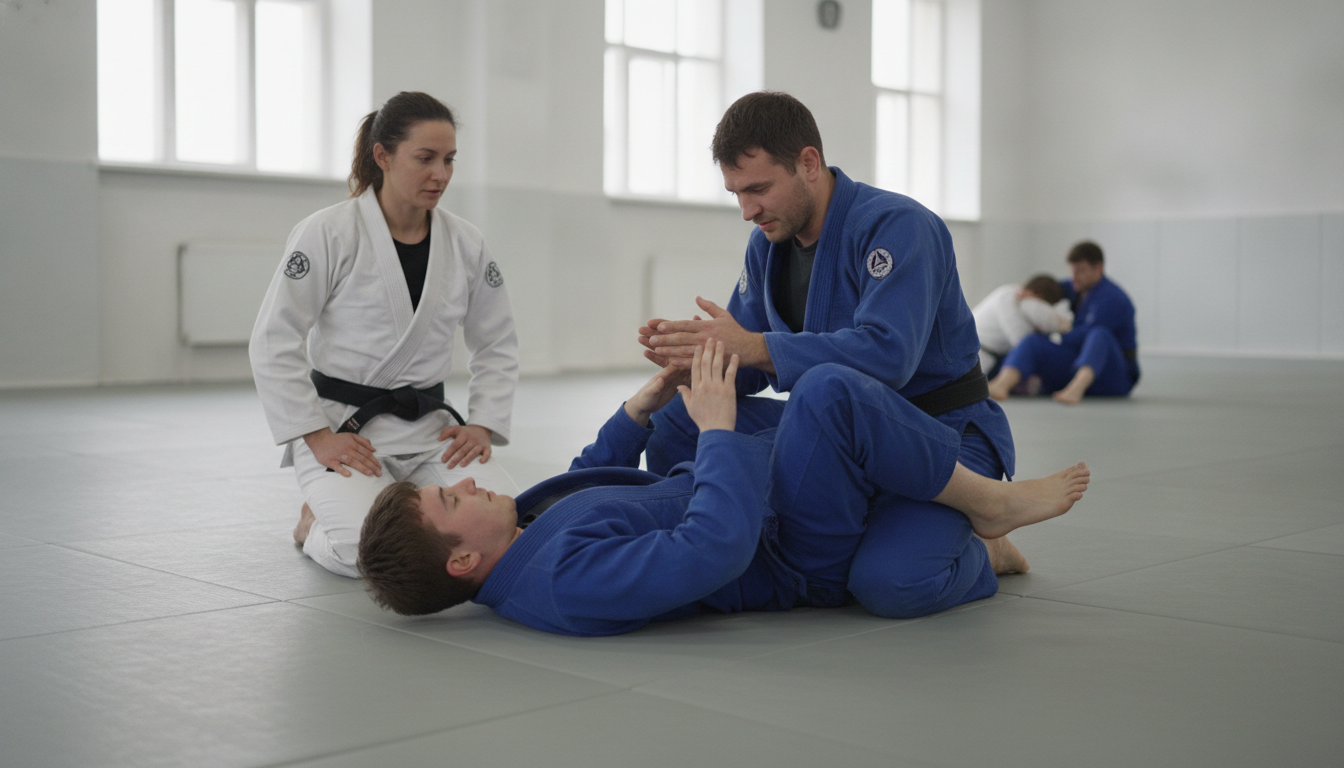
In March 2023, a San Diego jury awarded more than $46 million to a beginner Brazilian jiu-jitsu student who was paralyzed when an instructor put his full body weight on him during a class at Del Mar Jiu-Jitsu Club. The verdict was upheld on appeal, and in 2025 the California Supreme Court declined to review it.
Cases like this are rare, but they show why $1 million is a floor, not a target. Price an excess or umbrella policy with your main quote, and put your pairing, supervision and "no full weight on beginners" rules in writing.
What to do when a student gets hurt
How you handle the first hour after an injury shapes how smoothly the claim goes. Build these steps into staff training so any instructor can follow them:
- Give first aid and call 911 if needed. Stop the class, keep the student still if a head, neck or spine injury is possible, and assign someone to watch the rest of the room.
- Contact the parent or emergency contact straight away if the student is a minor or can't make the call themselves.
- Write the incident report the same day, while memories are fresh.
- Collect witness names and contact details, including students and parents watching.
- Photograph the area and equipment: the mat, any gap or seam, the pads or gear involved.
- Preserve records. Don't delete messages, change forms or edit attendance after the fact.
- Notify your insurer or broker promptly. Most policies require prompt notice, and late reporting is an easy reason to deny a claim.
- Don't admit fault or promise in writing to pay bills. Be kind and concerned, and let the insurer handle liability.
- Follow up with the family a day or two later to see how the student is doing.
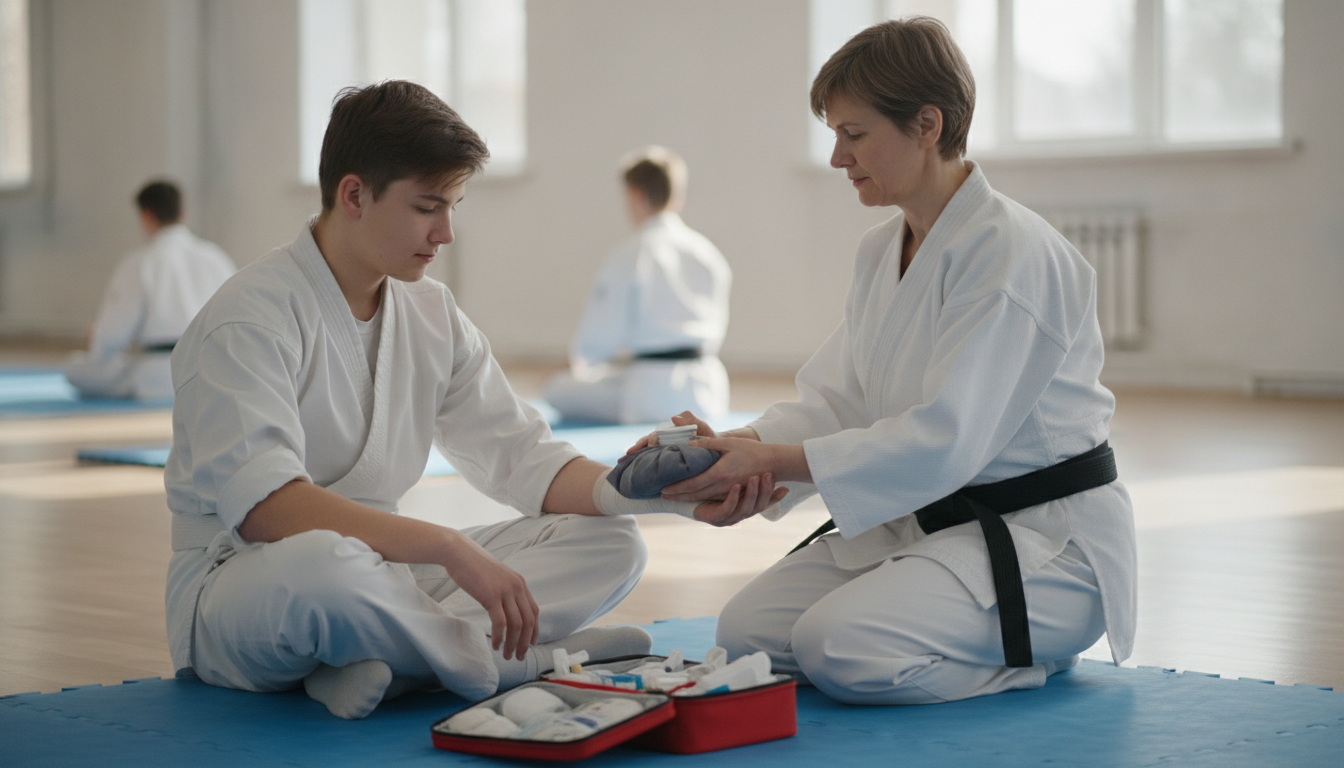
Date and time of incident: Class name and time slot: Instructor(s) teaching: Student name, age and rank: What happened (student's account): What happened (instructor's account): Technique or drill being practiced: Training partner (name, rank, approximate size): Protective gear in use: First aid given and by whom: Emergency services called (yes/no, time): Parent or emergency contact notified (name, time): Witnesses (names and contact details): Photos taken (yes/no, where stored): Insurer or broker notified (date, reference number): Follow-up with family (date, notes):
Records insurers ask for
When a claim comes in, the insurer or its adjuster will usually ask for:
- The student's signed waiver and health form, dated before the incident.
- Proof the student was registered for that class, which matters under "registered participants only" conditions.
- The attendance record showing who was on the mat and who was teaching.
- Your written safety rules and pairing policy.
- Instructor certifications: CPR and First Aid, background checks, SafeSport where relevant.
These are much easier to produce when they live in one system rather than a filing cabinet and three group chats. We built Pembee so registration forms capture waivers and health details at sign-up, attendance tracking logs who was on the mat from a phone, and class rosters show who was booked into each session, all timestamped.
How an accident medical claim usually works
Because accident medical is usually excess coverage, the family's own health insurance pays first. The school's policy then covers deductibles, co-pays and uncovered costs up to its limit, after the policy's own deductible. If the family has no health insurance, the accident medical policy typically pays as primary. Tell parents this early, since it answers the first question most of them ask after an injury: "who pays?"
When to review your policy
Most owners buy a policy and forget it until renewal. Your coverage should change when your school does. Review it with your broker when you:
- Add a style or a new level of contact, such as Muay Thai sparring at a karate school.
- Launch kids' or little-ninjas classes.
- Host a grading with outside guests, a seminar or a tournament.
- Run a school-break camp or a summer program.
- Hire your first employee or add instructors.
- Move, expand or open a second location.
- Grow past the enrollment you declared.
- Start off-site programs at schools, camps or community centers.
Pick a fixed review month, about 60 days before renewal, and walk through this list with your broker.

Get insured before your first class
Buy coverage before you teach your first class, including your first rented one. Start with the four core policies (general liability, professional liability, accident medical and property), then add workers' comp once you hire and abuse and molestation coverage if you teach kids. Buy a martial-arts-specific program rather than a generic small-business policy, run the ten broker questions against every quote, and keep your registration, waiver and attendance records tidy so a claim never comes down to a missing form.
With coverage sorted, our guides on how to run a martial arts class and martial arts drills for kids help you teach safe, well-structured sessions from day one.
Key takeaways
- Most schools need general liability, professional (participant) liability, accident medical and property coverage, plus workers' comp and abuse and molestation coverage where relevant.
- Expect about $400 to $2,500 a year for a small to mid-sized school; full-contact and large schools pay more.
- On per-student programs, small schools pay the minimum, and peak enrollment must be declared accurately.
- Avoid generic policies with an athletic participation exclusion; confirm sparring and rolling injuries are covered in writing.
- Waivers help but won't protect you from most claims involving kids.
- Treat $1 million as a floor and price an umbrella policy.
- Keep signed waivers, registrations and attendance records together so claims go smoothly.
FAQs
How much is insurance for a martial arts school?
Most small to mid-sized martial arts schools pay about $400 to $2,500 a year for a complete policy. Programs that price per student often have an annual minimum around $750, so new schools pay that minimum until they grow. Full-contact schools, large schools and schools running tournaments or camps pay more.
Do martial arts instructors need their own insurance?
If you teach as an employee under a school's policy, you're usually covered, but confirm it in writing. If you teach independently, rent space, run seminars or coach on contract, you need your own policy. Published instructor rates start at a few hundred dollars a year for a $1 million limit.
Does general liability cover student injuries?
Not always. Generic fitness and small-business policies often carry an athletic participation exclusion that removes coverage for injuries to people taking part. Martial arts programs add professional (participant) liability and accident medical, which are the policies that respond when a student gets hurt training.
Is a waiver enough if I teach kids?
No. A waiver signed only by a minor isn't enforceable anywhere, and roughly half of states have refused to enforce waivers parents sign on a child's behalf. Use a waiver for every student, but rely on professional liability and accident medical coverage for real protection.
Do I need workers' comp for part-time instructors?
It depends on your state. California requires it from the first employee, Florida requires it for non-construction businesses with four or more employees, and Texas lets most private employers opt out. Part-timers usually count as employees, and contractors can be reclassified after an injury, so check your state's rules.
Does my insurance cover tournaments and gradings?
Regular in-house classes and gradings for your own registered students are usually covered. Hosted tournaments, seminars with outside participants and open events often need an event rider. Some programs exclude competitions for certain styles, such as MMA and Muay Thai, entirely.
What is peak enrollment on a martial arts insurance quote?
It's the highest number of students you expect to have at any point in the policy year, not your average. Per-student programs multiply this number by the rate. Under-declaring it can leave you underinsured, so update your insurer if enrollment jumps mid-year.
Does my homeowner's insurance cover a garage dojo?
Usually not. Homeowner's policies typically exclude business activities, so an injury to a paying student in your garage may not be covered. Buy a commercial martial arts policy that lists your home address as a covered location, and check local zoning.
What limits do landlords usually ask for?
Most landlords and venues ask for $1 million per occurrence and $2 million aggregate, with them named as additional insured on your certificate. Some commercial leases in expensive markets ask for more. Some martial arts programs add additional insureds at no extra cost.
Do I need abuse and molestation coverage?
If you teach anyone under 18, yes. General liability policies commonly exclude abuse claims, and the add-on is inexpensive: one published program charges $2.10 per participant with a $150 minimum. Check whether it's full liability or defense-only, and pair it with background checks and a written safeguarding policy.