


Teaching the technique is the part most instructors are ready for. Running the room is harder: the line-up that won't settle, the uneven partners, the kid who needs the bathroom mid-drill, the absent student nobody followed up with. Those moments decide whether a class feels professional or chaotic, and whether students come back next month.
To run a martial arts class, prepare the mat and roster 15 minutes early, open with a line-up and bow, move through warm-up, technique, drilling, and a live or game block, close with a recap and bow-out, then log attendance and follow up with absent students.
This guide covers the class as a timeline, from unlocking the door to the last parent driving off. For what to teach, use our martial arts lesson plans and martial arts drills for kids. We build booking and attendance software for martial arts schools, so this is written for instructors running real classes.
The shape of a well-run class
Every well-run class has three phases. Before class is setup and arrival. During class is the ceremony, warm-up, technique, drilling, live work or games, and a recap. After class is dismissal, admin, and follow-up.
Consistency is what makes this work. Students, and kids in particular, settle faster when every class opens and closes the same way. The line-up becomes the moment they arrive mentally, and the bow-out tells them class is over. Once the routine runs on autopilot, your attention goes to the students instead of the schedule.
Before class: the 15 minutes that decide how it goes
Most class problems start before the bow. A wet mat, a missing kick shield, or a surprise trial student you didn't plan for will cost you more time mid-class than it would have cost to fix at the door.
Check the mat and the room
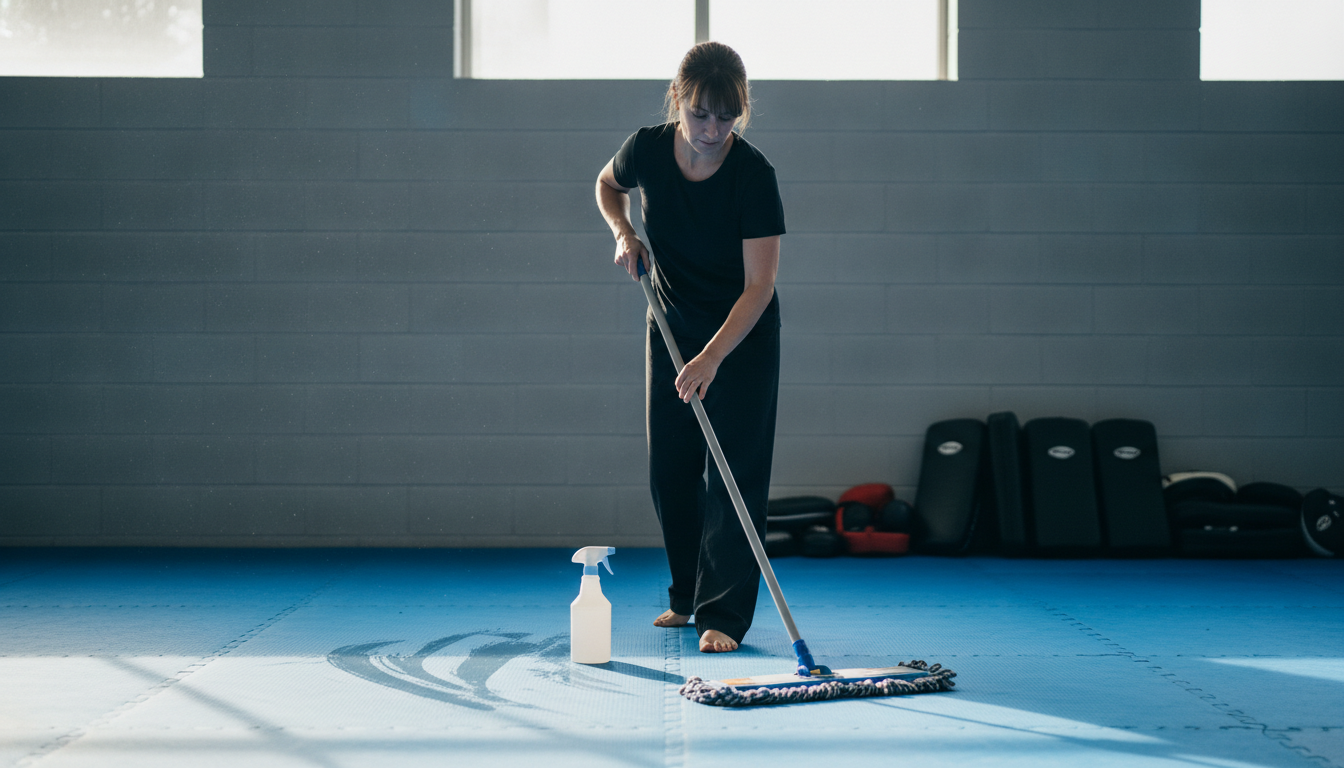
Walk the mat. Look for gaps between tiles, wet patches, and equipment left out from the last class. Then clean it: the NFHS guidance on skin infections in wrestling says mats must be cleaned before each practice with an appropriate disinfectant. The CDC's MRSA guidance for athletic facilities adds that household bleach or an EPA-registered disinfectant will remove MRSA from surfaces, and that shared equipment should be cleaned after each use and left to dry.
Grappling classes need this most. NFHS names ringworm, herpes gladiatorum, and bacterial infections such as MRSA as the three common mat infections. Once the mat is clean, stack pads, shields, and gloves where your assistants can reach them without crossing the room.
Know who is coming
Review the roster before anyone arrives. Check the headcount, ages, belt levels, anyone new or on a trial, anyone returning from injury, and any medical notes or allergies. Adjust the plan to the room you'll actually have, not the room you planned for last week.
When students book online, our class roster shows who's booked along with the details collected at signup, so you walk in knowing the headcount.
Brief your assistants
Give your helpers a 60-second brief: today's focus technique, who runs which group, who watches partner work, and who handles late arrivals and bathroom trips. It saves you from stopping the class to hand out jobs.
Greet every student at the door
Greet each student by name, make eye contact, and read the mood. A kid who walks in quiet and slumped may need a lighter touch today. Say hello to parents too. The door is where they decide whether they trust you with their child.
Take attendance at the door or at check-in, never mid-class. If you're not using software yet, print our free attendance sign-in sheet and keep it on a clipboard by the entrance.
A minute-by-minute class run sheet
Here are two versions: a 60-minute teen and adult class and a 45-minute kids' class for ages 6-9. Treat the timings as a starting point and adjust them to your style and your rules on sparring.
| Block | 60-min teen/adult | 45-min kids | What the instructor does | What assistants do |
|---|---|---|---|---|
| Line-up and opening bow | 0-3 | 0-3 | Headcount, bow in, state today's goal | Check uniforms and gear, seat late arrivals at the edge |
| Warm-up | 3-13 | 3-10 | Dynamic movement matched to the technique (a game for kids) | Join in, watch for anyone moving stiffly or favoring an injury |
| Technique teaching | 13-25 | 10-18 | Show at full speed, break it down, show again; one or two cues at a time | Act as demo partner, then move to the back rows to correct |
| Drilling with partners or pads | 25-40 | 18-30 | Circulate, give one correction per student | Hold pads, run a breakout group for new students |
| Live block or game | 40-52 | 30-38 | Set the intensity out loud, pair by size, referee | Watch one section of the mat each, stop rounds that escalate |
| Conditioning or forms (optional) | 52-55 | Skip | Lead a short circuit or one run of a form | Reset equipment |
| Cool-down and recap | 55-58 | 38-42 | Stretch, ask two or three students to name today's key point | Collect pads, note who struggled |
| Closing line-up, bow-out, announcements | 58-60 | 42-45 | Recap, grading dates and schedule changes, bow out | Walk kids to the door for pickup |
Build transition time into the plan. Every switch between blocks costs a minute or two, and five switches can eat 5 to 10 minutes of your hour. Use one set signal for every change, like a clap pattern or "line up in 5, 4, 3...", and give students who finish early a holding task: stance holds, frog jumps, or sit-ups. Nobody should ever be standing around waiting for the next instruction.
Share the class goal at the line-up and ask for it back at the end. "Today we're working on the front kick chamber" at minute two, then "Who can tell me the one thing to remember about the chamber?" at minute 56. Students remember what they have to say out loud. For full plans by age and belt level, use the lesson plan templates linked in the intro.
Opening and closing ceremonies that settle the room
The opening line-up does more work than it looks like. Students line up by rank, with the senior student at one end, all facing the instructor. As the Yale Karate dojo etiquette guide puts it, students "stand shoulder to shoulder facing the front of the dojo, in rank order." Then comes the bow, and in some schools a short meditation or a recital of the school's tenets. Keep the kids' version under two minutes.
Operationally, the line-up does three jobs at once:
- It signals the switch into class. Chatter stops because the routine says it stops.
- It gives you a headcount. You can see in one glance who's there and who's missing.
- It surfaces problems early. Untied belts, missing mouthguards, jewelry, and long nails show up before anyone starts drilling.
The closing mirrors the opening. Line up again, recap the goal, give announcements (grading dates, schedule changes, events), and bow out. Then dismiss kids to a parent or guardian, never to the parking lot.
Different arts use different words and customs. A karate dojo, a taekwondo dojang, and a jiu-jitsu academy will each open and close differently, and that's fine. What matters is that you teach your version consistently.
Staffing the mat: ratios and what assistants do
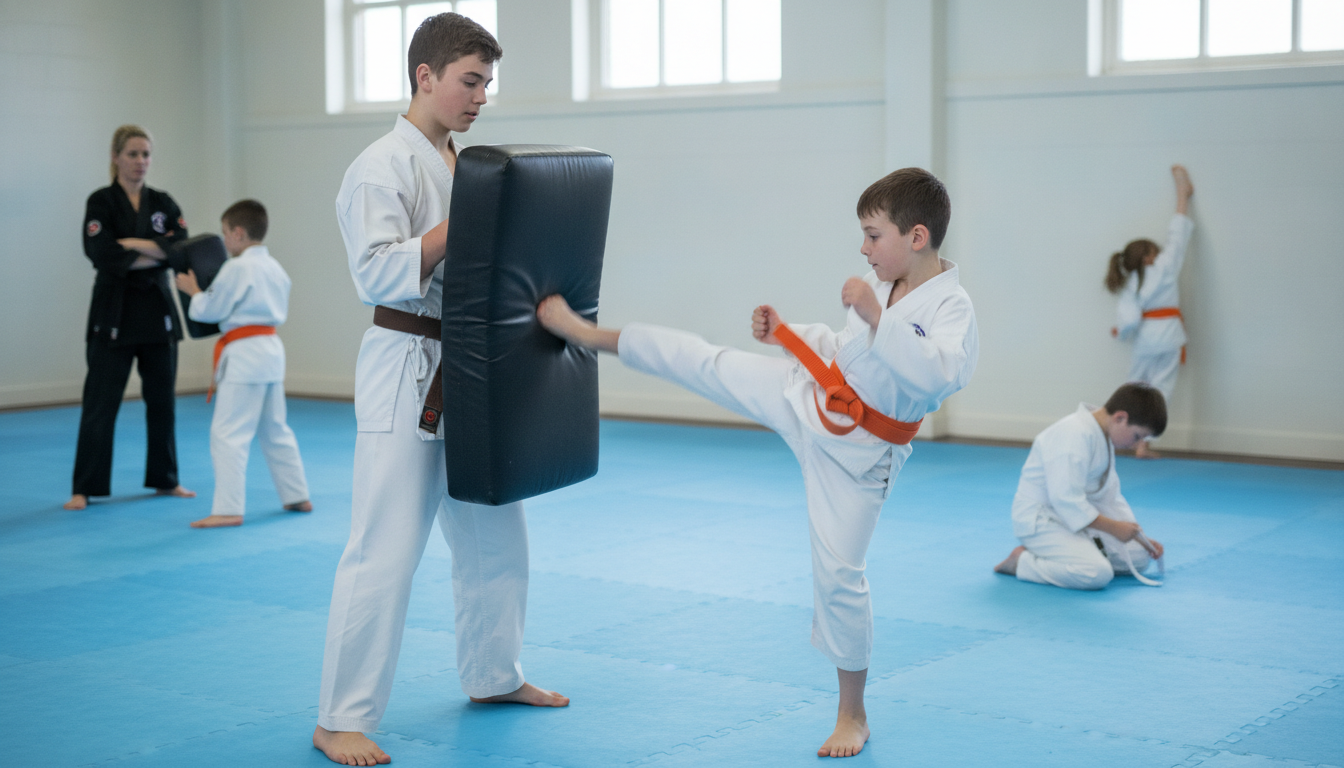
Our rule of thumb for kids' classes is one instructor or assistant for every 8 children. Above that, kids spend half the class waiting in lines, and partner drills get paired with whoever is standing closest rather than by size, which is where injuries happen. Teens and adults can stretch to around 1 to 12 or 15 for technique work, but tighten back up for sparring or rolling. Treat these numbers as a guideline, not a legal requirement.
Keep two adults on the mat whenever minors are present. The U.S. Center for SafeSport's standard is that one-on-one interactions between adults and minor athletes must be observable and interruptible, meaning another person can see the interaction and step in. A second adult in the room is the simplest way to meet that standard every class.
Here's what assistants and senior students can take off your plate:
| Job | When | Who suits it |
|---|---|---|
| Hold pads and shields | Drilling block | Any assistant or senior student |
| Be the demo partner | Technique teaching | A senior student who takes falls or strikes well |
| Run a breakout group for new students | Technique and drilling | An experienced assistant instructor |
| Supervise partner work and live rounds | Live block | An adult assistant |
| Handle late arrivals and bathroom trips | Whole class | An adult assistant |
| Reset equipment between blocks | Transitions | Junior helpers or senior students |
Giving senior students real jobs builds leadership and is the first rung toward becoming a martial arts instructor. That said, the head instructor should still teach the kids' classes rather than handing them all to teenagers.
For new students, pair them with a senior instructor or assistant for their first two or three classes. That person teaches the etiquette, the signals, and the routines, so the newcomer isn't guessing and the rest of the class isn't waiting.
Class management: scripts for the moments that go wrong
"Set clear expectations" is advice every instructor has heard. Here's what to actually say and do.
Post four or five mat rules on the wall and repeat them at the line-up for kids' classes. For example:
- Bow on and off the mat.
- Hands up to speak.
- Freeze on the signal.
- Control over power.
- Ask before leaving the mat.
Getting attention
Use one signal and stick to it. A call-and-response works well: you call "Class!" and students answer "Yes, sir!" or "Yes, ma'am!" A clap pattern that students copy back works too. Then wait for silence. Talking over noise teaches students that the signal is optional.
The escalation ladder
Agree on one ladder and make sure every instructor and assistant uses it the same way:
- Name and reminder. "Sam, freeze means freeze."
- Quick reset task. Ten jumping jacks or a 20-second stance hold, then straight back in.
- Short sit-out. At the edge of the mat where you can still see them, for a minute or two.
- Parent conversation. A calm chat at pickup, focused on what happens next time.
Consistency matters more than strictness. If one assistant lets it slide and another sends kids to sit out, students learn to test the adults instead of following the rules.
The student who goes too hard
Stop the round. Reset the intensity out loud: "This is 30 percent. Touch, don't hit." Re-pair by size and temperament. If it happens again, sit them out for the rest of the round. Watch sparring and rolling closely for emotional escalation, and step in before a frustrated student gets reckless, not after.
The student who argues or corrects others
Acknowledge them, redirect them to their own training ("Good eye, now show me yours"), and talk after class. Don't debate technique in front of the room.
Corrections that land
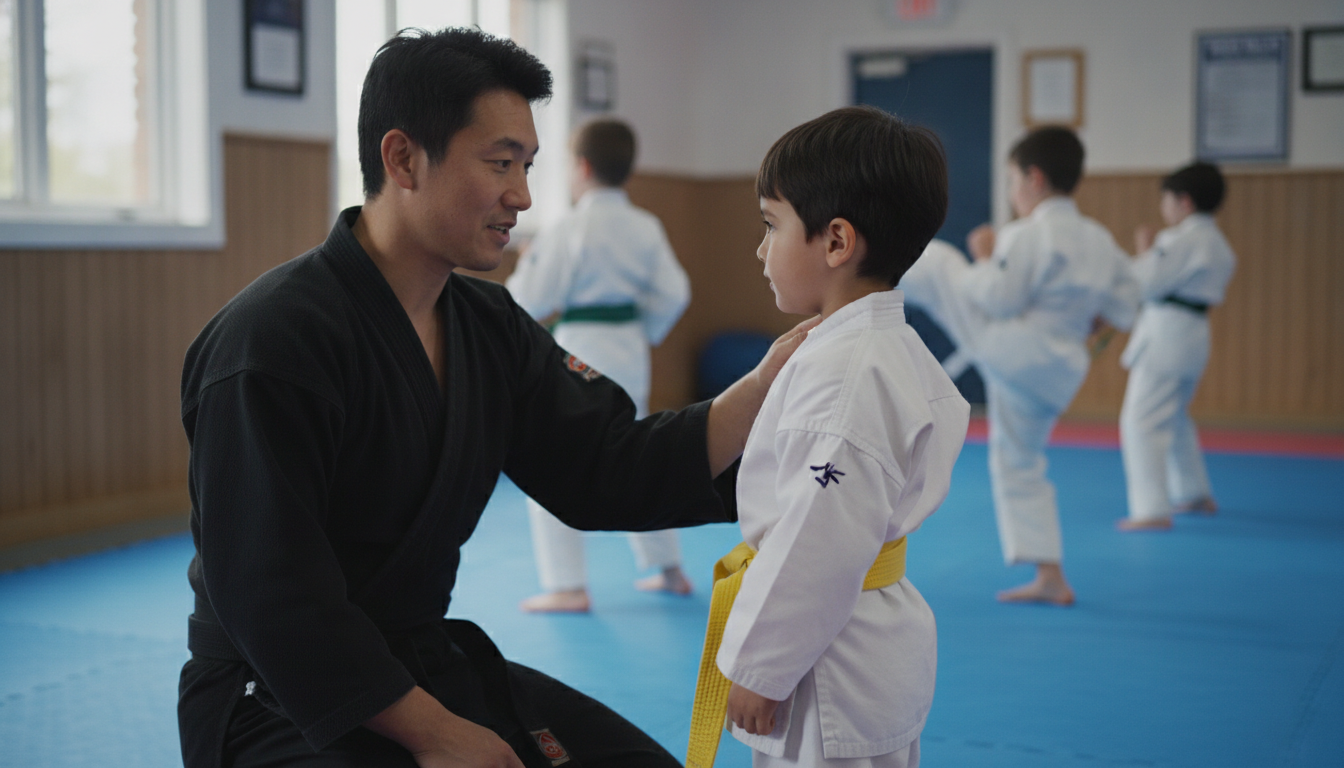
Give one correction at a time. Name what they did right first, then the fix, then have them do it again immediately so the fix sticks. Praise effort and specific details ("your guard stayed up the whole round") over talent.
Discipline doesn't mean rigid. Kids' classes need games with rules, and our kids' drills post has 30 drills, including reaction and focus games.
Safety on the mat
Warm up for the block that follows. Loosen joints before kicking, and warm up the neck and shoulders before breakfalls or rolling.
Control partner work. Pair students by size, age, and experience. New students never do live sparring or rolling in their first classes. You set the intensity, not the students.
Check the gear. Mouthguards and gloves for striking sparring, trimmed nails, no jewelry, and a clean uniform every class.
Run skin checks for grappling. NFHS guidance says skin checks should happen every day before practice. Anyone with a suspicious lesion sits out until a doctor clears them. For ringworm, NFHS notes that three days of treatment is adequate before returning (longer if the scalp is involved), while herpes and bacterial infections take longer. The CDC says to exclude athletes whose wounds can't be properly covered. Ask students to shower soon after class.
Know what happens when someone gets hurt. Stop the class. One adult attends to the injured student while an assistant gives everyone else a holding task. Keep a first aid kit on the wall, emergency contacts on file, and an incident log you fill in the same day. For any injury to a minor, call the parent before pickup, not at it.
Keep the paperwork that protects you. Collect a signed waiver and medical information at signup. Our guide on how to start a martial arts school covers waivers, and our guide to martial arts school insurance covers the cover you need.
Plan B: when the class doesn't match the plan
Three students show up instead of twenty
Turn it into a small-group session. More reps, more individual correction, and time on a technique that never gets attention in a full class. Never cancel on the students who showed up.
The room is full of mixed belts
Teach the same technique in three difficulty tiers, and use senior students as demo partners. Our martial arts lesson plans post includes a full mixed-rank plan if you run this class every week.
A trial student lands in an advanced class
Have an assistant run fundamentals with them at the side of the mat, then bring them back in for the game or cool-down. Make sure you get their name and contact details before they leave.
Odd numbers for partner work
Partner in yourself or send in an assistant. Or run groups of three with a rotating coach role, where one student watches and gives feedback.
The energy is flat (or wild)
Flat: switch to a short competitive game. Wild: slow things down with precise work like stance holds or forms, and lower your voice so they have to quiet down to hear you.
You can't make it
Keep a written plan for every class so a cover instructor can run it without calling you. Message families early. Our class roster lets you email everyone booked on a class in one click, so a change of instructor or time reaches every family at once.
Running a class alone vs. with a team
Many instructors teach alone in a rented hall. The job looks different when you have a team behind you.
| Solo instructor (rented hall, part-time club) | Head instructor with assistants (dedicated school) | |
|---|---|---|
| Realistic kids' class size | 8 to 10 | 16 to 24 |
| Ratio to aim for | Cap the class at 1:8 to 1:10 | 1:8 for kids, with named jobs for each helper |
| Check-in | Online booking and a quick check at the door | An assistant at the door |
| Breakout groups | Rarely, use tiers within one group instead | An assistant runs new students separately |
| Live sparring or rolling | Short, tightly controlled rounds, a few pairs at a time | Full rounds with an adult watching each section |
| Follow-up workload | All on you, so automate it | Shared, but someone has to own it |
If you teach alone, cap the class size, keep live work tight, bring in a second adult (even a parent volunteer) whenever minors are on the mat, and move check-in and payments online so you're not doing admin on the mat. When a capped class fills, our waitlist emails the next person in line automatically when a spot opens.
After class: the 10 minutes that keep students coming back
The class ends at the bow. Your job ends about 10 minutes later.
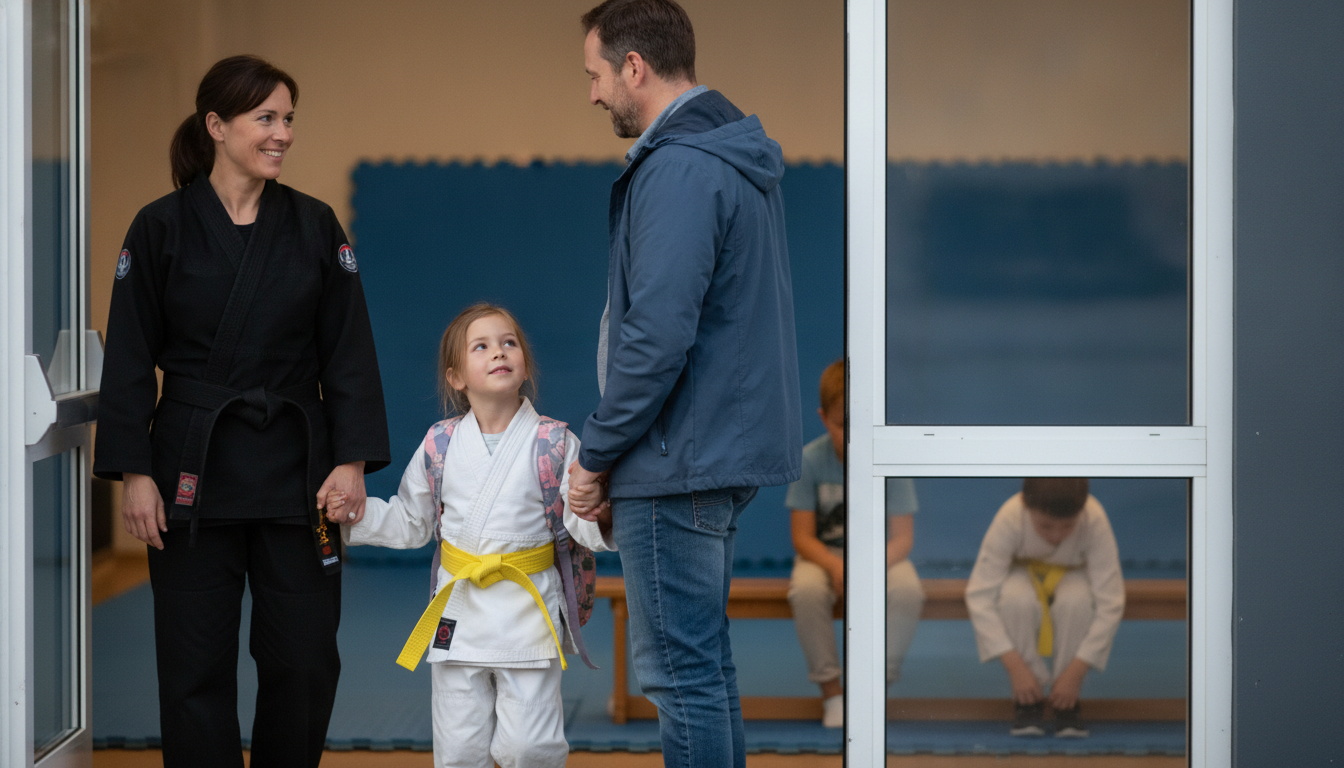
- Dismiss kids to a named parent or guardian. Don't leave until the last child is picked up.
- Log attendance if you didn't at check-in, and add a two-line note: who struggled, who's ready for a stripe or grading, and who seemed off.
- Message absent students, especially anyone who has missed two classes in a row. A drop in attendance is usually the first sign that a student is about to quit, and a friendly "we missed you" catches it early.
- Wipe down the mats and equipment again before the next class.
- Reflect for one minute. Write down one thing that worked and one thing to change next time.
Our attendance tracker shows who's missed classes, so the follow-up messages take minutes rather than an evening. For the wider retention picture, including grading events and referrals, see our guide on how to promote a martial arts school.
Your class-running checklist
Before class
- Mat checked and cleaned
- Roster reviewed: new students, trials, injuries, medical notes
- Assistants briefed on jobs
- Gear out and within reach
- Students greeted and checked in at the door
During class
- Line-up, bow, and today's goal
- Warm-up matched to the technique
- Technique taught with one or two cues
- Drilling with partners or pads
- Live block or game at a set intensity
- Recap question, announcements, bow-out
After class
- Every child dismissed to a parent or guardian
- Attendance logged with short notes
- Absent students messaged
- Mats and equipment wiped
- One thing that worked, one thing to change
Key takeaways
- Arrive 15 minutes early to clean the mat, review the roster, brief assistants, and greet students at the door.
- Run every class on the same skeleton: line-up and goal, warm-up, technique, drilling, live work or a game, recap, and bow-out.
- Plan for transitions with one signal and a holding task for early finishers.
- Aim for one adult or assistant per 8 kids, and keep two adults present whenever minors are on the mat.
- Use one escalation ladder, applied the same way by every adult.
- Log attendance, message absent students, and write one note on what to change after every class.
Where to go next
A class runs well when the routines are the same every time, because that frees your attention for the students in front of you.
For what to teach inside this structure, go back to the lesson plans and kids' drills posts linked at the top. When admin starts crowding out mat time, our roundup of the best martial arts software compares the options, and our martial arts software page shows how we handle bookings, attendance, and payments.
FAQs
How long should a martial arts class be?
About 30 minutes for ages 3-5, 45 minutes for school-age kids, and 60 to 90 minutes for teens and adults. Shorter classes suit short attention spans, while longer adult classes leave room for conditioning and live rounds. Whatever the length, keep the same opening and closing routine.
How many students can one martial arts instructor teach?
For kids, aim for about 8 students per instructor or assistant. Teens and adults can stretch to 12 to 15 for technique work, but keep the ratio tighter for sparring or rolling. Above those numbers, students spend more time waiting than training.
How do you start a martial arts class?
Line students up by rank, bow in, and tell them today's goal in one sentence. Then move straight into a warm-up that prepares the body for the technique you're about to teach. The whole opening should take about three minutes.
How do you end a martial arts class?
Finish with a short cool-down, then ask two or three students to name the key point of the class. Line up again, give announcements, and bow out. For kids, dismiss each child to a parent or guardian at the door.
How do you handle a disruptive student in a martial arts class?
Use a consistent escalation ladder: a reminder by name, then a quick reset task, then a short sit-out at the edge of the mat, then a conversation with the parent. Every adult on the mat should use the same steps. Consistency matters more than how strict each step is.
How do you keep a martial arts class safe?
Clean the mat before every class, pair students by size and experience, and set the intensity yourself for any live work. Check gear, nails, and skin before contact. Keep a first aid kit, emergency contacts, and an incident log ready for the day someone gets hurt.
What should I do before teaching my first martial arts class?
Assist in other classes and lead warm-ups first, so the room already knows you. Write the plan down with timings, arrive early, and give one or two instructions at a time. Our guide on how to become a martial arts instructor covers the certifications and training involved.
How do I teach a class with different belt levels?
Teach the same technique in tiers: a basic version for new students, a harder version for middle ranks, and a combination or application for senior belts. Use senior students as demo partners so they're challenged too. Everyone drills the same move, so the class stays together.
How do you run a martial arts class on your own?
Cap the class size, keep live work to short, controlled rounds, and run tiers within one group instead of breakout groups. Move check-in and payments online so you're not handling admin on the mat. If you teach minors, have a second adult present, even a parent volunteer.