


Plenty of coaches can run a brilliant session. Far fewer can tell you how many children need to pay before the pitch hire is covered, how many staff the ratios demand, or whether they legally need to register with Ofsted. That gap is where camps lose money or fold after one holiday. This guide closes it: what a football camp actually costs to run, who you need on the touchline, what the law requires, and how to fill it.
Here is the short version. To run a football camp: pick a format and holiday dates, secure a pitch with an indoor backup, put FA-qualified and DBS-checked staff in place at safe coach-to-child ratios, insure it, set a budget and a price that breaks even, take bookings and payments online, and plan a daily programme kids want to come back to. The rest of this playbook puts real UK numbers against every one of those.
Decide what kind of football camp you're running
Before anything else, settle on a format, because it drives your staffing, your venue, and your compliance load. Most people reading this want a school-holiday day camp, and for good reason: it is the easiest to start, the cheapest to run, and the one working parents search for hardest.
Here is how the common formats compare on effort to set up and run.
| Format | Setup effort | Best for |
|---|---|---|
| School-holiday day camp (single or multi-day) | Low to medium | The default. Holiday childcare plus football, easiest to fill and staff. |
| One-day skills clinic | Low | Testing demand, a themed session (goalkeeping, finishing), or a taster. |
| Weekly holiday club (full week block) | Medium | Established coaches who can fill five days and want a fuller week's income. |
| Residential camp | High | Experienced operators only. Overnight care adds heavy Ofsted, safeguarding, and insurance requirements. |
Next, pick an age band and a length. A single group of 5 to 12 year olds is hard to coach well, so either narrow it (5 to 8, 9 to 12) or run one camp and split children into age or ability groups on the day. For length, a half day runs roughly 9am to 12pm, a full day 9am to 3pm, and an extended day 8am to 6pm to cover working-parent hours, which is a genuine selling point.
Then choose your holiday windows. UK demand clusters around Easter, the late-May half-term, the six weeks of summer, the October half-term, and February half-term. Summer is the big one, but half-terms are easier to fill for a first camp and lower risk. If your ambition is an ongoing operation rather than a one-off, our guide to how to start a football academy covers the recurring model.
Get qualified, DBS-checked coaches in place
This is the compliance floor, and it is not optional. Every adult in a supervisory role needs the right checks and qualifications before a single child arrives.
Start with the coaching qualification. The FA's Introduction to Coaching Football is the entry-level course anyone running grassroots football is expected to hold. It costs around £100 through England Football Learning, and partially funded places can bring that down to about £24 for eligible coaches. The higher UEFA C and above pathways exist for experienced coaches, but you do not need them to run a grassroots holiday camp.

On top of the coaching course, each coach needs two more FA certificates:
- Safeguarding Children, taken separately, at around £30. It must be kept in date.
- Introduction to First Aid in Football, at around £30 (or an emergency first aid equivalent), renewed every three years. You need at least one qualified first-aider on site at all times.
Finally, the background check. Anyone working with children in a paid coaching role needs an enhanced DBS check that includes the children's barred list, applied for through GOV.UK. The government fee is £49.50, so budget around £60 per person once you add the umbrella-body admin charge, and never let an unchecked adult supervise children. If you are hiring in coaches rather than doing it all yourself, our guide on how to become a football coach is a useful thing to point them at.
Work out how many staff you need (coach-to-child ratios)
"How many coaches do I need?" has a real answer, and it comes from your safeguarding ratios, not a guess. The NSPCC's Child Protection in Sport Unit sets out recommended supervision ratios that most UK activity providers work to:
| Age band | NSPCC ratio | Coaches for 24 children | Coaches for 36 children |
|---|---|---|---|
| 4 to 8 years | 1:6 | 4 | 6 |
| 9 to 12 years | 1:8 | 3 | 5 |
| 13 to 18 years | 1:10 | 3 | 4 |
Two rules sit on top of the table. There should always be a minimum of two adults on site, even for a tiny group, so that no adult is ever alone with children. And these are minimums: your sport's governing body, your insurer, or your own risk assessment can all push the number higher.
Work a real example. Say you take 30 children aged 8 to 12. At 1:8 that is four coaches as an absolute floor. Add a camp lead who also holds the first aid certificate and you are planning for five staff, which comfortably clears the ratio and gives you cover for lunch, toilet trips, and drop-off and pick-up. That fifth pair of hands is not a luxury, and as the next section shows, it is the single biggest lever on your budget.
Sort your venue, pitch and equipment
Your venue decides your biggest running cost and your weather resilience. You want a grass or 3G pitch, an indoor or sports-hall backup for the inevitable British rain, plus toilets, running water, a shaded base for hot days, and secure storage. School and council facilities are usually the sweet spot: they sit empty over the holidays, and many will do a block-booking rate for a full week.
Pitch hire varies widely by region, so get quotes rather than trusting an average. As a rough guide, a 3G five-a-side runs somewhere around £30 to £47 an hour with junior rates often lower, and grass pitches land around £45 to £95 per two-hour block. Across a full week of daytime use that is a serious line item, which is exactly why a holiday block rate from a school is worth chasing.

Equipment is a smaller and mostly one-off cost. A starter kit of cones (around £8 to £9 a pack), training bibs (from about £4 each), footballs (from about £12), and a few pop-up or small goals (£18 to £100 depending on size) covers the basics, plus a well-stocked first aid kit, a pump, and a spares bag. Budget a one-off £150 to £300 and it will last across several camps. Our football coaching equipment guide breaks down what to buy first.
What it costs to run a football camp: a sample UK budget
This is the question the search hides, and the one almost no competing guide answers with a number. Split your costs in two: one-off startup costs you pay once, and per-camp running costs you pay every time you run.
Here is a realistic startup budget for a solo operator getting qualified and equipped for the first time.
| Startup item (one-off) | Example cost | Notes |
|---|---|---|
| FA Introduction to Coaching Football | £100 | As little as £24 with a partially funded place. |
| FA Safeguarding Children | £30 | Kept in date. |
| FA Introduction to First Aid in Football | £30 | Renewed every three years. |
| Enhanced DBS check | £60 | £49.50 government fee plus admin. Per adult. |
| Starter equipment kit | £200 | Lasts multiple camps. |
| Public liability insurance (annual) | £105 | £10m cover. See the insurance section below. |
| Booking and website setup | £0 | Our platform is free to start, with no card required. |
| Total startup | Around £525 | Closer to £450 if your coaching course is funded. |
Now the part that recurs. Below is an illustrative running budget for a five-day summer camp taking 30 children aged 8 to 12, staffed at five adults. Your numbers will shift with your region and your pitch deal, so treat it as a model, not a quote.
| Per-camp running cost (5 days, 30 children) | Example cost | Notes |
|---|---|---|
| Venue and pitch hire | £750 | School holiday block rate, around £150 a day for pitch plus indoor backup. |
| Coaching wages | £2,400 | Four coaches at ~£90/day plus a lead at ~£120/day, over five days. |
| Consumables | £150 | First aid restock, water, certificates, medals, prizes. |
| Booking and payment fees | £60 | Card processing on roughly £3,900 of bookings. |
| Marketing | £120 | Flyers and a small boosted-post budget. |
| Total per camp | Around £3,480 | Wages and venue are ~90% of it. |
The lesson in that table is that staff and pitch dominate everything else. Snacks and cones are rounding errors next to the wage bill, so your price has to be built around the two big lines, not the small ones. For a deeper budgeting and cash-flow template, our football academy business plan guide includes a downloadable break-even calculator you can reuse for camps.
Price your camp and hit break-even
Price against your local market, not a national average. Across the UK, budget and local camps charge roughly £15 to £25 per child per day, typical full-week day camps land around £100 to £160, and premium branded camps run to £279 a week or more. Ring round the camps near you, see what they charge, and position just inside that band.
Now the maths that keeps you solvent. Break-even is simply your total per-camp cost divided by your price per child. Using the sample budget above, at a full-week price of £130 per child:
- Total per-camp cost: around £3,480
- Break-even: £3,480 / £130 = 27 children
- Fill all 30 places and you profit around £420
That margin is thin on purpose, to make a point: at 27 children you have only just covered your costs, and a couple of last-minute cancellations wipe out the profit. Two levers fix it. Push the price to £150 a week (still mid-market) and 30 children brings in £4,500, lifting profit past £1,000. Or fill more places, but watch your ratios, because crossing a ratio threshold means hiring another coach and adding to the wage line.
A few pricing tactics that work:
- Offer a full-week rate at a small discount to the day rate, to reward fuller bookings.
- Run sibling and early-bird discounts to drive early commitment and cash flow.
- Set a minimum-numbers threshold below which you cancel and refund, so a half-empty camp never runs at a loss.
If you want to lower the cost side rather than raise the price side, our guide to funding for football clubs covers grants and support that can offset equipment or facility costs.
Do you need to register with Ofsted?
This is the question most operator guides skip, and it can either add a compliance step or hand you a real sales advantage, depending on how you play it.
The general rule: if you care for children under 8 for more than two hours a day, you usually have to register with Ofsted, most often on the Childcare Register rather than the Early Years Register. There are exemptions, though, and two of them matter for football camps. A camp built around a single activity such as sport can be exempt from compulsory registration even when it runs longer than two hours, and short-run provision (broadly 14 days or fewer in a year) can also fall outside it. The rules are nuanced, so check your exact position against the current Ofsted guidance before you decide.
Here is why registration is worth considering even when you are exempt: it lets parents pay you through Tax-Free Childcare. Under the GOV.UK Tax-Free Childcare scheme, the government adds £2 for every £8 a parent pays in, up to £500 per child every three months, which is £2,000 a year. For an eligible family that is effectively 20% off your camp, and it is a genuine reason to book you over an unregistered rival. To accept it, you must be registered (on the voluntary part of the Childcare Register if you are otherwise exempt) and signed up to receive the payments.

The parent-side eligibility is worth knowing so you can explain it: both parents (or a single parent) generally need to be working and each earning at least the equivalent of 16 hours a week at minimum wage, neither earning over £100,000, with children aged 11 or under. Our guides on how to accept Tax-Free Childcare payments and how to set up an after-school club in the UK go deeper on the registration mechanics.
Sort insurance, safeguarding and risk assessment
Insurance is non-negotiable and cheap relative to the risk. You want public liability cover (commonly up to £10m) and, the moment you take on any staff, employers' liability, which is a legal requirement. Specialist coaching cover starts from around £6.55 a month, or roughly £105 a year for a £10m public liability policy. Most insurers will ask you to hold a recognised coaching qualification before they cover you, which is another reason the FA course comes first.
Safeguarding is more than a certificate. In practice you need a named safeguarding lead, a written safeguarding policy, and a clear route for children or staff to report a concern. You also need medical details, allergies, emergency contacts, and photo and media permissions collected for every child before the first morning, not scribbled down at the gate.
Then write a risk assessment. Walk the site and note the real hazards: pitch surface and surroundings, hot weather and hydration, wet weather and slips, equipment like goals and posts, and the crush points at drop-off and pick-up. Keep a stocked first aid kit and a trained first-aider on site whenever children are present.
Plan the day: a sample football camp timetable
A camp that runs to a rhythm feels calm; one that improvises feels chaotic. Here is a copy-ready full-day structure you can adapt, built around a 9am to 3pm day.
| Time | Session |
|---|---|
| 8:45 to 9:00 | Staggered drop-off and registration, mark the register, group children by age or ability. |
| 9:00 to 9:20 | Warm-up and movement games to get bodies moving and settle nerves. |
| 9:20 to 10:30 | Technical skills carousel, rotating stations for dribbling, passing, and shooting. |
| 10:30 to 10:45 | Water and snack break. |
| 10:45 to 12:00 | Small-sided games applying the morning's skills. |
| 12:00 to 13:00 | Lunch and quiet time. |
| 13:00 to 14:15 | Themed session or a World Cup style tournament with mixed teams. |
| 14:15 to 14:45 | Cool-down, player of the day awards, certificates. |
| 14:45 to 15:00 | Staggered pick-up against your register. |

Rotate stations every 15 to 20 minutes so no group stands idle, keep groups small enough to match your ratios, and always have a wet-weather version that moves the same plan into a sports hall. For the drills themselves, lean on our football training session plans and football coaching drills for kids, and mix in a few fun camp games for kids for the lighter afternoon slots.
Take bookings and run the admin without spreadsheets
You can coach brilliantly and still sink under the paperwork: registration forms, medical notes, consent, payments, waitlists, refunds, and a register for every session. This is the operational engine, and it is where camps quietly lose hours they should spend on the pitch. It is also where our booking software earns its keep.
Here is what you actually need to capture and manage, and how we handle it in one place:
- An online booking page offering per-day or full-week places, with real-time capacity and automatic waitlists when a session fills.
- Registration forms that collect medical info, allergies, emergency contacts, and consent and photo permissions at the point of booking, so nothing is missing on day one.
- Card payments taken up front, with sibling and early-bird discount codes, plus refunds or credits handled cleanly when a family cancels.
- Daily registers and headcounts you can check against your ratios, with automatic booking confirmations and reminder emails to parents.
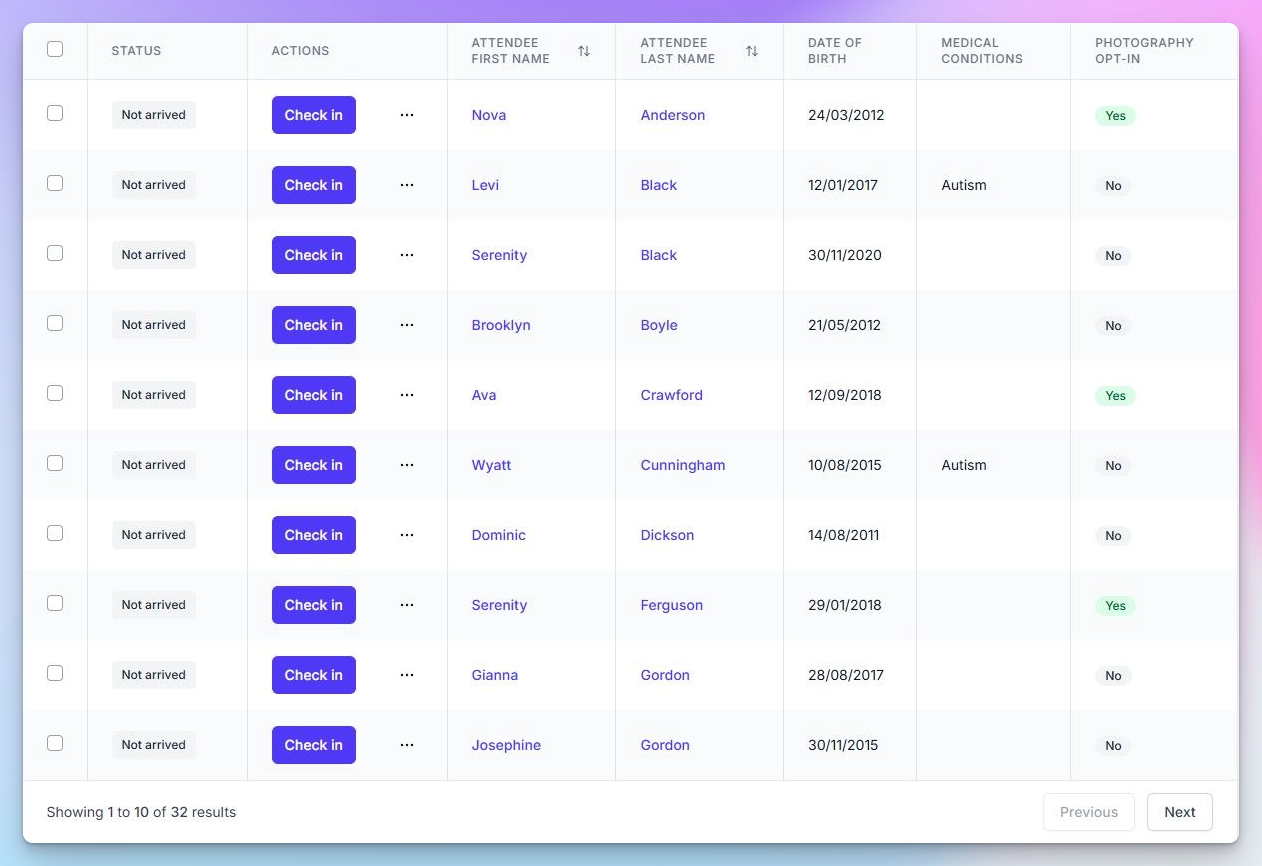
Do it this way and camp week becomes coaching, not chasing forms and payments. For a wider view of the tools available, see our roundup of the best football club management software.
Fill your camp: marketing that works locally
A camp lives or dies on local reach, so start marketing six to eight weeks before the first day. The channels that work are close to home: local parent Facebook groups, school newsletters and flyers (ask nearby schools to share your dates), a simple Google presence with a Google Business listing, and one shareable booking link you can drop everywhere.
Give parents reasons to book now rather than later. Short clips and photos from past camps (with consent) build trust, reviews from returning families are gold, and early-bird pricing plus sibling offers create urgency. Then think about the camp after this one: capture parent emails, mention next holiday's dates at pick-up, and offer a returning-camper discount so your hardest bookings are already warm. Our football club marketing guide covers the local playbook in more depth, and if you are branding a brand-new camp, football club name ideas is a useful starting point.
Key takeaways
- Pick a format first: a school-holiday day camp is the easiest and most in-demand starting point.
- Get the compliance floor in place before day one: FA coaching qualification (~£100), safeguarding and first aid (~£30 each), and an enhanced DBS check per adult.
- Staff to NSPCC ratios (1:6 for ages 4 to 8, 1:8 for 9 to 12, 1:10 for 13 to 18), always with at least two adults.
- Budget around £525 in one-off startup costs and roughly £3,480 to run a five-day, 30-child camp, with wages and pitch hire making up about 90% of it.
- Break-even is total cost divided by price per child. Price inside your local band, and use full-week, sibling, and early-bird rates to protect your margin.
- Ofsted registration is worth considering even when you are exempt, because it lets parents pay with Tax-Free Childcare, effectively 20% off.
- Take bookings, payments, consent, and registers online so camp week is spent coaching, not on admin.
FAQs
How much does it cost to run a football camp?
Budget roughly £525 in one-off startup costs (coaching qualification, safeguarding, first aid, DBS, equipment, and insurance) plus per-camp running costs of around £3,480 for a five-day camp taking 30 children. Wages and pitch hire make up about 90% of the running cost, so those are the two numbers to nail down. Your figures will vary by region and by the pitch deal you can negotiate.
What qualifications do I need to run a football camp in the UK?
At minimum, each coach needs the FA's Introduction to Coaching Football qualification, an in-date FA Safeguarding Children certificate, and an FA first aid certificate, plus an enhanced DBS check that includes the children's barred list. You do not need the higher UEFA C pathway to run a grassroots holiday camp, though it helps for more advanced coaching.
How many coaches do I need per child?
Follow the NSPCC's recommended ratios: one adult to every six children aged 4 to 8, one to every eight aged 9 to 12, and one to every ten aged 13 to 18. Always have a minimum of two adults on site, even for a small group. Your governing body, insurer, or risk assessment may require more.
Do I need to be Ofsted registered to run a holiday football camp?
It depends. Caring for children under 8 for more than two hours a day generally requires registration, but single-activity sports camps and very short-run provision can be exempt, so check the current Ofsted guidance for your exact case. Even when you are exempt, registering on the voluntary Childcare Register is often worth it, because it lets parents pay with Tax-Free Childcare.
How much should I charge for a football camp?
Price against your local market. UK camps typically charge around £15 to £25 per child per day, with full-week day camps landing around £100 to £160 and premium branded camps reaching £279 a week or more. Work out your break-even (total cost divided by places), then price just inside your local band and add full-week, sibling, and early-bird options.
What staff-to-child ratio is safe for a football camp?
Use the NSPCC ratios as your floor: 1:6 for ages 4 to 8, 1:8 for 9 to 12, and 1:10 for teenagers, with never fewer than two adults present. Build in a little slack so you stay within ratio during lunch, toilet breaks, and drop-off and pick-up, when supervision is stretched thinnest.
What insurance does a football camp need?
You need public liability cover, commonly up to £10m, and employers' liability the moment you take on staff, which is a legal requirement. Specialist coaching cover starts from around £6.55 a month or roughly £105 a year for a £10m policy. Most insurers require you to hold a recognised coaching qualification before they cover you.
How do parents pay with Tax-Free Childcare?
Eligible working parents open a Tax-Free Childcare account on GOV.UK, and the government adds £2 for every £8 they pay in, up to £500 per child every three months. To receive it, your camp must be registered with Ofsted (the voluntary Childcare Register is fine if you are otherwise exempt) and signed up to accept the payments.
How far in advance should I start marketing a football camp?
Start six to eight weeks before the first day. That gives parents time to plan their holiday childcare and gives you time to fill places, chase early-bird bookings, and cancel and refund cleanly if numbers fall below your minimum threshold. Local Facebook groups, school newsletters, and a shareable booking link do most of the work.
What should a football camp daily timetable look like?
A full day runs well from around 9am to 3pm: staggered drop-off and registration, a warm-up, a technical skills carousel, a water break, small-sided games, lunch and quiet time, an afternoon tournament, then cool-down, awards, and staggered pick-up. Rotate stations every 15 to 20 minutes to keep energy up, and keep an indoor version ready for wet weather.
How many children do I need to break even on a football camp?
Divide your total per-camp cost by your price per child. On the sample budget here (around £3,480 for a five-day camp) at £130 per child, you break even at 27 children and profit above that. Raising the price or filling more places both help, but watch your ratios, because adding children can mean adding a coach.