
How to Set Up an After School Club in the UK: Costs & Rules


The single decision that shapes everything else about your club is whether you are providing childcare or teaching an activity. It sets your Ofsted position, your ratios, your insurance premium and whether parents can pay you with government money.
In England, you must register with Ofsted if you care for children under eight for more than two hours a day. Clubs that coach one or two listed activities, such as football or drama, are usually exempt. Budget roughly £1,100 to £2,400 for a lean single-site launch and £3,200 to £5,300 for a fuller setup, before wages.
This guide is written for two readers: someone starting a club at a primary school as their own business, and someone setting one up inside a school, church or community group. Every figure below was checked in August 2026 against GOV.UK, Ofsted and Coram sources, and prices move.
The nine steps, in order
- Decide whether you are running childcare or an activity club
- Check demand before you spend anything
- Choose your business structure
- Work out whether you must register with Ofsted
- Apply for your enhanced DBS and submit your registration
- Secure the venue and pin down the lettings agreement
- Sort insurance, policies and training
- Price the sessions and check the break-even maths
- Open bookings and fill the club
The order matters. The instinct is to find premises first, which is how people end up paying rent on a hall they are not yet allowed to fill. Ofsted works to a 12-week target and Early Years Register applications can run to six months, so the DBS and the registration application go in long before you sign anything with a school.
Childcare club or activity club?
A childcare club exists so a parent can work. Children arrive at 3.15pm, stay until 5.30pm or 6pm, eat something, do homework, play, and get collected. What happens in the session is up to you.
An activity club exists to teach one thing. You run a football club, a drama club, a coding club or a Spanish club for a fixed hour or so, and the children leave when it ends. The same hall and the same children can be either. The difference is what you are selling.
That distinction decides your legal position. In England, the registration exemptions that matter most to out-of-school providers are:
- You look after each child for two hours or less a day.
- You coach or tutor in no more than two of these categories: school study support, sport, performing arts, arts and crafts, or religious, cultural and language study. Children under five cannot attend for more than four hours a day.
- You only look after children aged eight and over, who fall outside compulsory registration entirely.
- You run from one location for 14 days or fewer in a year, with at least 14 days' written notice to Ofsted.
Only one exemption can cover your whole provision, so you cannot stack the activity exemption on top of the two-hour rule to stretch a session.
| Childcare club | Activity club | |
|---|---|---|
| Ofsted registration | Compulsory for under-eights over two hours a day | Usually exempt, voluntary registration still open |
| Typical session | 2.5 to 3 hours, 3.15pm to 6pm | 45 to 75 minutes, one activity |
| Ratios | Staffing set as for a class above reception age, effectively 1:30, but insurers and schools expect 1:8 to 1:10 | Set by your governing body or insurer, commonly 1:10 to 1:15 |
| EYFS learning and development | Does not apply to before and after school care for reception age and above | Does not apply |
| Tax-Free Childcare | Yes, once registered and signed up | Only if you take voluntary registration |
| What parents are buying | Cover until they finish work | A skill, once a week |
Plenty of clubs sit in both camps: an activity block from 3.15pm to 4.15pm, then general care until 6pm. If any child is under eight and stays past the two-hour mark, you are running childcare and you register. Our guide to wraparound care covers how the two models fit together across a school day.

Do you need to register with Ofsted?
If you care for children under eight for more than two hours a day and no exemption fits, registration is compulsory. There are three routes, and the fees below come straight from Ofsted's childcare registration fees.
| Register | Who it covers | Annual fee |
|---|---|---|
| Early Years Register | Children from birth to 31 August following their fifth birthday, cared for more than two hours a day. EYFS welfare requirements apply. | £220 for childcare on premises |
| Compulsory part of the Childcare Register | Children aged five to seven, cared for more than two hours a day | £114 |
| Voluntary part of the Childcare Register | Children aged eight and over, or provision that is otherwise exempt | £114 |
| Both registers | Mixed age groups, which is most after school clubs | £220, not £334 |
| Reduced fee, Early Years Register | Providers on domestic or non-domestic premises working less than three hours a day, or fewer than five days a week, or fewer than 45 weeks a year | £35 |
The reduced fee is worth a phone call. Ofsted publishes it against the Early Years Register rather than the Childcare Register, and a term-time club runs 38 or 39 weeks a year, comfortably under the 45-week threshold. Ask Ofsted to confirm your position before you pay the full £220.
Two practical points. The fee is due on application and again on the anniversary, and Ofsted does not refund it even if your application is withdrawn or refused. And you need an enhanced DBS check with a barred list check, plus a Government Gateway account, before you can apply at all, which is why the DBS sits at step five rather than step eight.
Timescales: Ofsted works to a 12-week target for registration, and Early Years Register applications commonly take longer, up to around six months. Once you are open, Early Years Register settings are inspected within 30 months and then at least every six years. Settings on the Childcare Register only are sampled rather than routinely inspected. A club run directly by a school for its own pupils is exempt from registering at all. We go into the process in more detail in our guide to Ofsted registration for clubs.
Register anyway, even if you are exempt
If you are exempt, you can still join the voluntary part of the Childcare Register for £114. Most exempt clubs skip it to save the money. That is almost always the wrong call, for reasons that are worth doing the arithmetic on.
Why registration is a pricing decision, not just a compliance one
Registration is what connects you to two government payment routes. Neither is available to an unregistered provider, and both change what a family actually hands over.
Tax-Free Childcare lets parents pay into a childcare account and have the government add £2 for every £8 they deposit, capped at £500 a quarter and £2,000 a year per child, or £1,000 a quarter and £4,000 a year for a disabled child. Only providers registered with Ofsted or the equivalent national regulator can be paid from those accounts. The Universal Credit childcare element covers up to 85% of eligible costs, capped at £1,071.09 a month for one child and £1,836.16 for two or more, and again only for registered providers.
Coram Family and Childcare's Childcare Survey 2026 puts the average after-school club at £69 a week in England, £71 in Scotland and £74 in Wales. Take the England figure across a 38-week year and you are charging £2,622 for a place. Here is what three different families actually hand over for it.
| Family situation | What the club charges | What the family pays | Who pays the rest |
|---|---|---|---|
| Club not registered | £2,622 | £2,622 | Nobody |
| Registered, family uses Tax-Free Childcare | £2,622 | £2,097.60 | HMRC adds £524.40 |
| Registered, family claims the Universal Credit childcare element | £2,622 | £393.30 net of the claim | DWP reimburses up to 85% |
The registered club is not cheaper. It just costs the family less, which is the only comparison a parent standing at the school gate actually makes. At £114 a year, the voluntary register pays for itself if it wins you one extra child for a single term.
Getting set up on the scheme is a separate job from registering, and it trips people up. We have written the full process in accepting Tax-Free Childcare payments, and our Tax-Free Childcare tools handle matching those payments back to the right child.
What it costs to set up
The Ofsted fee is the smallest line in a start-up budget, so here is the whole list. The lean column is one club at one site with two staff and borrowed or second-hand equipment. The fuller column is 24-plus places or two sites with four staff. Wages are excluded from both and covered in the next section.
| Item | Lean setup | Fuller setup |
|---|---|---|
| Ofsted registration | £114 (Childcare Register) | £220 (both registers) |
| Enhanced DBS with barred list check | £120 to £160 for two staff | £240 to £320 for four staff |
| DBS Update Service | £32 a year | £64 a year |
| Paediatric first aid, 12 hours | £85 to £120 for one first aider | £340 to £480 for four, or £525 to £775 plus VAT for an on-site group course |
| Safeguarding level 2 | £40 to £80 | £80 to £160 |
| Level 2 food hygiene | £40 to £60 | £80 to £120 |
| Food business registration | Free | Free |
| Public and employers' liability insurance | £45 to £160 a year | £200 to £400 a year |
| Business structure | £0 as a sole trader, £100 to incorporate online | £100 limited company, £115 for a CIC |
| ICO data protection fee | £47 by direct debit, £52 otherwise | £52 |
| Venue deposit and first month's hire | £150 to £600 | £600 to £1,500 |
| Equipment, craft supplies, games, storage boxes | £250 to £600 | £800 to £1,500 |
| First aid kit, fire kit, signage | £60 to £120 | £150 |
| Launch marketing, flyers, banner, printing | £50 to £150 | £250 |
| Booking and registers software | See our pricing | |
The lean column adds up to just over £1,000 at the bottom of every range, so plan for £1,100 to £2,400 to open a single site once software is in, and £3,200 to £5,300 for a fuller setup. Companies House fees rose sharply on 1 February 2026, so older guides quoting £50 to incorporate are out of date.
Two costs people consistently forget. The first is the hall: schools and community centres routinely want a deposit and a month up front, before a single parent has paid you. The second is the gap between spending and earning. You will pay for DBS checks, first aid training and registration weeks or months before you can take a booking, and that gap is the working capital your first term depends on.

The maths that decides whether your club works
An after-school club looks like a variable-cost business and behaves like a fixed-cost one. Three staff cost the same whether nine children turn up or 24, and the hall costs the same either way too.
From April 2026 the National Living Wage is £12.71 an hour for 21 and over and £10.85 for 18 to 20 year olds. Employer National Insurance runs at 15% on earnings above £5,000 a year, though most small employers can offset up to £10,500 of that with the Employment Allowance. Assume 3.5 paid hours per member of staff for a 3pm to 6pm session, which covers setup, the session itself, clear-down and handover.
Here is a 24-place club charging £14 a session with three staff on shift, a hall at £15 an hour and snacks at £1 a child.
| Occupancy | Children | Session income | Staff cost | Hall | Snacks | Left over |
|---|---|---|---|---|---|---|
| 100% | 24 | £336 | £153 | £45 | £24 | £114 |
| 75% | 18 | £252 | £153 | £45 | £18 | £36 |
| 50% | 12 | £168 | £102 (two staff) | £45 | £12 | £9 |
The staff figure is checkable: three people times 3.5 hours times £12.71 is £133.46, and 15% employer National Insurance takes it to roughly £153. Two staff on the same shift come to about £102. Treat that as the cautious end, because the 15% only bites on earnings above £5,000 a year and the Employment Allowance can wipe out the National Insurance for a small employer entirely.
Read the right-hand column carefully. Dropping from 24 children to 18 wipes out two thirds of the margin, and at half full you are running a club for £9 a session before insurance, software, your own admin time or a single wet-play day when nobody wants the field. Scale it up and the spread is stark: five afternoons a week across 38 term-time weeks turns £114 a session into about £21,700 a year, £36 into about £6,800, and £9 into roughly £1,700. Occupancy is not a detail of this business. It is the business.
Three levers move those numbers. Sell terms rather than drop-ins, so your income is as fixed as your costs. Set a minimum-numbers rule and cancel below it rather than running at a loss out of politeness. And flex staffing to actual bookings, which only works if you know Friday what next week looks like. That last one is the whole argument for running registers and bookings in one place rather than a spreadsheet and a WhatsApp group.
What changed in 2026
Two things happened this year that most guides on this topic have not caught up with, and both change the answer to "which club should I start".
The National Wraparound Childcare Programme put £289m through local authorities to expand 8am to 6pm term-time provision, with delivery scaling from September 2024. That funding ran to 31 March 2026, and the expectation was always that provision would stand on parent fees alone by September 2026. If your plan assumed a council start-up grant, ask your local authority's childcare team what is actually left before you budget a penny of it.
Free breakfast clubs are the bigger shift. Phase 1 of the national rollout began in April 2026. Under the free breakfast clubs grant methodology, state-funded mainstream schools on the programme get a flat £25 a day plus £1 per pupil attending, with a one-off £1,000 start-up grant for schools new to it, backed by £80m to bring in around 2,000 more schools between April 2026 and March 2027. For a private provider that means paid breakfast provision in participating primaries is being replaced by a free offer, so check your target school's status before you build a morning session into the model. After-school provision is untouched. If you are working out what a morning session should look like either way, we have a run-through of breakfast club ideas.
The Holiday Activities and Food programme is the exception to the funding squeeze. It runs in England through 2026/27 and is confirmed to 2028/29, which remains the realistic route into paid holiday delivery for clubs that want a 52-week business rather than a 38-week one.
Getting into a school
This is the step people underestimate. Ofsted publishes its process and you can work through it; getting a head to say yes has no published process at all. Approach the school business manager or the head directly, not the office inbox, and go in with the paperwork already done: enhanced DBS certificates, £6m public liability cover, a written safeguarding policy, a named designated safeguarding lead and two references.
Then negotiate the lettings agreement properly, in writing, before you take a single booking. Pin down all of this:
- The hourly rate, and whether it rises annually
- The exact hours, including setup and clear-down, not just session time
- Which rooms, and what happens when the hall goes to the Christmas play for three weeks
- Locked storage you can leave equipment in
- Outdoor access and the wet-weather alternative
- Caretaker cover and who locks up
- Toilets and kitchen or fridge access
- Parking and gate access at collection time
- Whether the school will name you in newsletters and the September welcome pack
- Notice period on both sides
- Whether they want a flat hire charge or a percentage of your fees
School hire rates vary enormously by local authority, roughly £10 to £50 an hour, and there is no national rate to quote at anyone.
One thing worth knowing before you walk in: a club run by the school itself for its own pupils does not need to register with Ofsted. That is why some heads would rather employ you to run their club than let the hall to your business. It is a smaller, safer income with none of the registration cost, and none of the ownership either. Decide which of those you actually want before the conversation.
Staffing, ratios and qualifications
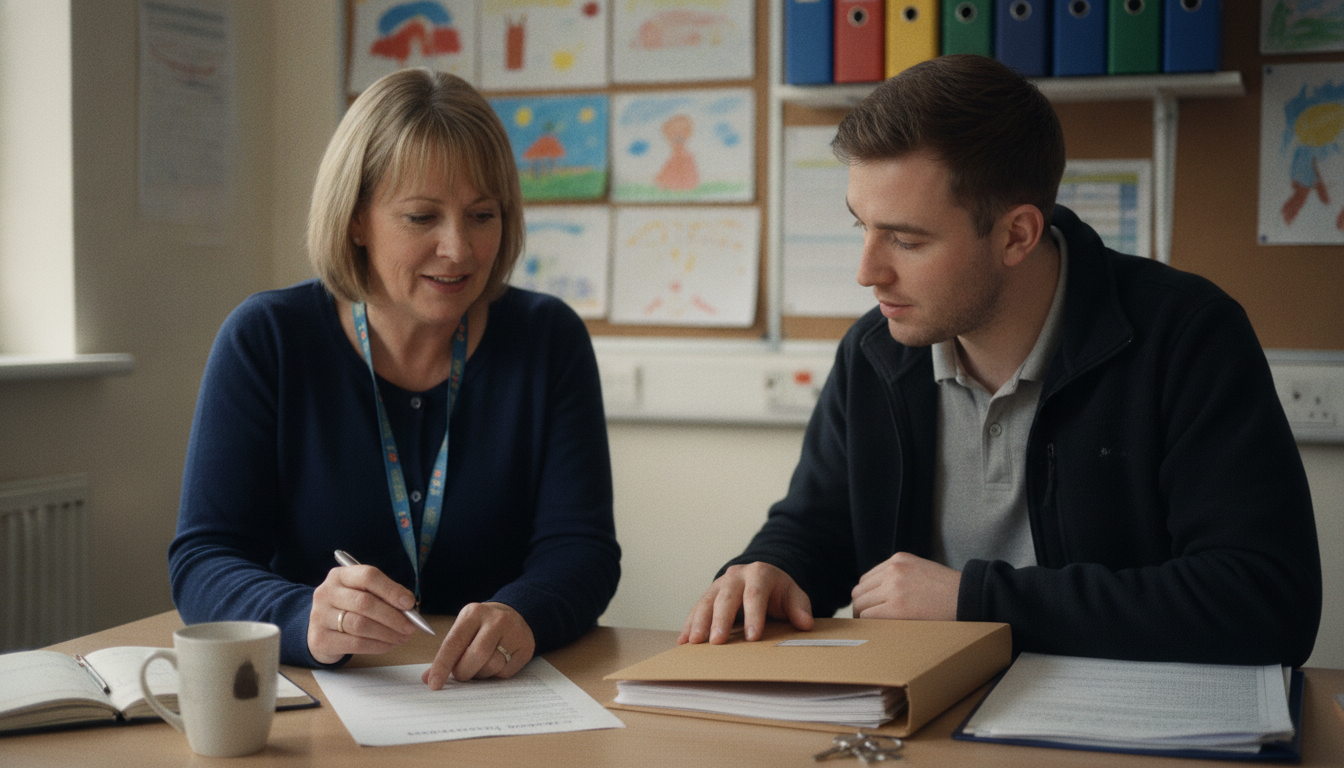
There is no statutory adult-to-child ratio for out-of-school care for children aged eight and over. For before and after school and holiday care for children who normally attend reception or above, staffing is set as it would be for a class, effectively 1:30, and the EYFS learning and development requirements do not apply.
What is legal and what is expected are different things. Insurers typically want around 1:8 for under-eights and 1:10 to 1:15 for older children, schools ask, and parents ask more often than they used to. Most established clubs work to 1:8 or 1:10 whatever the minimum allows. Whatever ratio you settle on, keep two adults on site at all times, so nobody is ever alone with a child and one person can leave the room in an emergency. Our breakdown of UK staff to child ratios sets out the numbers by age group.
No qualification is legally required to run out-of-school care. In practice a Level 2 or Level 3 Playwork or Childcare qualification for the manager is what schools and inspectors expect to see, and it is the thing that separates a club that gets recommended from one that gets tolerated. Be careful what you are buying: a regulated Level 3 Playwork diploma is a substantial course, and a £20 to £30 unregulated online "playwork certificate" is not the same thing and should never be presented as though it is.
Every member of staff needs an enhanced DBS with a barred list check and safeguarding training, and you need at least one paediatric first aider on site for every session. Put everyone on the DBS Update Service at £16 a year each, so certificates stay portable and you are not paying for a fresh check every time someone moves between your clubs.
Policies, paperwork and data
Write these before you open, not after your first incident. The minimum set for an out-of-school club:
- Safeguarding and child protection, naming a designated safeguarding lead
- Uncollected child
- Missing child
- Behaviour
- Medication and medical needs
- Health and safety, with a written risk assessment for the venue
- Complaints
- Fire and evacuation
- Food and allergens
- Photography and social media
- Data protection and retention
- Fees, cancellations and late collection
The Department for Education's out-of-school settings safeguarding guidance for providers, updated on 9 February 2026, covers health and safety, safeguarding and child protection, safe and suitable people, and governance. It is non-statutory, but it is the benchmark unregistered clubs get judged against and schools increasingly ask whether you follow it.
Two of those policies are worth getting right rather than downloading. We have templates and worked examples for photo consent forms and for cancellation and refund policies, which is where late collection charges belong, agreed in writing long before you need to enforce one.
You will hold names, addresses, medical details and emergency contacts for children, so you almost certainly need to pay the ICO data protection fee. The ICO's tier 1 fee covers organisations with no more than ten staff or turnover under £632,000, and is £52 a year, or £47 by direct debit. Also register your food business with the local council if you are serving anything beyond wrapped snacks. It is free, and it has to be done at least 28 days before you start trading.
Setting up outside England
Ofsted only covers England. The rest of the UK has its own regulators and its own registration routes.
In Scotland, you register with the Care Inspectorate as a day care of children service, and staff register separately with the Scottish Social Services Council. In Wales, you register with Care Inspectorate Wales under the Child Minding and Day Care (Wales) Regulations, and the National Minimum Standards for Regulated Childcare apply. In Northern Ireland, registration is handled locally by your Health and Social Care Trust rather than by a single national body, so the process differs by area.
Fee structures and thresholds differ in all three, so get them from the regulator directly rather than from any guide, including this one.
Plenty does not change wherever you are. Criminal record checks run through Disclosure Scotland and AccessNI rather than the DBS, but the requirement is the same. Employer National Insurance, the National Living Wage, the ICO fee and food business registration are UK-wide. So is Tax-Free Childcare, which parents can use with a club anywhere in the UK provided you are registered with the relevant national regulator.
Pricing, taking payments and filling the club
Coram's Childcare Survey 2026 average of £69 a week in England works out at roughly £13 to £15 a session for a five-day place, and that is the number your local market is anchored to whether you like it or not. Coram's separate Holiday Childcare Survey 2026 puts a holiday club place at £191 a week across Great Britain, which is why so many term-time clubs eventually add holiday provision.
Charge per term wherever you can. Your costs are fixed by the half term, so your income should be too. Keep a smaller drop-in allocation at a premium for the parents who genuinely need one afternoon a week, and take a deposit or the first term up front. Put your late collection charge in the terms parents agree to at sign-up.
If you take Tax-Free Childcare, be ready for the reconciliation. Each payment arrives with a unique child reference number rather than the parent's name, so you need a reliable way to match a bank reference back to a child, or your Sunday evenings disappear into a bank statement.
Filling the club is mostly a school-gate job rather than an advertising one. The newsletter, the September welcome pack and a free taster week will outperform any paid campaign you can afford in year one. Give parents a reason to book early by capping places honestly and running a real waiting list. Our guide to after school club activity ideas covers the demand side in more depth.
This is the part of the job we build for. Registers, waiting lists, recurring term payments, medical and consent records and attendance sit in one place in our after school club booking system, so a club manager is not rebuilding a register in a notebook every afternoon.

Your first 12 weeks
Sequenced so that the slowest thing, registration, starts early and the most expensive commitment, the hall, comes late.
| Weeks | What you do |
|---|---|
| 1 to 2 | Test demand. Talk to the school office, ask for a short parent survey in the newsletter, and count how many families say they would pay and at what price |
| 2 to 3 | Choose your structure, register as a sole trader or incorporate, and open a business bank account |
| 3 to 4 | Apply for your enhanced DBS and book paediatric first aid, safeguarding and food hygiene training |
| 4 to 6 | Submit your Ofsted application and pay the ICO fee. Allow 12 weeks, longer for the Early Years Register |
| 5 to 7 | Agree the lettings agreement in writing, get three insurance quotes and buy cover |
| 7 to 9 | Write your policy set and register the food business with the council, at least 28 days before opening |
| 9 to 11 | Open bookings, publish the fee schedule and run a free taster session |
| 11 to 12 | Sign up for Tax-Free Childcare once registration is confirmed, then recruit and induct staff |
The trap to avoid is signing a hall agreement that starts before your registration is confirmed. Ask for a start date tied to your registration coming through, or a break clause, and be honest with the school about why.
Everything above belongs in one document you can hand to a bank, a school or a funder. If you are pulling it together, our after school club business plan guide gives you the structure.
Two decisions carry more weight than all the rest: childcare or activity club, and registered or not. The second one is worth far more than the £114 it costs, because it is the difference between a parent paying your full fee and HMRC paying a fifth of it for them.
Key takeaways
- Registration is compulsory in England if you care for under-eights for more than two hours a day. Clubs coaching one or two listed activities are usually exempt.
- Ofsted fees are £114 for the Childcare Register and £220 for the Early Years Register or both, dropping to £35 under 45 weeks a year.
- Budget £1,100 to £2,400 to open a lean single site and £3,200 to £5,300 for a fuller setup, before wages.
- Register even when exempt. Tax-Free Childcare and the Universal Credit childcare element are closed to unregistered providers, and both cut what a family pays.
- At £14 a session with three staff, a 24-place club clears about £114 full and £9 at half full. Occupancy is the whole business.
- Apply for the DBS and registration before you commit to a hall. Ofsted targets 12 weeks; the Early Years Register can take six months.
FAQs
Do I need to be Ofsted registered to run an after school club?
In England, yes, if you care for children under eight for more than two hours a day and no exemption applies. Clubs that coach no more than two listed activities, such as football or drama, and clubs taking only children aged eight and over are exempt. Exempt clubs can still join the voluntary part of the Childcare Register, which is what unlocks Tax-Free Childcare.
How much does it cost to set up an after school club in the UK?
Roughly £1,100 to £2,400 for a lean single-site club with two staff, and £3,200 to £5,300 for a fuller setup with four staff or two sites. Both figures exclude wages. The biggest variables are the venue deposit, equipment and how many staff need DBS checks and paediatric first aid training.
What ratio of staff to children does an after school club need?
There is no statutory ratio for children aged eight and over. For before and after school care for children of reception age and above, staffing is set as for a class, effectively 1:30. Insurers and schools usually expect closer to 1:8 for under-eights and 1:10 to 1:15 for older children, and two adults should always be on site.
Can parents pay for an after school club with Tax-Free Childcare?
Yes, provided you are registered with Ofsted or your national regulator and signed up to the scheme with HMRC. Parents pay into a childcare account and the government adds £2 for every £8, capped at £500 a quarter and £2,000 a year per child. Unregistered clubs cannot be paid from these accounts at all.
Do I need a qualification to run an after school club?
No qualification is legally required for out-of-school care. In practice schools and Ofsted inspectors expect the manager to hold a Level 2 or Level 3 Playwork or Childcare qualification, and every member of staff needs safeguarding training and an enhanced DBS check. At least one paediatric first aider must be on site for every session.
How long does Ofsted registration take?
Ofsted works to a 12-week target for childcare registration, though Early Years Register applications commonly take longer and can run to around six months. You need an enhanced DBS with a barred list check and a Government Gateway account before you can apply, so start both well before you plan to open.
How much should I charge for an after school club place?
The average after-school club costs £69 a week in England, £71 in Scotland and £74 in Wales, according to Coram's Childcare Survey 2026. That is roughly £13 to £15 a session. Charge per term rather than per session where you can, because your staffing and hall costs are fixed whether children turn up or not.
Do I need insurance to run an after school club?
Yes. Public liability cover is the minimum, and schools typically require £6m or more before they will let you a hall. Employers' liability cover is a legal requirement as soon as you employ anyone, including part-time staff, and is usually written at £10m. Expect £45 to £160 a year for a small single-site club.
Can I run an after school club from a village hall instead of a school?
Yes, and many clubs do, but factor in the walk. If children need collecting from school and escorting to the hall, that is extra staff time, a written risk assessment for the route and parental consent for the walk. Check the hall's own insurance, fire capacity, kitchen facilities and whether you can store equipment on site between sessions.
What is the difference between an after school club and wraparound care?
Wraparound care is the wider term for provision that covers the gap between the school day and a working day, usually 8am to 6pm, so it includes breakfast clubs as well as after-school clubs. An after school club is the afternoon half of it. Government wraparound policy in England covers both, but the funding rules and Ofsted position are the same for each.