


Your school's name goes on the sign above the door, the back of every uniform, each belt certificate, the tournament roster, and your Google listing. Once students wear it, changing it gets expensive. And you are rarely naming in a vacuum: IBISWorld counts 76,364 martial arts studios in the US in 2026, up 6.0% on 2025, so most towns already have a few.
Below are 300+ martial arts school name ideas sorted by style, tone, and audience, plus a generator, a simple formula, and the checks that stop you from printing a name you'll have to replace.
How to name a martial arts school (quick answer)
A strong martial arts school name usually comes together in four steps:
- Pick your anchor. Your town or neighborhood, your surname, or one idea you want students to feel, such as focus, respect, or grit.
- Decide between a style word and "Martial Arts." Use the style (Karate, Jiu-Jitsu) if you teach one well-known art and plan to stay that way. Use "Martial Arts" if you teach two or more, or plan to.
- Add a venue word that suits your art: Academy, Dojo, Dojang, Gym, or Club.
- Check it before you print anything. Say it out loud on the phone, search Google Maps within 25 miles, search the federal trademark register, and grab the domain and social handles.
The rest of this guide expands each step and gives you the lists to pull from.
The martial arts school naming formula
Most names that work on a sign follow the same quiet pattern:
[Anchor] + [Style word or "Martial Arts"] + [Venue word]
The anchor makes the name yours. The style word tells a stranger what you teach. The venue word sets the tone: "Dojo" reads traditional, "Gym" reads competitive, "Academy" reads structured and family-friendly, and "Club" reads community-run.
| Anchor type | Example 1 | Example 2 | Example 3 |
|---|---|---|---|
| Place | Riverside Karate Academy | Northgate Jiu-Jitsu | Cedar Hill Taekwondo |
| Founder | Alvarez Martial Arts | Kim's Taekwondo Dojang | Okafor BJJ |
| Concept | Steady Mind Karate | Keystone Martial Arts | True North Jiu-Jitsu |
Two shortcuts are worth knowing. The venue word is optional in two-word names: "Northgate Jiu-Jitsu" already sounds finished. And "Martial Arts" doubles as a venue word, so "Alvarez Martial Arts" needs nothing more.
Concept names are the most brandable of the three, but they carry a cost. "Keystone" says nothing about where you are or what you teach, so the style word has to do more work, and your marketing has to fill in the rest. Place and founder anchors come with a head start because people already know the street or the instructor.

Martial arts school name generator
Type your town, neighborhood, a local landmark, or your surname, and the generator combines it with character words and venue words. Because every result starts with your own anchor, the output is already more distinctive than a stock list.
Treat the output as a shortlist, not a decision. The tests and availability checks further down tell you which candidate can carry the sign.
Martial arts school name ideas by style
Jump to your art. Each list opens with a naming note specific to that style, because what sounds right for a judo club can sound odd on a Muay Thai camp.
Karate school names
"Dojo" and "Karate-Do" both fit karate naturally. "Kai" means club or association, so "[Word] Karate Kai" suits a club-style school. Leave "ryu" alone unless you founded a style (more on that in the conventions section).
- Harbor Point Karate
- Pine Ridge Karate Dojo
- Empty Hand Karate Dojo
- Stillwater Karate
- Clear Path Karate
- Oak Hollow Karate Kai
- Front Stance Karate
- Kiai Karate Club
- Northfield Karate-Do
- Steady Hand Karate
- Mill Creek Karate Kai
- Ironwood Karate
- First Light Karate Dojo
- Blue Ridge Karate Academy
- Bamboo Grove Karate
- Kata House Karate
- Heritage Karate Dojo
- Morning Pine Karate
- Summit Karate Club
- Stone Garden Karate
Taekwondo school names
The Korean word for a training hall is "dojang," so "Dojang" is the natural venue word here. Spell out "Taekwondo" in the name: it's the word parents type into search, while "TKD" mostly isn't.
- Maple Grove Taekwondo
- Pinecrest Taekwondo Dojang
- High Kick Taekwondo
- Spin Kick Taekwondo Academy
- Crescent Moon Taekwondo
- Bright Path Taekwondo
- Summit Peak Taekwondo
- Cedar Lane Taekwondo
- Twin Rivers Taekwondo
- Blue Heron Taekwondo
- Cornerstone Taekwondo Academy
- Five Tenets Taekwondo
- Courtesy First Taekwondo
- Black Pine Taekwondo
- Lakeview Taekwondo Dojang
- Northern Star Taekwondo
- Open Sky Taekwondo
- Evergreen Taekwondo
- Clearwater Taekwondo Dojang
- Parkside Taekwondo
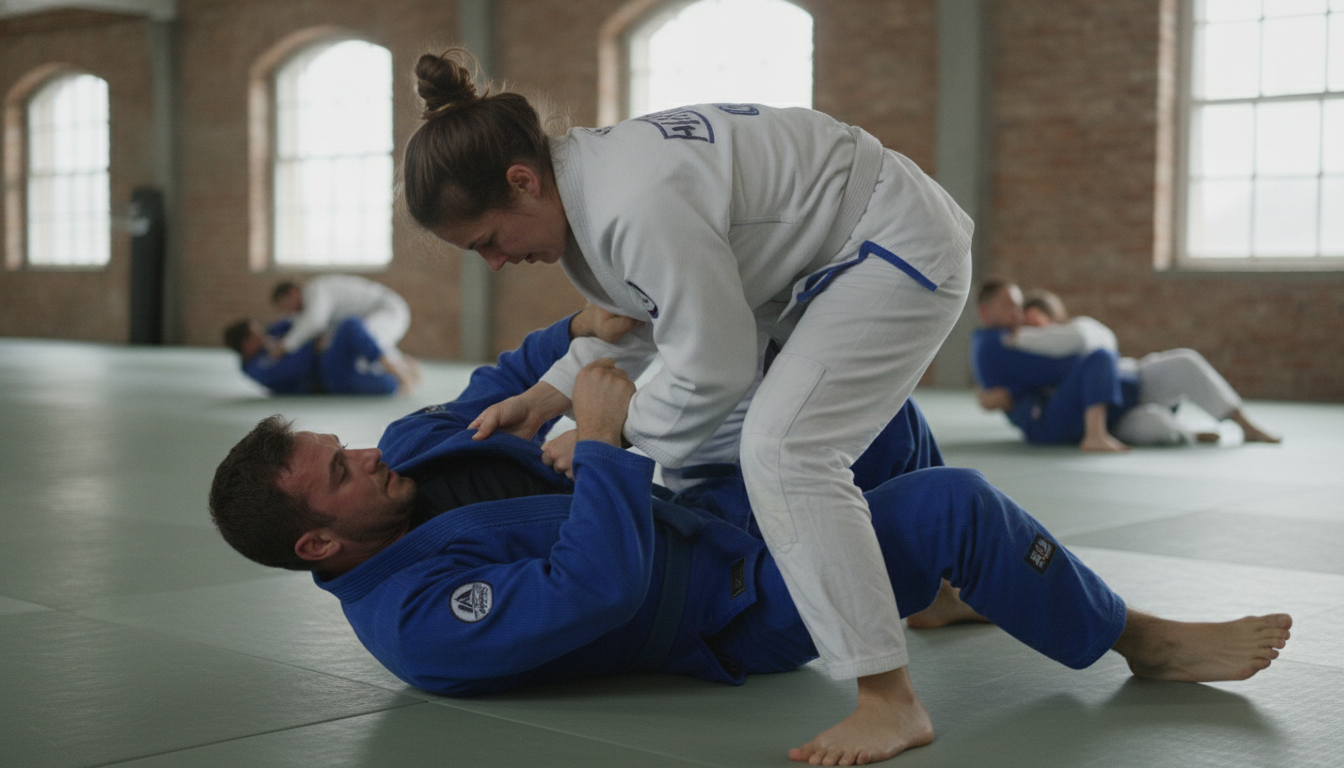
Brazilian jiu-jitsu gym names
BJJ culture favors "Academy" or plain "Jiu-Jitsu," and grappling vocabulary (guard, base, sweep, open mat) reads as insider-friendly. If you're affiliated with a team, your affiliation agreement may already decide part of your name, so read the trademark section below before you order patches.
- Closed Guard Jiu-Jitsu
- Solid Base Jiu-Jitsu
- Riverbend Jiu-Jitsu
- Northside Jiu-Jitsu Academy
- Harborline BJJ
- Base Camp Jiu-Jitsu
- Grip and Base Jiu-Jitsu
- Half Guard Academy
- Tidewater Jiu-Jitsu
- Slow Roll Jiu-Jitsu
- Flow State Jiu-Jitsu
- Iron Grip BJJ
- Granite State Jiu-Jitsu
- Open Mat Jiu-Jitsu
- Hip Escape BJJ
- Roll On Jiu-Jitsu
- Anchor Point Jiu-Jitsu
- Groundwork Jiu-Jitsu Academy
- Old Town Jiu-Jitsu
- Mat Chess Jiu-Jitsu
MMA gym names
MMA gyms lean adult and competitive, so "Gym," "Fight Club," "Combat," and "Training Center" all fit. If you also run kids' classes, pick a name you'd be comfortable printing on a flyer for parents.
- Ironbound MMA
- Southside Fight Club
- Cageside MMA
- Northline MMA
- Five Rounds MMA
- Clinch Point MMA
- Full Range MMA
- Hybrid Combat Academy
- Rust Belt MMA
- Steel Valley MMA
- Headway MMA
- Crossroads Combat Club
- Proving Ground MMA
- Undercard MMA
- Riverfront Fight Club
- Coastline Combat
- Redline MMA
- Camp Nine MMA
- Timberline MMA
- Ironclad Combat Sports
Kickboxing and Muay Thai gym names
"Muay Thai" is well searched, so it earns its place in the name. "Camp" follows the Thai gym convention and signals serious training. Technique words such as teep (push kick), wai kru (the pre-fight ritual), and mongkol (the headband) give insiders a nod.
- Eight Limbs Muay Thai
- Clinch Camp Muay Thai
- Lakeshore Muay Thai Camp
- Teep Muay Thai
- Elbow Room Muay Thai
- Roundhouse Kickboxing
- Southpaw Kickboxing
- Shin Guard Kickboxing
- Wai Kru Muay Thai
- Mongkol Muay Thai
- Pad Round Kickboxing
- Northside Kickboxing Club
- High Guard Kickboxing
- Full Rounds Kickboxing
- Old School Muay Thai
- Canal Street Muay Thai Camp
- Switch Kick Kickboxing
- Cedar Muay Thai
- Harbor Kickboxing Club
- Tempo Kickboxing
Judo club names
Judo schools have traditionally called themselves clubs, which suits the sport's community roots. Judo means "the gentle way," and terms such as ukemi (breakfalls), kuzushi (off-balancing), and randori (free practice) make good anchors.
- Eastside Judo Club
- Ukemi Judo Club
- Oakridge Judo Club
- Gentle Way Judo
- Seiryoku Judo Club
- Harborview Judo
- Lakeside Judo Club
- Throw and Fall Judo
- Balance Point Judo
- Kuzushi Judo Club
- First Throw Judo
- Tatami Judo Club
- Hilltop Judo
- Valley Judo Club
- Randori Judo Club
- Uptown Judo
- County Line Judo
- Pinewood Judo Club
- Bridgeport Judo Club
- Riverstone Judo
Kung fu school names
"Kwoon" is the Cantonese word for a training hall. Keep "Kung Fu" in the name even if you teach a specific lineage, because lay searchers type "kung fu near me," not "Hung Gar." Animal imagery belongs to kung fu more than any other art, since many styles are named for animals, but only use the animal of a style you actually teach.
- Pine Hill Kung Fu Kwoon
- Jade River Kung Fu
- Five Rivers Kung Fu
- Crane Hill Kung Fu
- Horse Stance Kung Fu Academy
- Willow Kung Fu
- Flowing River Kung Fu
- Iron Palm Kung Fu
- Mountain Gate Kung Fu
- Bamboo Bridge Kung Fu
- Silver Creek Kung Fu Academy
- Quiet Water Kung Fu
- East Hill Kung Fu Kwoon
- Rooted Stance Kung Fu
- Red Maple Kung Fu
- Long Fist Kung Fu Academy
- Old Mill Kung Fu
- Cloud Hands Kung Fu
Krav Maga and self-defense school names
Self-defense students are buying an outcome: feeling safe and confident. Benefit words such as safe, guard, aware, and confident tend to land better than fighting words here, and they sit comfortably next to "Krav Maga" or "Self-Defense."
- Safe Harbor Self-Defense
- Aware Self-Defense
- Steady Ground Krav Maga
- Everyday Krav Maga
- Street Smart Self-Defense
- Clear Exit Self-Defense
- Stand Firm Krav Maga
- On Guard Self-Defense
- Confident Steps Self-Defense
- First Response Krav Maga
- Home Base Self-Defense
- Northshore Krav Maga
- Real World Self-Defense
- Alert Self-Defense Academy
- Walk Tall Self-Defense
- Line Drawn Krav Maga
- Citywide Krav Maga
- Shield Self-Defense
Martial arts school names by tone
If you teach several arts, or just want a feel before a style, start here. Each tone attracts a slightly different student.
Traditional and respectful names
Traditional Japanese school names often draw on nature (pines, water, mountains) rather than animals, a point Dave Lowry makes in Black Belt Magazine's guide to naming a dojo. These names suit schools that emphasize etiquette, kata, and lineage.
- Pine Wind Karate Dojo
- Quiet Mountain Martial Arts
- Way of the River Martial Arts
- Stone Path Martial Arts
- Still Water Dojo
- Bamboo Path Martial Arts
- Autumn Pine Karate
- Old Oak Martial Arts
- Mountain Stream Dojo
- Evening Bell Martial Arts
- Cedar Hall Martial Arts
- Harmony Path Dojo
- True Path Martial Arts
- Rooted Tree Martial Arts
- White Pine Dojo
- Moon on Water Dojo
- Humble Way Martial Arts
- Clear Spring Dojo
- Patient Stone Karate
- Twin Pines Martial Arts
Strong and cool names
Hard materials and blunt words suit adult, competitive, and fitness-led schools. Pair them with a style word so the name doesn't read like a hardware store.
- Forge Martial Arts
- Iron Mountain Martial Arts
- Granite Martial Arts Academy
- Apex Combat Academy
- Anvil Fight Club
- Blacksmith Martial Arts
- Stonewall Martial Arts
- Vanguard Martial Arts
- Tempered Steel Martial Arts
- Bedrock Martial Arts
- Hard Road Martial Arts
- Grit Martial Arts
- Iron Will Martial Arts
- Titan Martial Arts
- Oak and Iron Martial Arts
- Last Round Martial Arts
- Unbroken Martial Arts
- Northwall Martial Arts
- Basalt Martial Arts
- Keel Martial Arts
Modern and minimal names
Studio-style schools with clean interiors, adult programs, and a design-conscious brand often prefer names that sound like a gym or a coffee shop more than a temple.
- Movement Lab Martial Arts
- The Method Martial Arts
- Dojo Collective
- Studio Kata
- Mat Lab
- The Practice Martial Arts
- Common Ground Martial Arts
- Form and Flow Martial Arts
- Parallel Martial Arts
- Signal Martial Arts
- Canvas Martial Arts
- Line Martial Arts Studio
- Northform Martial Arts
- Open Floor Martial Arts
- Craft Martial Arts
- Tread Martial Arts
- Studio Nine Martial Arts
- Base Martial Arts Collective
- Quarter Martial Arts Studio
- The Martial Arts Project
Short and one-word names
One word fits a uniform patch and a social handle with room to spare. On the sign and your Google listing, add the style or "Martial Arts" after it (Stance Martial Arts, Pivot Jiu-Jitsu) so people know what you do.
- Stance
- Pivot
- Resolve
- Anchor
- Kinetic
- Poise
- Steadfast
- Stride
- Cadence
- Ember
- Rooted
- Sentinel
- Vigil
- Grounded
- Summit
- Tenacity
- Current
- Flint
- Brace
- Bearing
Clever and fun names
Puns work best for casual, community-focused schools, and they make great names for social accounts and events even if the school itself stays formal. Keep the joke on the art, never on the students.
- Kick Start Martial Arts
- Belt Up Karate
- The Mat Room
- Bow In Martial Arts
- Black Belt Bound
- Kick Back Martial Arts
- Ready Stance Martial Arts
- Knee Deep Muay Thai
- Hold Your Ground Martial Arts
- Sweep Dreams Jiu-Jitsu
- Guard Duty BJJ
- Bow and Arrow Jiu-Jitsu
- Hip Toss Judo
- Tap In Jiu-Jitsu
- Well Rounded MMA
- Kick It Karate
- Break Fall Club
- Chop and Change Karate
- Fist Things First Martial Arts
- Upper Hand Martial Arts
Martial arts school names by audience
Who fills your mats should shape the words you choose. A name that excites a 25-year-old fighter can worry the parent of a 5-year-old, and the reverse is just as true.
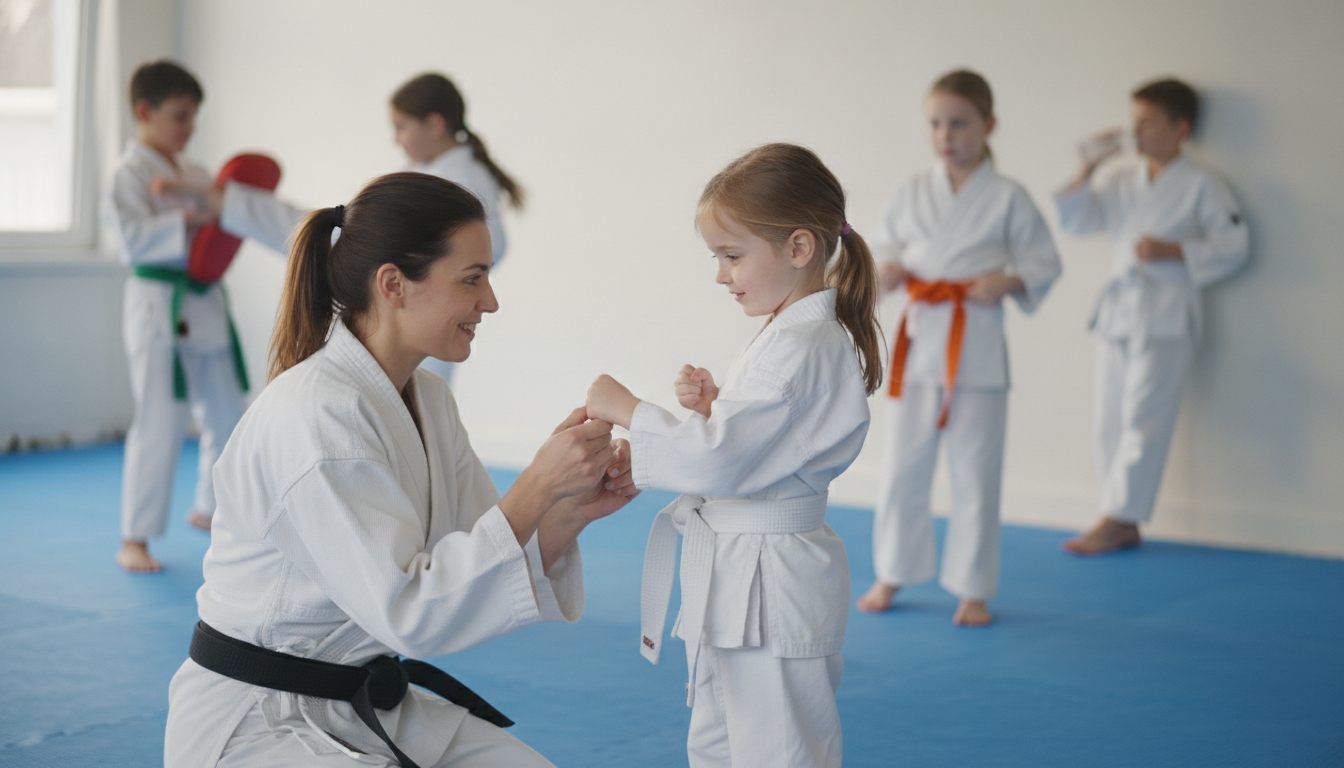
Kids and family martial arts names
Parents are choosing confidence, focus, and good behavior as much as kicks, and those are the benefits of martial arts for kids they're hoping to see. Keep "fight" language out and let character words lead.
- Bright Belts Martial Arts
- Confident Kids Karate
- Little Steps Martial Arts
- Family Tree Martial Arts
- Kind and Strong Martial Arts
- Growing Strong Karate
- Brave Hearts Martial Arts
- Together Martial Arts
- Focus Kids Martial Arts
- Rainbow Belt Karate
- Good Habits Martial Arts
- Respect First Martial Arts
- Big Steps Karate
- Family Mat Martial Arts
- Sprout Martial Arts
Women's martial arts and self-defense names
Women-only classes and self-defense programs work best with names about strength and steadiness. Skip the pink, "diva," and "girl power" framing; most adult women find it patronizing.
- Strong and Steady Self-Defense
- Bold Stance Martial Arts
- Her Guard Jiu-Jitsu
- Unshaken Martial Arts
- Stand Tall Self-Defense
- Common Strength Martial Arts
- Fierce and Calm Martial Arts
- Solid Footing Self-Defense
- Own Your Space Martial Arts
- Clear Voice Self-Defense
- Ground Truth Jiu-Jitsu
- Upright Martial Arts
- Brave Space Martial Arts
- Firm Footing Karate
- Open Guard Women's Jiu-Jitsu
Adult fitness and beginner-friendly names
Many adults start martial arts in their 30s, 40s, or later, and the biggest barrier is feeling too old or too unfit to walk in. A welcoming name lowers that barrier before your trial class does.
- Everyday Martial Arts
- Open Door Martial Arts
- First Belt Martial Arts
- Grown-Up Karate
- Second Wind Martial Arts
- Never Too Late Karate
- Lunch Break Martial Arts
- Late Start Karate
- New Chapter Martial Arts
- The Adult Dojo
- Evening Class Martial Arts
- Beginner's Mind Martial Arts
- Day One Martial Arts
- Steady Progress Martial Arts
- White Belt Welcome Martial Arts
Competition team names
Many schools give their tournament squad or fight team its own name. It builds identity on the road and keeps competitive branding separate from the family-friendly school name.
- Red Corner Team
- Podium Squad
- Blackline Competition Team
- Summit Fight Team
- The Traveling Mat
- Gold Standard Team
- Early Weigh-In Crew
- Point Fighters
- Finals Crew
- Next Round Team
- Hardline Competition Squad
- Night Shift Fight Team
- Contender Squad
- Main Mat Team
- Full Contact Crew
Names for kids programs and belt clubs inside your school
Most schools don't just have one name. They run age-tiered programs under the main brand, and those program names show up on your timetable, your flyers, and your booking page, so they deserve the same care.
| Program | Name ideas |
|---|---|
| Ages 3-5 | Mini Movers, Sprout Kicks, Little Stances, Tiny Steps, Pocket Kicks |
| Ages 6-9 | Juniors, Rising Belts, Explorers, Young Kickers, Adventurers |
| Ages 10-13 | Trailblazers, Challengers, Pathfinders, Contenders, Preteen Academy |
| Teens | Teen Academy, Next Gen, Teen Squad, Varsity Martial Arts, Young Adults |
| Leadership and black belt track | Leadership Team, Junior Instructors, Black Belt Candidates, Mentor Program, Assistant Crew |
| Parent and child | Kick Together, Family Mat, Parent and Me Martial Arts, Side by Side, Mat Buddies |
Keep the tier names on one theme so parents can see a progression path. A nature ladder works well: Sprouts (3-5), Saplings (6-9), Timbers (10-13), and Oaks (teens). A child who starts as a Sprout can see where they're headed, and so can their parents.
Search any common program name before you use it. Some kids' program names are closely tied to existing associations, and "Tiny Tigers" is one to avoid for that reason. Once you've named the tiers, our martial arts lesson plans and martial arts drills for kids help you fill each one with age-appropriate classes.
Dojo, dojang, kwan, and kai: using martial arts terms correctly
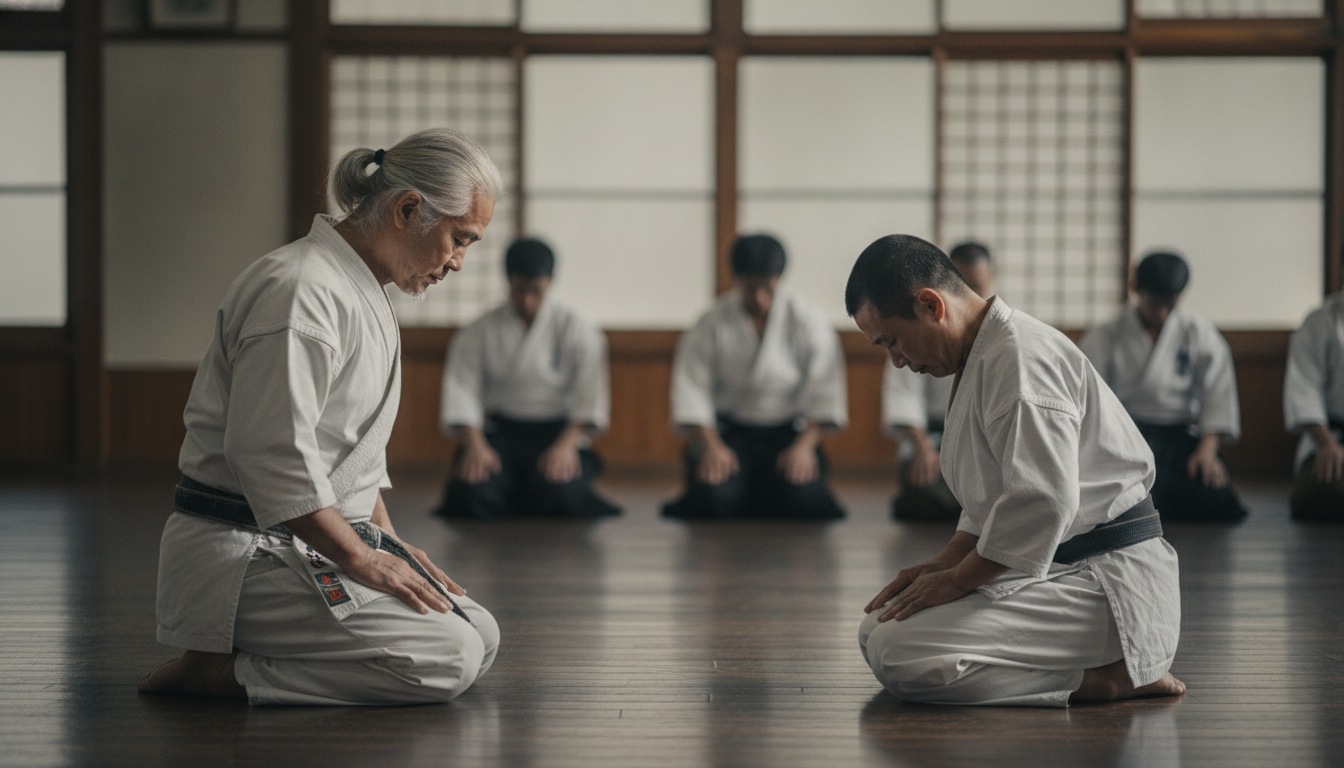
Plenty of Western schools bolt "Dojo" or "Kai" onto an English word without knowing what it means. Students and visiting instructors from Japan, Korea, and China notice. Here's what the common terms actually mean.
| Term | Language | Literal meaning | How schools use it | Well-known example |
|---|---|---|---|---|
| Dojo | Japanese | Place of the way | The training hall itself | Generic |
| -kan (館) | Japanese | Hall, large building | The name of a school's hall or headquarters | Kodokan (judo), Shotokan (karate) |
| -kai (会) | Japanese | Club, association | A group of people, not a place | Kyokushinkai (karate) |
| -ryu (流) | Japanese | Style, school, lineage | A system or style, not a building | Goju-ryu, Uechi-ryu (karate) |
| -den (殿) | Japanese | Hall, palace | A building or hall | Butokuden (Kyoto) |
| Dojang | Korean | Place of the way | A taekwondo or hapkido training hall | Generic |
| Kwan (관) | Korean | Hall, school, institute | A school or lineage | Moo Duk Kwan, Jidokwan |
| Kwoon | Cantonese | Training hall | A kung fu school | Generic |
A few of these carry stories worth knowing. The Kodokan, founded by Jigoro Kano in 1882, translates roughly as "a place for studying the way." Shotokan means "Shoto's hall," after Gichin Funakoshi's pen name Shoto, "pine waves." A ryu) is a lineage or style rather than a building, and a Korean kwan) historically referred to one of the founding schools of modern taekwondo.
Three practical rules follow from this, echoing Lowry's advice:
- Don't call your karate school a "ryu" unless you founded a style. Naming a new school "[Word]-ryu" claims you created a system, and experienced karateka will read it that way.
- Animal names are mostly a Western habit in Japanese arts. "Black Tiger Dojo" or its Japanese translation can land awkwardly with native speakers. Kung fu is the exception, because many of its styles are named after animals.
- If you want a foreign-language name, have a native speaker check it. If you can't, an English name is safer than a mistranslation printed on 200 uniforms.
Founder name, place name, or concept name?
Your anchor is the biggest decision in the formula, and each type fails in a different way.
| Anchor | Best when | Watch out for | Examples |
|---|---|---|---|
| Founder name | You already have a reputation or lineage, or you plan a second location in another part of town | Harder to sell the school later, and the brand rests on one instructor | Alvarez Martial Arts, Chen Kung Fu Academy, Park's Taekwondo |
| Place name | You want instant local recognition and a name that matches what people type into Maps | Breaks if you move or open a second site across town | Mill Creek Karate, Eastside Judo Club, Harbor Point Jiu-Jitsu |
| Concept name | You want the most brandable, easiest-to-trademark option | Says nothing about where you are or what you teach | Steadfast Martial Arts, Keel Jiu-Jitsu, Resolve MMA |
School owners on martial arts forums tend to land on the same practical advice. Owners planning a second location often pick their surname over a neighborhood so the name travels. Owners who use a place name weigh how likely a move is, and some keep the place out of their domain so a move doesn't cost them their web address.
For a single-location school, a place or founder anchor paired with the style word is usually the safest choice.
Style word or "Martial Arts"?
This choice decides who finds you and how easily you can grow. Use this rule:
- One widely searched style, no plans to add another: use the style word. "Karate," "Taekwondo," "Jiu-Jitsu," "Judo," and "Muay Thai" are all terms people search for.
- Two or more styles, or kids and adults programs in different arts: use "Martial Arts." It covers a karate school that adds BJJ next year without a rename.
- A niche style: pair a broad word with the style in your tagline. Most lay searchers have never heard of Hapkido, Wing Chun, or Kali, so "Crane Hill Kung Fu" will be found where "Crane Hill Wing Chun" won't. Put "Traditional Wing Chun" under the logo.
Think about your program mix before you settle this. A school that opens with kids' karate and later adds adult kickboxing will outgrow "Karate" within a couple of years. Our guide on how to start a martial arts school walks through choosing your programs, so decide the mix first and name the school second.
How your name affects Google Maps and local search
Most new students find a school by searching "karate near me" or "BJJ [town]" and tapping a result on the map. Many owners assume they can tune their Google listing for those searches later by adding keywords to the business name. You can't.
Google's Business Profile guidelines say your name "should reflect your business's real-world name, as used consistently on your storefront, website, stationery, and as known to customers." Adding keywords, taglines, or location details that aren't part of that real name isn't allowed, and listings that do it risk suspension.
So "Summit Dojo - Kids Karate Austin" is off the table on Maps unless that's genuinely the name on your sign. "Summit Dojo" is what you get.
The takeaway: if local search matters to you, and for a school that relies on local families it should, the style word belongs in the actual name. "Summit Karate" tells Google and the parent scrolling the map exactly what you do. "Summit" on its own relies on reviews, photos, and your category settings to do that work.
Once the name is set, the rest of your local visibility comes down to your profile, reviews, and photos, which we cover in our guide on how to promote a martial arts school.
Check the name is free before you commit
Run these checks before you pay for a sign, a logo, or a single uniform patch:
- Google Maps, within about 25 miles. Search the name and close variants. If a school two towns over has a similar name, parents will confuse you, and so will Google.
- Federal trademarks. Search the USPTO trademark database for the name, focusing on Class 41 (education and training services, which covers martial arts instruction). Search sound-alikes and spelling variants too.
- Your state's business registry. Check the state business entity and DBA (doing business as) records to see whether another company already uses the name.
- Domain and social handles. Look for a .com first, then Instagram, Facebook, TikTok, and YouTube. Avoid hyphens and numbers in the domain.
- Your affiliation agreement. If you're joining an association, franchise, or BJJ team, confirm its naming rules. Affiliate BJJ schools usually use the team name only with the team's permission and on its terms.
Naming is one of several early legal and admin decisions, alongside your entity, your leases, and your cover. Our martial arts business plan guide shows where it fits, and our guide to martial arts school insurance covers the protection side.
Famous names to steer clear of
Some names look like fair game because everyone knows them. That's exactly the problem.
- Gracie. The Gracie family has registered trademarks on the Gracie name in jiu-jitsu, and family members have fought over who can use it in federal court (Gracie v. Gracie, 9th Cir. 2000). Unless you're a Gracie or an approved affiliate, leave it out.
- Cobra Kai. Even the TV show's owner hasn't had a clear run. Sony's applications for COBRA KAI covering martial arts training ran into an existing registration for COBRA KAI JIU JITSU held by a real BJJ school, as trademark attorneys at Gottlieb, Rackman & Reisman explain. The mark is contested, and it isn't yours to use.
- Franchise and association brands. Many martial arts franchises and associations operate nationally, often with trademarked names and program names. A name that sounds like one of them can bring a cease-and-desist letter, even if you've never heard of the brand.
This is general information, not legal advice. If you plan to scale, franchise, or sell merchandise under the name, a short consultation with a trademark attorney costs far less than a rename.
Test your shortlist in ten minutes
Once you have three to five finalists that pass the checks, run each through these quick tests:
- The phone test. Say the name on a call. Can the other person spell it and find you online without asking twice?
- The kid test. Can a 6-year-old say it? Kids repeat your name to their friends, and that's free marketing.
- The certificate test. Picture it in formal type on a black belt certificate. Does it still look right?
- The shouted test. Imagine a coach calling it out across a tournament hall. Is it short and clear enough to carry?
- The patch test. Does it fit on a uniform patch about 3 inches wide and stay readable?
- The 10-year test. Will it still fit if you add adult BJJ, a teen program, or a second site?
Then ask 5 to 10 people from your target audience (parents, adults, or competitors) to pick their favorite of your final three.

Naming mistakes that cost you later
These are the mistakes that force a rename two or three years in:
- Locking yourself to one style or age group. "Kids Karate Kingdom" becomes awkward the day you launch adult kickboxing.
- Hard-to-spell foreign words. If people can't spell it, they can't search for it.
- Trendy slang, swapped letters, or numbers. "Kickz" and "4Life" date fast and confuse search.
- A name too close to a nearby school. Even if it's legal, it splits your reviews and your referrals.
- A famous brand or franchise name. See the Gracie and Cobra Kai examples above.
- Hyphens and digits in the domain. Nobody remembers where the hyphen goes.
- Promises you can't back. "Undefeated Academy" invites a skeptical first visit and an awkward first loss.
You've named your school, now fill the mats
With a name you're happy with, it goes on the sign, the uniforms, your website, and the page where people actually sign up. That booking page is where a lot of first impressions happen, so the name needs to look right there too.
We built Pembee so martial arts schools can take trial class sign-ups, sell memberships and class packs, and run belt-level classes under their own name and logo, with booking pages you can link from your website, Instagram, and Google profile. Our martial arts software page shows how it fits together, and our roundup of the best martial arts software compares the options. If you're getting ready for your first classes, our guide on how to run a martial arts class is the natural next step, and if you're still weighing up teaching as a career, start with how to become a martial arts instructor.
Key takeaways
- Build your name from the formula: [Anchor] + [Style word or "Martial Arts"] + [Venue word].
- Use a style word if you teach one well-known art and always will; use "Martial Arts" if you teach or plan to teach more than one.
- Put the style word in the real name if you want it on Google Maps, because Google won't let you add it to your listing later.
- Use kan, kai, ryu, dojang, and kwan the way they're meant, or stick to English.
- Search Google Maps, USPTO Class 41, your state registry, and domains before you print anything, and stay away from Gracie, Cobra Kai, and franchise brand names.
- Test your final three with real parents and students.
FAQs
What makes a good martial arts school name?
A good martial arts school name is easy to say, easy to spell, and tells a stranger what you teach. Most strong names combine an anchor (a place, your surname, or a concept) with a style word or "Martial Arts."
Should I put my martial art style in the name?
Yes, if you teach one widely searched style such as karate, taekwondo, BJJ, or judo and don't plan to add another. The style word helps people find you on Google Maps, where you can't add keywords that aren't part of your real name. If you teach several arts, "Martial Arts" is the safer choice.
Should I use my own name for my martial arts school?
A founder name works well if you already have a reputation or lineage, and it travels with you to a second location. The downside is that the brand rests on you, which can make the school harder to sell or hand over later.
What is the difference between a dojo and a dojang?
A dojo is a Japanese training hall and a dojang is a Korean one; both translate roughly as "place of the way." Use "Dojo" for Japanese arts such as karate, judo, and aikido. Use "Dojang" for Korean arts such as taekwondo and hapkido.
What does "kai" mean in a dojo name?
"Kai" means club or association in Japanese. It describes a group of people rather than a building, which is why an organization like Kyokushinkai uses it.
Can I call my school "Gracie" or "Cobra Kai"?
No, not without permission. The Gracie family has registered trademarks on its name in jiu-jitsu and has litigated over who can use it. Cobra Kai is a contested mark between Sony and an existing jiu-jitsu school, so using it invites a legal letter.
Do I need to trademark my martial arts school name?
You don't need a federal trademark to open, but you should search the USPTO database before you commit so you don't infringe someone else's. Registering your own mark is worth considering if you plan to open several locations, franchise, or sell branded gear.
Should my school name include my city?
A city or neighborhood name gives you instant local recognition and matches what people search for. The risk is that it breaks if you move or open across town. If a move or second site is likely, a founder or concept anchor travels better.
How long should a martial arts school name be?
Aim for two to four words, and ideally under about 25 characters. That length fits a uniform patch, a social handle, and a sign readable from the street.
Can I rename my martial arts school later?
Yes, but it costs more than you'd expect: new signs, uniforms, certificates, a new domain, and time for Google and your students to catch up. It's far cheaper to run the checks in this guide before you open.