


There is no single gymnastics coach exam you sit and pass. The route depends on where and who you want to coach, and that is exactly what makes it confusing to start. In short, you become a gymnastics coach by joining your national governing body, clearing a background and safety screening, completing a foundational coaching course, and getting CPR and First Aid certified, then building supervised experience. This guide covers the routes, the certifications, what it all costs, what you can earn, how long it takes, and where coaching can lead.
What does a gymnastics coach do?
A gymnastics coach plans and runs sessions, teaches skills safely, and helps athletes progress from their first forward roll to competition routines. The work is part teaching, part safety, and part people management, and most coaches do all three in the same session.
Day to day, that means planning lessons and warm-ups, demonstrating and breaking down skills, spotting gymnasts physically as they attempt new moves, tracking each athlete's progress, managing groups of different abilities at once, and communicating with parents about how their child is doing. Strong session planning is the backbone of all of it, and a good library of gymnastics lesson plans and a stock of gymnastics games and warm-ups makes the difference between a class that flows and one that falls apart.
Where you coach shapes everything else, from the qualifications you need to the pay you can expect. The main settings are:
- Recreational gyms and clubs teaching beginners and hobby gymnasts of all ages.
- Competitive clubs training athletes who compete through the levels.
- Schools and high schools, often as a teacher or hired coach for a gymnastics or tumbling program.
- Colleges, coaching collegiate teams at a higher technical level.
- Adult and fitness gymnastics, a growing area covering adult beginners and conditioning classes.
Do you need gymnastics experience or a degree?
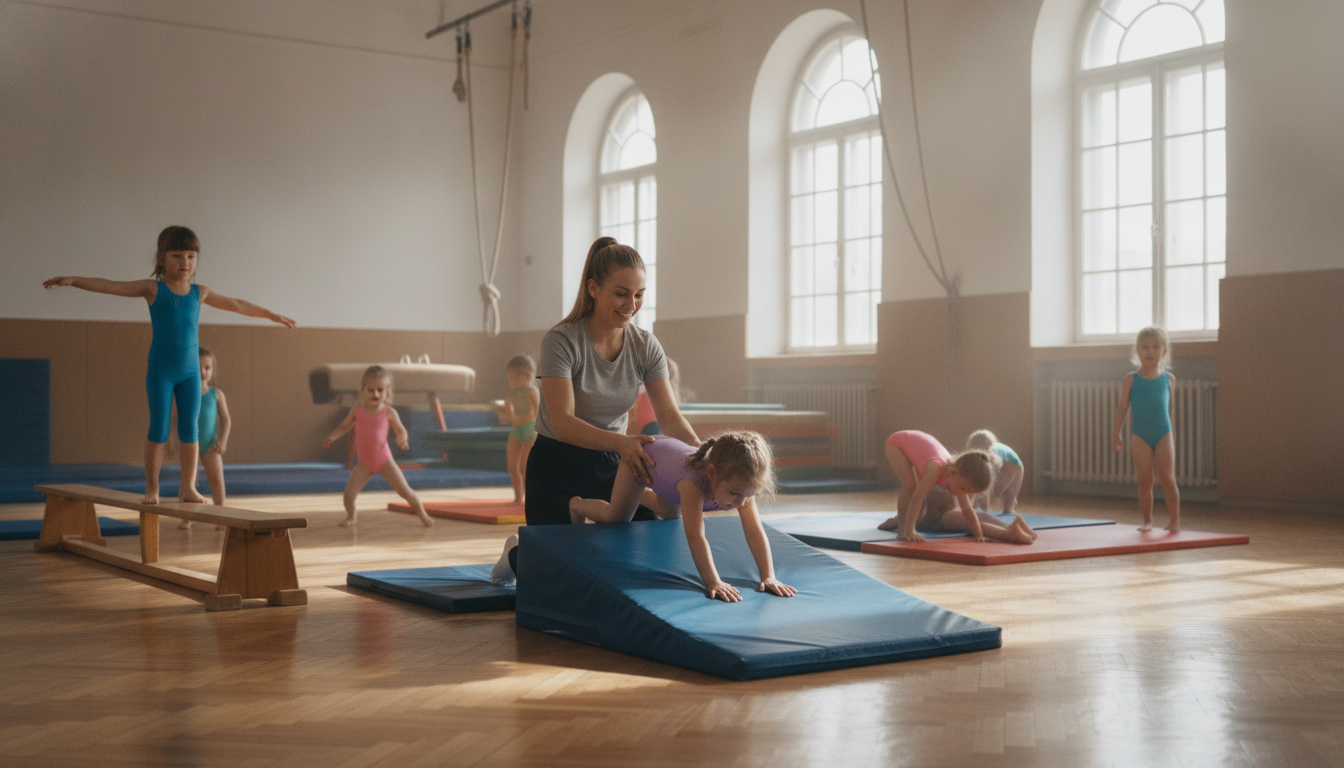
This is the question most aspiring coaches actually want answered, so here is the honest version. For recreational coaching, prior gymnastics experience helps but is often not required. Plenty of good rec coaches come from dance, cheer, diving, or other sports, or simply start as a teenager helping out at their local gym and learn on the job.
Competitive coaching is different. Clubs training athletes through the levels typically expect two to five years of experience as a gymnast yourself, because spotting advanced skills safely and reading technique demands a feel for the sport you mostly get from doing it.
A degree follows the same split. You do not need a college degree to coach at a private gym or club. For high school and college roles, a bachelor's degree is usually required, and high school positions often need a state teaching license or an athletic association coaching certification on top of the governing-body credentials below.
Coaching with no experience? Start with the recreational route in the step-by-step section below. The certifications and screening matter far more than a competitive past, and most clubs will train you alongside experienced coaches.
The pathway: recreational vs. competitive vs. school coaching
Most guides blur these routes together, which is why the requirements feel murky. They are genuinely different paths with different entry bars, and picking yours first makes every later decision simpler. Here is how they compare in the US.
| Route | Experience needed | Core requirements | Typical pay | Best for |
|---|---|---|---|---|
| Recreational / club | Helpful, not required | Governing-body membership, safety certification, foundational course, background check, CPR & First Aid | ~$10-$20/hr | Newcomers, career changers, teens starting out |
| Competitive club | 2-5 years as a gymnast | All recreational requirements plus SafeSport, ongoing renewals, and higher coaching tiers | $30k-$80k/yr full-time | Former gymnasts who want to develop athletes |
| High school | Some coaching or playing background | Bachelor's degree, often a teaching license or association certification, plus safety and CPR | Stipend or part of a teaching salary | Educators and those who want a school setting |
| College | Strong competitive and coaching record | Degree, proven coaching results, governing-body credentials | Varies widely by program | Experienced coaches aiming for elite athletes |
The quickest way to choose is to be honest about two things: how much gymnastics experience you bring, and how much time you can commit. If you want to start soon and learn as you go, recreational coaching is the entry point. If you have a competitive background and want to develop athletes long term, aim at the competitive route from the start.
Step-by-step: how to become a gymnastics coach
The steps below follow the US route through USA Gymnastics, the national governing body. If you are coaching outside the US, the order is the same but the credentials differ, and there is a dedicated section on that further down.
1. Choose your route and join your governing body
Start by deciding which route from the table above you are aiming for, because it determines which membership you need. In the US, that means joining USA Gymnastics. The organization offers different membership types depending on whether you are an instructor at a recreational program or a competitive coach.
A USA Gymnastics Competitive Coach membership runs $99 for the competition season (for example, August 1, 2026 through July 31, 2027). Recreational instructor memberships and program affiliations work slightly differently, so confirm the right one for your gym before paying. Many gyms guide new hires through this during onboarding.
2. Pass the background check and SafeSport screening
Before you work with athletes, you have to clear safeguarding requirements. USA Gymnastics requires a background check that is re-screened every two years. Competitive coaches also complete two safety courses: U110, the U.S. Center for SafeSport course, and U112, a course on tough coaching versus emotional abuse.
These are not optional extras. They exist to keep athletes safe, and you cannot be an active member coaching minors without them. Build them into your timeline early because they gate everything that follows.
3. Complete the safety certification
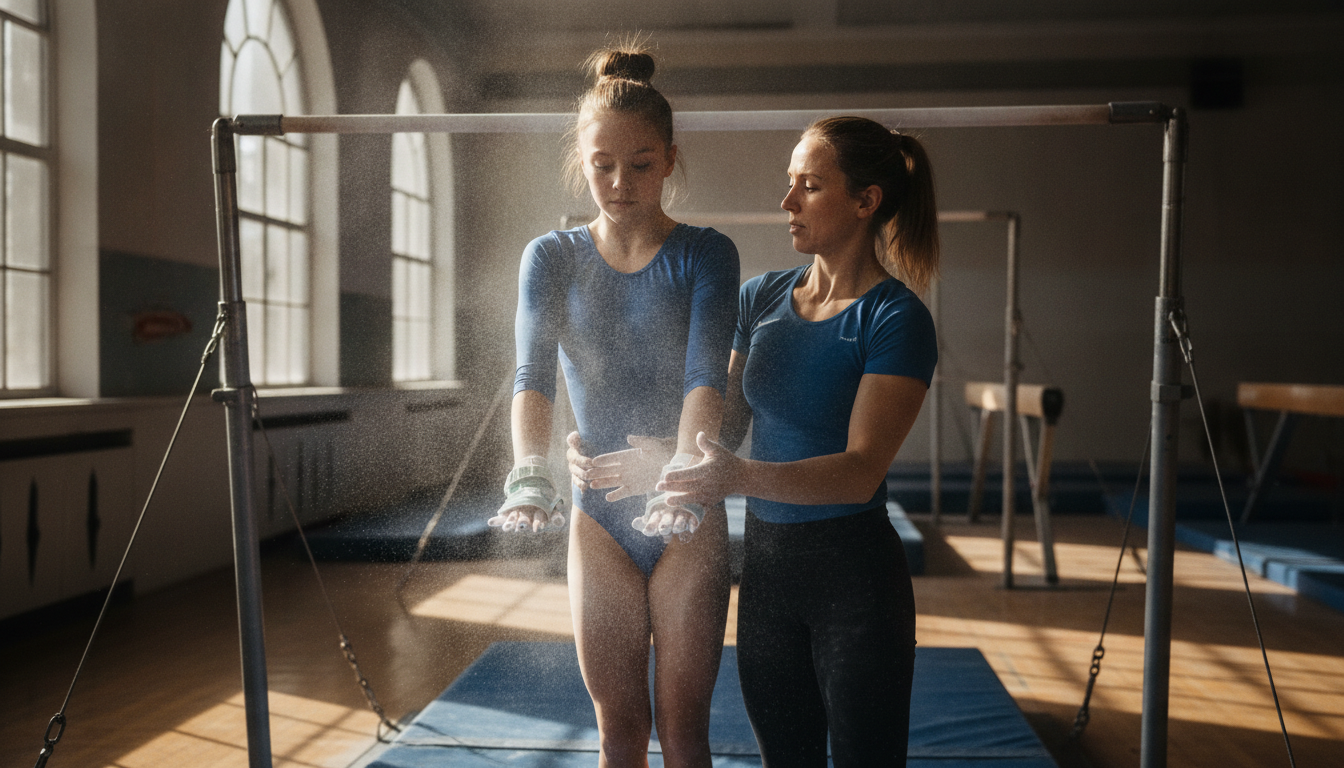
Next is the USA Gymnastics Safety Certification, which covers spotting, equipment, and injury prevention. It is valid for four years, after which you renew by retaking it. This is the credential that signals you understand how to run a session without putting gymnasts at risk, and most clubs will not let you on the floor without it.
4. Take the foundational coaching course
With screening and safety handled, complete the foundational instruction course. For USA Gymnastics that is U100, Fundamentals of Gymnastics Instruction. It takes roughly four to five hours online and requires no prior experience to start, which is what makes it the realistic entry point for someone coming in without a competitive background.
U100 teaches the basics of how to instruct: progressions, lesson structure, and the fundamentals of teaching skills to beginners. For minors aged 16 to 17 who want to coach, the requirements are lighter (parent or guardian registration, safety certification, and U100), so younger helpers can start here too.
5. Get CPR and First Aid certified
Get CPR and First Aid certified through a recognized provider. Many gyms offer this during onboarding, but you can do it yourself online for around $15 and have it ready before you apply. It is a small cost that makes you more hireable and, more importantly, prepares you for the moment a gymnast lands awkwardly.
6. Gain supervised coaching experience
Credentials get you in the door, but coaching is a craft you learn by doing. Assist at a local gym, summer camp, or rec center, and shadow a senior coach before running your own groups. Watch how experienced coaches manage a class, sequence skills, and handle the gymnast who is nervous about a new move.
This supervised period is where the benefits of gymnastics for children stop being theory and become something you deliver session by session. Most coaches spend weeks to months here before taking full responsibility for a group.
7. Apply for coaching jobs and keep developing
Once you are certified and have some hours behind you, apply. Local gyms, recreational centers, school programs, and competitive clubs all hire, and many post openings directly or take walk-in applications. From there, keep your certifications current, move up the coaching tiers, and consider specializing in an apparatus or age group. Judging is a parallel path worth exploring if you enjoy the competitive side and want another way to stay involved.
What it costs to get qualified
No competitor guide adds this up, so here is a clean breakdown. The headline: a recreational coach in the US can typically get qualified for under $200 before pay starts, with competitive coaching adding renewal fees over time. Costs vary by program and change year to year, and the figures below are US examples.
| Item | Typical cost |
|---|---|
| Governing-body membership | ~$99 per season (Competitive Coach) |
| Safety certification | Added fee, renews every 4 years |
| Background check | Added fee, re-screened every 2 years |
| Foundational course (U100) | Often bundled with membership or low cost |
| CPR & First Aid | ~$15 online |
| Optional recreational course tiers | Varies by provider |
A few things worth knowing. Recreational instructor memberships often cost less than the $99 competitive figure, so your real entry cost can be lower. Many gyms reimburse or cover certification for coaches they hire, so ask before you pay out of pocket. And the renewals (safety certification every four years, background check every two) are the ongoing cost to budget for, not the one-time entry.
How long does it take?
There is no single answer because the routes differ so much, so think in effort rather than a fixed number.
For recreational coaching, the timeline is short. The foundational course is four to five hours, the screening and certifications can be completed online within days, and many people are assisting in a gym within a few weeks of deciding to start.
Becoming a competitive coach takes longer, usually months. You are stacking the membership, multiple certifications, SafeSport courses, and a meaningful block of supervised hours before a club hands you athletes to develop.
High school and college coaching is measured in years, because the bachelor's degree, any teaching license, and the competitive coaching record behind those roles take time to build. If you want to coach soon, start recreational and let the higher routes follow.
How much do gymnastics coaches earn?
Pay ranges widely, so treat these as ranges rather than a single salary. Entry and part-time coaching in the US typically pays around $10 to $20 per hour, with an average near $19 per hour according to figures published by Indeed.
For annual pay, the median sits roughly in the $33,000 to $37,000 range, with Indeed reporting an average near $33,251 and other industry sources citing a median around $37,440. Experienced full-time coaches earn more, commonly $30,000 to $80,000, and figures from Glassdoor cited in industry reporting put some coaches around $63,000. Across all sources, the broad range runs from about $15,500 to $70,000.
What moves you within that range comes down to a few factors:
- Setting: competitive clubs and college programs generally pay more than rec gyms.
- Region: pay tracks local cost of living and demand.
- Hours: many coaching jobs are part-time, which caps annual earnings.
- Level coached: developing competitive athletes commands higher rates than beginner classes.
- Owner vs. employee: coaches who run their own gym earn from the business, not an hourly wage.
That last point is where the real earning ceiling lives, and it is worth understanding before you start.
Coaching gymnastics outside the US
The search for how to become a gymnastics coach is global, but most guides only cover the US. The pathway shape is the same everywhere (join a governing body, clear safeguarding checks, complete a coaching qualification, build experience), but the credentials differ by country.
In the UK, British Gymnastics runs the qualifications. The current entry route is the Assistant Foundation Coach award (formerly Level 1), which lets you assist under supervision and carries a 12-month registration. From there you progress to Foundation Coach (formerly Level 2), which requires you to be 18 or over and carries a 24-month registration. Recreational entry needs no degree, and you will also need a DBS check and a first aid qualification.
Canada and Australia run their own tiered systems. In Canada, coach accreditation goes through Gymnastics Canada under the National Coaching Certification Program. In Australia, Gymnastics Australia operates its own tiered coach accreditation. In every case, start at your national governing body's coaching pages, pick the entry-level award, and follow their published pathway.
From coach to running your own gym
Coaching is a career with a clear ladder, and it is worth seeing the whole thing before you take the first rung. The progression typically runs from recreational coach, to competitive coach, to head coach, and for many, to opening and running their own club.
That last step changes the job. Running a gym means managing class schedules, rosters, registrations, waivers, and payments, on top of the coaching. The admin grows quietly as you do, and the coaches who thrive are the ones who systematize it early. There is a real body of work behind opening a gym well, from the gymnastics business plan and the gymnastics equipment list you build the floor around, to the funding for gymnastics clubs that gets you off the ground, and the step-by-step of how to open a gymnastics gym once the pieces are in place. Once classes are running, a solid gymnastics marketing guide is what keeps them full. And if you coach more than one sport, our guide to how to become a football coach walks the same ladder for a different discipline.
This is where we fit. An online booking system for gymnastics clubs handles bookings, payments, registrations, and rosters in one place, so the hours you spend on admin shrink and the hours you spend coaching grow. It is the difference between a club that runs you and one you run. To see how we stack up against the field, our roundup of the best gymnastics management software compares the eight main options.
Key takeaways
- You become a gymnastics coach by joining your national governing body, clearing a background and safety screening, completing a foundational coaching course, getting CPR and First Aid certified, and building supervised experience.
- Recreational coaching is the fastest entry: no degree needed, experience helpful but not required, and you can be assisting within a few weeks.
- Competitive coaching expects two to five years as a gymnast and adds SafeSport courses and ongoing renewals; high school and college roles need a degree.
- In the US, a recreational coach can typically get qualified for under $200 before pay starts, with renewals as the main ongoing cost.
- Pay ranges from about $10-$20 per hour entry level to $30,000-$80,000 for experienced full-time coaches, with the highest ceiling for those who run their own gym.
- Outside the US, the pathway shape is the same but credentials differ, run by bodies like British Gymnastics, Gymnastics Canada, and Gymnastics Australia.
FAQs
Can you become a gymnastics coach with no experience?
Yes, for recreational coaching. Certifications and safety screening matter more than a competitive past, and many coaches come from dance, cheer, or other sports, or start as teen helpers. Competitive roles are different and typically expect two to five years of experience as a gymnast.
How long does it take to become a gymnastics coach?
For recreational coaching, a few weeks: the foundational course is four to five hours and the certifications can be completed online quickly. Competitive coaching takes months to build the credentials and supervised hours, and high school or college roles take years because of the degree and experience required.
Do you need a degree to coach gymnastics?
No degree is required to coach at a private gym or club. High school and college positions usually do require a bachelor's degree, and high school roles often need a state teaching license or an athletic association coaching certification on top of the standard safety credentials.
What certifications do gymnastics coaches need?
In the US you need governing-body membership, a safety certification, the foundational instruction course (U100), a background check, and CPR and First Aid. Competitive coaches also complete SafeSport courses. The exact credentials vary by country and by the setting you coach in.
How much do gymnastics coaches make?
Entry and part-time coaching pays roughly $10-$20 per hour, with an average near $19. Annual pay sits around a $33,000-$37,000 median, and experienced full-time coaches commonly earn $30,000-$80,000. The broad range runs from about $15,500 to $70,000, with gym owners earning from the business rather than an hourly wage.
Do I need to have been a competitive gymnast to coach?
Not for recreational coaching. A competitive background helps you teach advanced skills and read technique, which is why competitive clubs expect it, but rec coaching is open to people from other sports and to beginners who complete the certifications and learn on the job.
What is the youngest age you can start coaching gymnastics?
In the US, minors aged 16 to 17 can coach with parent or guardian registration, a safety certification, and the foundational U100 course. Many gyms take on teenage assistant coaches who help under supervision while they build experience and complete their credentials.
Is being a gymnastics coach a good career?
It can be, depending on what you want from it. Part-time rec coaching is flexible and rewarding but rarely a full income on its own. Full-time competitive coaching and head-coach roles pay more, and running your own gym offers the highest earning potential along with the most responsibility.
How do I find gymnastics coaching jobs?
Local recreational gyms, competitive clubs, rec centers, and school programs all hire coaches and often post openings directly or accept walk-in applications. Getting certified first and gaining supervised hours as an assistant makes you far more hireable, since clubs can put you on the floor sooner.
Do gymnastics coaches need insurance?
Coaches employed by a gym are usually covered by the club's insurance, but independent coaches and gym owners need their own liability cover. If you go on to run your own club, insurance becomes part of the operating costs you budget for alongside equipment, rent, and software.
What skills make a good gymnastics coach?
Safe spotting, clear communication, patience, strong session planning, and constant safety awareness. You are teaching physical skills that carry real risk, so the best coaches combine technical knowledge with the people skills to keep a mixed-ability group motivated and progressing. Becoming a gymnastics coach comes down to the same core path wherever you are: join a governing body, clear the safety screening, complete a foundational course, and build experience. It scales from a weekend recreational qualification to a full career or your own club. If you are coaching young beginners along the way, our [gymnastics drills for kids](/blog/gymnastics-drills-for-kids) is a useful next read.